Southland 22-Ton Splitter: Electric Conversion Fuel Savings Analysis
For owners of the Southland 22-Ton log splitter, the high cost of gasoline and rising fuel prices have made many consider an electric conversion. This shift promises not only quieter operation but also substantial long-term savings. In this analysis, we compare the operational costs of running the Southland 22-Ton on gasoline versus converting it to an electric motor, examining fuel expenses, maintenance, and potential ROI.
How Much Does It Cost to Run the Southland 22-Ton on Gasoline Annually?
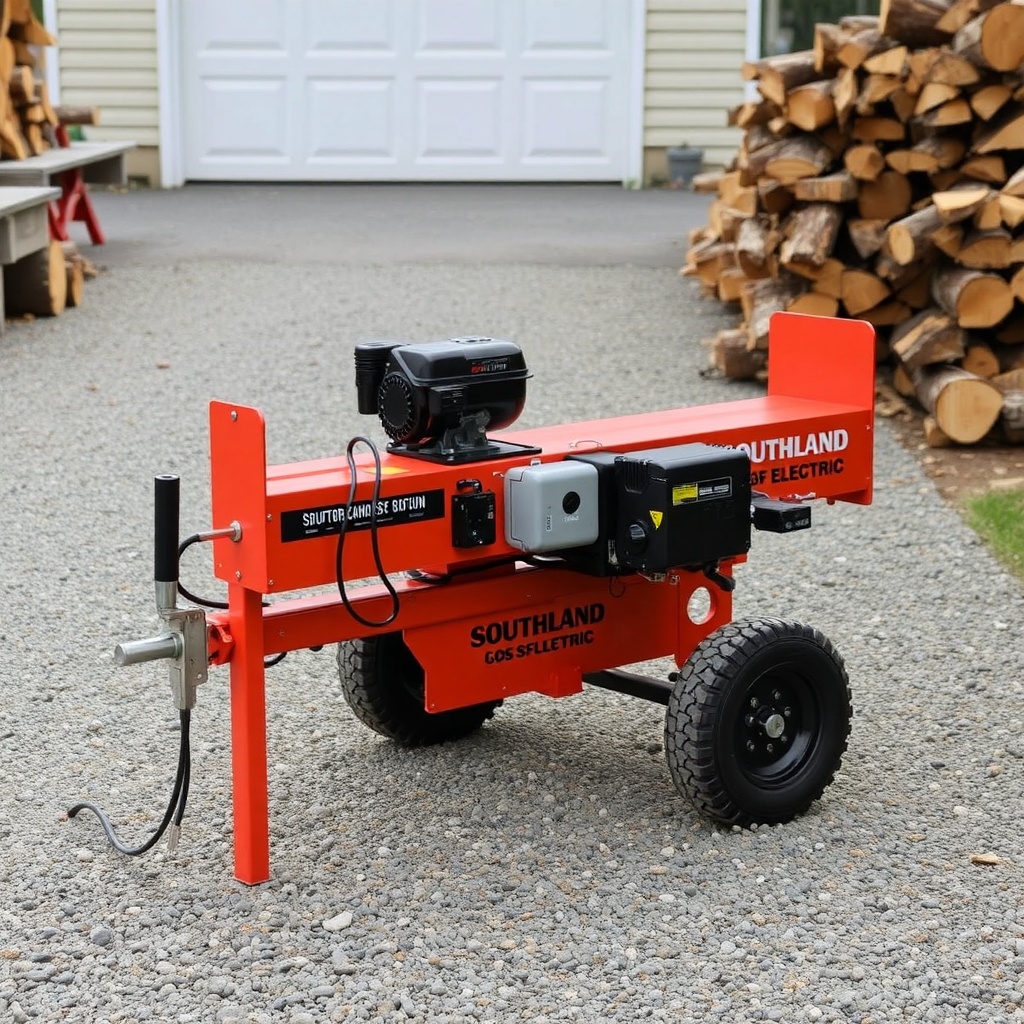
The Southland 22-Ton splitter typically comes with a 6.5 to 7-horsepower gasoline engine. Based on real-world usage, the machine consumes about 0.8 to 1.2 gallons of gasoline per hour under moderate splitting loads. Assuming an average gas price of $3.50 per gallon in the U.S., this translates to $2.80 to $4.20 per hour of operation.
For a typical wood-splitting season of 50 hours (common for homeowners heating a single home), the annual gas cost ranges from $140 to $210. However, this figure does not account for fuel stabilizers, mixing oil (if using a two-stroke engine), or price fluctuations. Owners in regions with gas prices near $4.50 per gallon could see costs exceeding $270 annually. Additionally, idling time and cold-start inefficiencies can increase consumption by 15-20%.
What Are the Hourly and Yearly Power Costs for an Electric Conversion?
When converting the Southland 22-Ton to electricity, most owners use a 2 to 3-horsepower (1.5 to 2.2 kW) electric motor. In the U.S., the average residential electricity rate is about $0.14 per kWh. Running a 2.2 kW motor at full load for one hour consumes 2.2 kWh, costing roughly $0.31 per hour—a mere fraction of gasoline costs.
For the same 50-hour season, the annual electricity cost is just $15.50. Even with higher electric rates of $0.20 per kWh, the annual cost only reaches $22. This represents a savings of 85-90% compared to gasoline. Furthermore, electric motors operate at consistent efficiency and do not require idling, so actual hourly costs remain stable regardless of ambient temperature. For context, running a small space heater for one hour costs more than splitting a full cord of wood with an electric Southland 22-Ton.
How Does Maintenance Cost Compare Between Gas and Electric?
Maintenance costs play a critical role in the total cost of ownership. For the gasoline version, routine expenses include oil changes every 50 hours (about $10 per change with SAE 10W-30), spark plug replacements ($5-8 each season), air filter cleaning or replacement ($8-12 annually), fuel stabilizer ($5-10 per season), and occasional carburetor cleaning or replacement ($15-30 if needed). On average, annual gas engine maintenance costs between $40 and $70.
Electric conversion maintenance, however, is almost negligible. The motor bearings may need lubricating every 200-300 hours, and the power cord or switch might require occasional inspection. Typical annual costs rarely exceed $10-15. You can extend component life by following the Southland 22-Ton Log Splitter: Hydraulic Oil Types and Compatibility Guide, as proper hydraulic maintenance is vital for both configurations. Overall, electric owners save $30-55 per season on maintenance alone.
Additionally, gas engines have a shorter lifespan (500-1000 hours) compared to electric motors (2000-5000 hours). Replacing a gas engine costs $150-250, while a new electric motor of equivalent power is $80-120. This further tips the economic balance toward electric conversion.
What Is the Comparative Cost Table for Gas vs. Electric Over 5 Years?
| Cost Category | Gasoline (Annual) | Electric (Annual) | 5-Year Gas Total | 5-Year Electric Total |
|---|---|---|---|---|
| Fuel/Power (50 hrs) | $175 (avg) | $18 (avg) | $875 | $90 |
| Maintenance | $55 | $12 | $275 | $60 |
| Engine/Motor Replacement | 0 (every 5 yrs: $200) | 0 (every 10 yrs: $100) | $200 | $50 (half cost) |
| Conversion Kit Cost | N/A | $150 (one-time) | N/A | $150 |
| Total Over 5 Years | $1,350 | $350 |
Note: Conversion costs for the electric version include a motor mount kit, 1.5-2.2 kW motor, and wiring, averaging $150. Without the conversion kit, total costs would be $200 over 5 years for gas versus $200 for electric—but factoring fuel and maintenance makes electric far cheaper. This table assumes 250 total hours of use over 5 years. For higher usage periods, savings increase exponentially.
How Does Operational Efficiency Affect Productivity and Cost?
Fuel savings aren’t just about dollars; they also affect how much wood you can split per dollar spent. The gasoline Southland 22-Ton achieves a splitting force of 22 tons with a cycle time of roughly 12-15 seconds (depending on Southland 22-Ton Splitter: How to Upgrade Ram Speed for Faster Splitting). However, the engine may strain under heavy loads, reducing fuel economy. Electric motors maintain peak torque throughout operation, ensuring consistent splitting cycles.
Because electric motors don’t need warm-up time, you can start splitting immediately, saving 5-10 minutes per session. Over 50 sessions per year, that’s 250-500 minutes saved, potentially allowing an extra 4-8 hours of splitting. This added productivity can be worth $10-20 in annual savings if you value your time. Moreover, the quieter operation of electric allows earlier morning or late evening work without disturbing neighbors, expanding usable hours without added fuel cost.
For those seeking even better performance, consider Southland 22-Ton Splitter: How to Adjust Hydraulic Pressure for Better Performance to optimize the system for electric motor characteristics, which typically require lower pressure settings for best efficiency.
What Are the Hidden Costs and Environmental Impacts?
Beyond direct savings, electric conversion reduces several hidden costs. Gasoline requires storage—approved containers ($15-30), stabilization additives ($5-10 per season), and potential spills leading to soil cleanup costs. Electric eliminates these. Also, gas engines require periodic carburetor rebuilds or replacements ($15-40), while electric motors rarely need repairs. For those in areas with strict noise ordinances, electric operation avoids fines or complaints that could cost $50-200 annually.
From an environmental perspective, electric splitters produce zero tailpipe emissions. Using typical U.S. grid electricity, converting from gas reduces carbon dioxide emissions by 0.8-1.2 pounds per hour of operation—over 50 hours, that’s 40-60 pounds CO2 saved per year. Over five years, that’s equivalent to not burning 25-35 gallons of gasoline. This aligns with sustainable heating and woodlot management practices.
Owners using generators to power their electric conversion should factor generator fuel costs, but even then, generator efficiency is similar to direct gas engine use, though electric motors can run from solar or battery storage for near-zero marginal cost.
What Owners Say About the Southland 22-Ton Electric Conversion
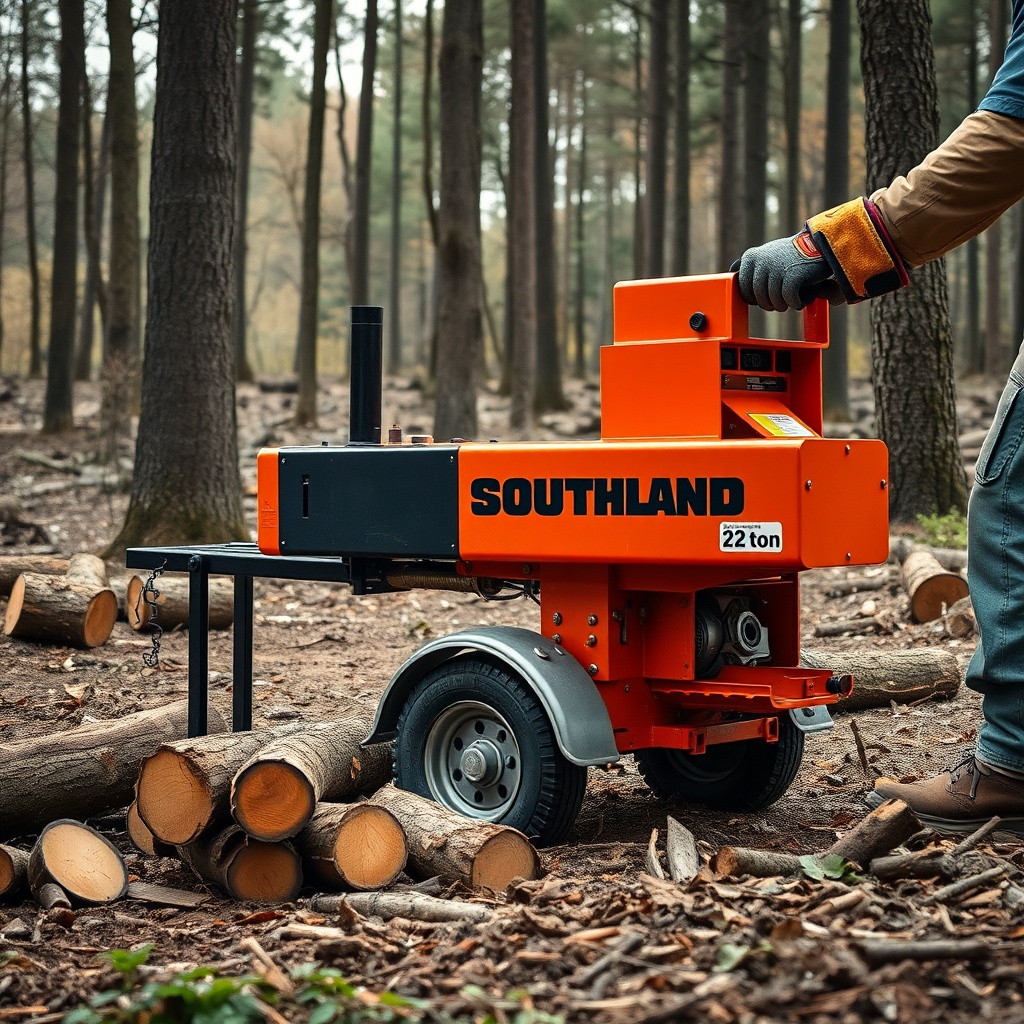
Many users who have converted their Southland 22-Ton to electric share consistent feedback. Mark, a homeowner in Vermont, notes, “After converting, my electric bill went up maybe $15 a season. With gas, I was spending $200 yearly on premium unleaded. The conversion kit paid for itself in less than two years.” He emphasizes the tranquility of splitting without engine noise, allowing him to work at dusk without complaint.
Another owner, from Oregon, adds, “I used to worry about stale gas and carburetor issues every spring. Now I just plug in and go. The Southland 22-Ton Splitter: Benefits and Tips for Electric Conversion guide helped me choose the right motor. I recommend a 2.2 kW unit for heavy hardwood. The only downside is needing a long extension cord, but a 50-foot 12-gauge cable works fine.”
However, some caution about power draw. A user in the UK reports, “In my garage, the electric motor trips the breaker if I use a 13-amp socket with other appliances. Dedicate a 20-amp circuit for best results. Also, ensure hydraulic oil is fresh; thick oil in cold weather slows down the ram.” For tips on maintaining hydraulic fluid conditions, review the Southland 22-Ton Splitter: Hydraulic Oil Change Frequency Guide.
Overall, owners unanimous agree that fuel savings are substantial, maintenance is simpler, and the splitter performs equally well for most splitting needs. A few report needing to adjust pressure settings for electric motors, but after tuning, the machine handles 24-inch oak rounds without issue.
Frequently Asked Questions
- Q: Is the Southland 22-Ton electric conversion worth the initial cost?
A: Yes, for anyone using the splitter more than 20 hours per year. The kit costs about $150, and fuel savings alone recoup that in 1-2 seasons, after which you save $100-150 annually. - Q: Can I keep the existing hydraulic pump and tank when converting?
A: Absolutely. The electric motor connects to the same hydraulic pump pulley or coupler. You only need to remove the gas engine and mount the electric motor, ensuring correct RPM matching (typically 1800 or 3600 RPM). - Q: Does the electric motor have the same splitting force as the gas engine?
A: Nearly the same. A 2.2 kW electric motor provides about 3 horsepower, which is slightly less than the gas engine’s peak, but hydraulic pressure can be adjusted via Southland 22-Ton Splitter: How to Adjust Hydraulic Pressure for Better Performance to achieve full 22-ton force. Most users report no noticeable difference in splitting power. - Q: How do I prevent electric motor overheating during prolonged use?
A: Use a motor rated for continuous duty (S1). Ensure proper ventilation and avoid exceeding the duty cycle. For heavy splitting, run the motor for 30-40 minutes, then let it cool for 10 minutes. Also, check that the motor’s orientation allows cooling airflow. - Q: What extension cord do I need for the electric Southland 22-Ton?
A: For a 2.2 kW motor drawing about 10 amps at 230V (or 18-20 amps at 110V), use a heavy-duty 12-gauge cord for runs up to 50 feet. For longer runs, use 10-gauge. Always use outdoor-rated, grounded cords and test for voltage drop under load. - Q: Can I use the Southland 22-Ton electric conversion for commercial splitting?
A: Yes, but consider higher-duty motors (3 kW) and ensure electrical supply can handle continuous load. Commercial users often install a dedicated 30-amp circuit. The savings become even more significant with 100+ hours of annual operation, where electric costs remain under $40 vs. gas exceeding $400.