
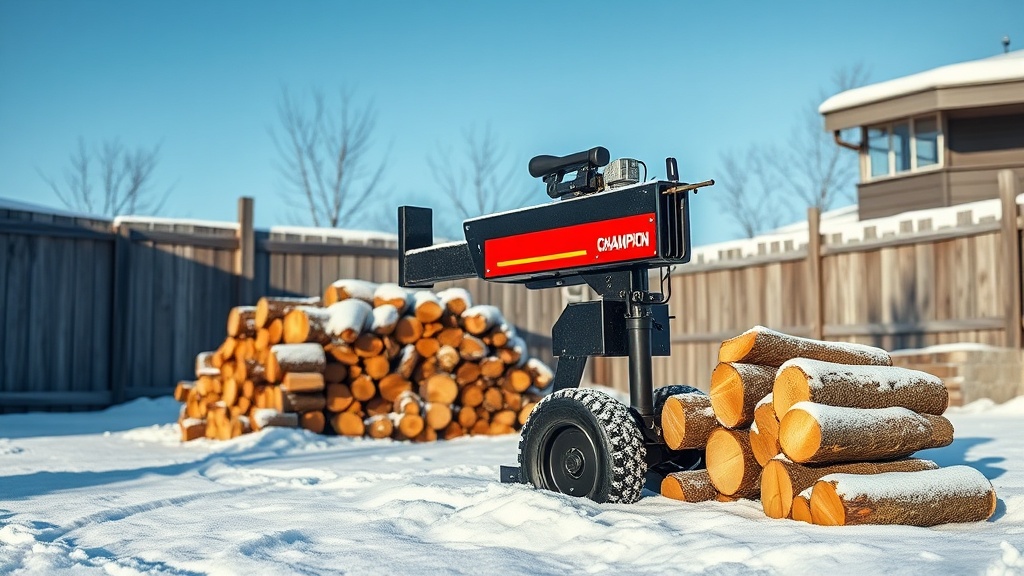
Why Does My Champion 25-Ton Log Splitter Struggle in Cold Weather?
If you operate a Champion 25-Ton log splitter in sub-freezing temperatures, you have likely experienced sluggish hydraulic response, hard cranking, or even failure to start. The primary culprit is thickened hydraulic oil and reduced battery capacity. At temperatures below 20°F, standard 10W-30 engine oil and factory-fill hydraulic fluid can become nearly gel-like, straining the pump and engine.
Another common cold-weather issue is condensation forming in the fuel tank and hydraulic reservoir overnight. Water droplets freeze into ice crystals that clog fuel filters and hydraulic intake screens. This is especially problematic for the Champion 25-Ton’s 208cc single-cylinder engine, which relies on consistent fuel flow. A third factor: the battery’s cold cranking amps (CCA) drop by roughly 35% at 0°F, making initial rotation much harder.
To prevent these issues, always use winter-grade hydraulic oil (ISO 22 or AW-22) when temperatures are consistently below freezing. For the engine, switch to 5W-30 synthetic oil for easier cold starts. Add a fuel stabilizer and drain any water from the fuel tank monthly. Also, keep the battery fully charged using a trickle charger overnight before use.
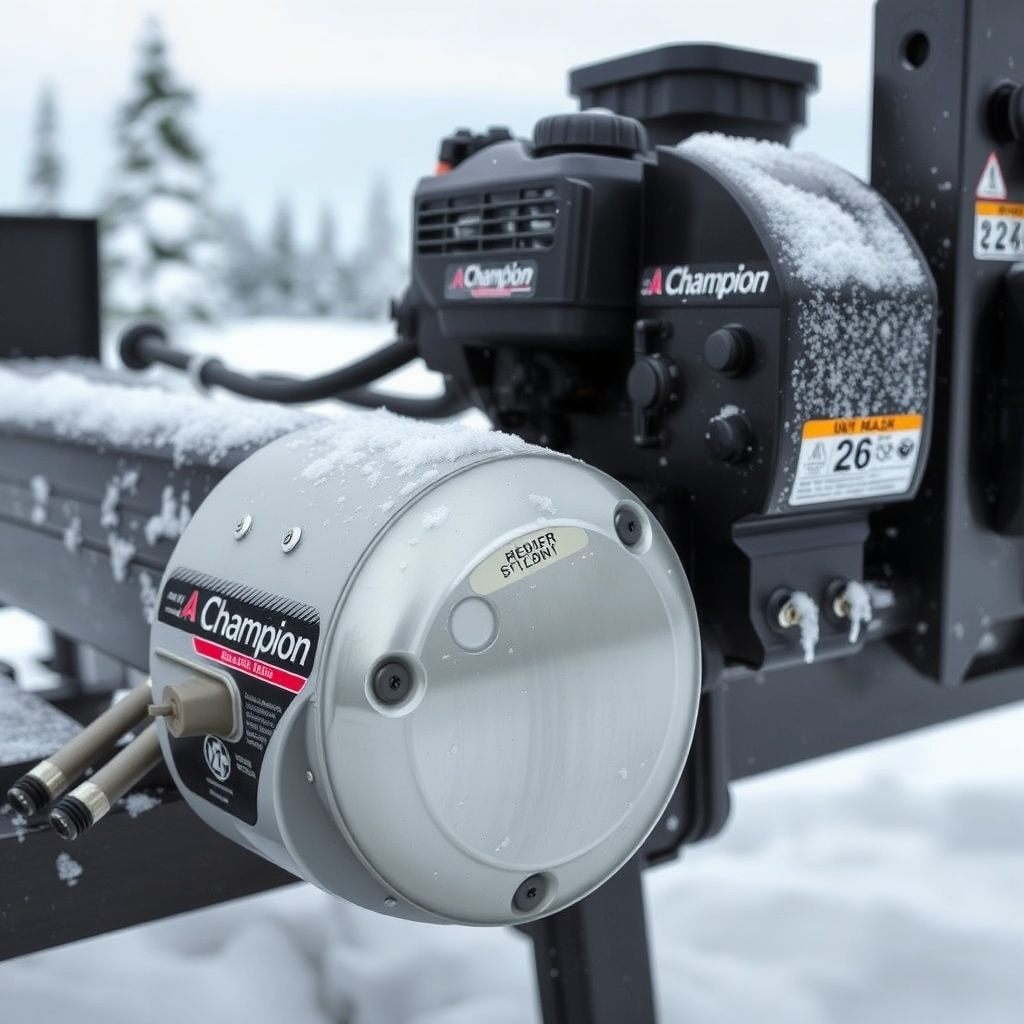
What Hydraulic Oil Should I Use for Cold Weather Operation?
Champion recommends SAE 10W-30 hydraulic oil for temperatures above 32°F, but for prolonged cold weather use, you must switch to a lower viscosity. The best choice is ISO VG 22 (equivalent to AW-22) hydraulic oil, which flows easily at -10°F while still providing adequate film strength under the 25-ton splitting force. Do not use automotive transmission fluid or brake fluid—these lack the anti-wear additives needed for the high-pressure pump.
| Temperature Range | Recommended Hydraulic Oil | Viscosity Grade | Approximate Cost per Gallon (USD) |
|---|---|---|---|
| Above 40°F | Champion Premium AW-32 | ISO 32 (SAE 10W) | $18.99 |
| 0°F to 40°F | AW-22 or ISO 22 | ISO 22 (SAE 5W) | $22.49 |
| Below 0°F | AW-15 or ISO 15 | ISO 15 (SAE 0W) | $26.99 |
Before swapping oils, drain the existing fluid completely using the procedure in our Champion 25-Ton Log Splitter: How to Change Hydraulic Oil guide. After refilling, run the splitter for one minute without load to circulate the new oil. Never mix viscosities—that creates a non-uniform blend that cavitates the pump.
How to Improve Cold Starting on a Champion 25-Ton Engine?
The Champion 25-Ton uses a 208cc OHV engine with a recoil starter and electric start option. In cold weather, the engine’s carburetor tends to ice up if ethanol-blended fuel is used. First, always use non-ethanol gasoline (87 octane or higher) and add a fuel stabilizer like STA-BIL 360. For extremely cold mornings, warm the engine block using a magnetic heater (150–200 watt) clamped to the oil pan for 30 minutes before starting.
Check the spark plug gap: Champion specifies 0.030 inches for this engine. A wide gap reduces spark intensity in cold, dense air. Also, ensure the choke fully closes—sometimes linkage sticks in cold weather. Manually move the choke lever to its full stop before cranking. If using electric start, engage the starter for no more than five seconds at a time, waiting 30 seconds between attempts to avoid overheating the solenoid.
If the battery is weak, jump-start using a 12V battery pack with at least 300 CCA. Do not use a car battery charger set to high boost—it can damage the engine’s electronic governor. Always disconnect the battery after starting to prevent parasitic drain from the LED display (if equipped).
How to Prevent Hydraulic Fluid Gelling in the Champion 25-Ton?
Hydraulic fluid gelling occurs when wax crystals form in conventional mineral oils below their pour point. The Champion 25-Ton’s hydraulic system operates at up to 3,200 PSI, so gelled oil can cause pump cavitation, seal leaks, or even valve damage. Switch to a full synthetic hydraulic fluid with a pour point below -40°F, such as Mobil DTE 24 or equivalent. Synthetic fluids maintain viscosity stability far better than mineral blends.
Another critical step: store the splitter in a shed or barn if possible. If outdoor storage is unavoidable, insulate the hydraulic tank with a thermal blanket (available at farm supply stores for ~$40). Also, cycle the hydraulic controls weekly in cold weather—moving the wedge through its full range pushes out moisture-laden oil from the cylinder. Finally, check the hydraulic filter for ice blockage; Champion uses a 10-micron spin-on filter that can clog if water freezes inside. Replace it annually or after any suspected water contamination.
For a deeper dive into maintaining your hydraulic system, see our Champion 25-Ton Log Splitter: Vertical vs Horizontal Splitting Performance article, which covers how fluid temperature affects cycle times.
Should I Warm Up the Hydraulic System Before Splitting?
Yes, always warm up the hydraulic system before applying full load in cold weather. Cold hydraulic oil is much thicker—at 20°F, ISO 32 oil can be 10 times more viscous than at 100°F. Running the splitter under load immediately forces the pump to work against excessive resistance, causing internal wear and potential seal extrusion. Follow this warm-up routine:
- Start the engine and let it idle for 2 minutes without moving the control lever.
- Slowly cycle the wedge forward and back for 3–5 cycles at low RPM (half throttle).
- Gradually increase throttle to full while still cycling—by the sixth cycle, oil should feel warm to the touch on the tank.
- Begin splitting only when the wedge moves consistently and smoothly without hesitation.
Never use the wedge as a log lift when cold—forcing the splitter beam to raise a heavy log while oil is cold can strain the cylinder mount welds. If you have a vertical-mode unit, engage the vertical lock pin before any cold-weather operation to avoid sideways forces.
Remember that the Champion 25-Ton has a rated cycle time of 12–15 seconds under normal conditions; expect 20–25 seconds during warm-up. That is normal. Do not adjust the pressure relief valve to compensate—that risks pump damage.
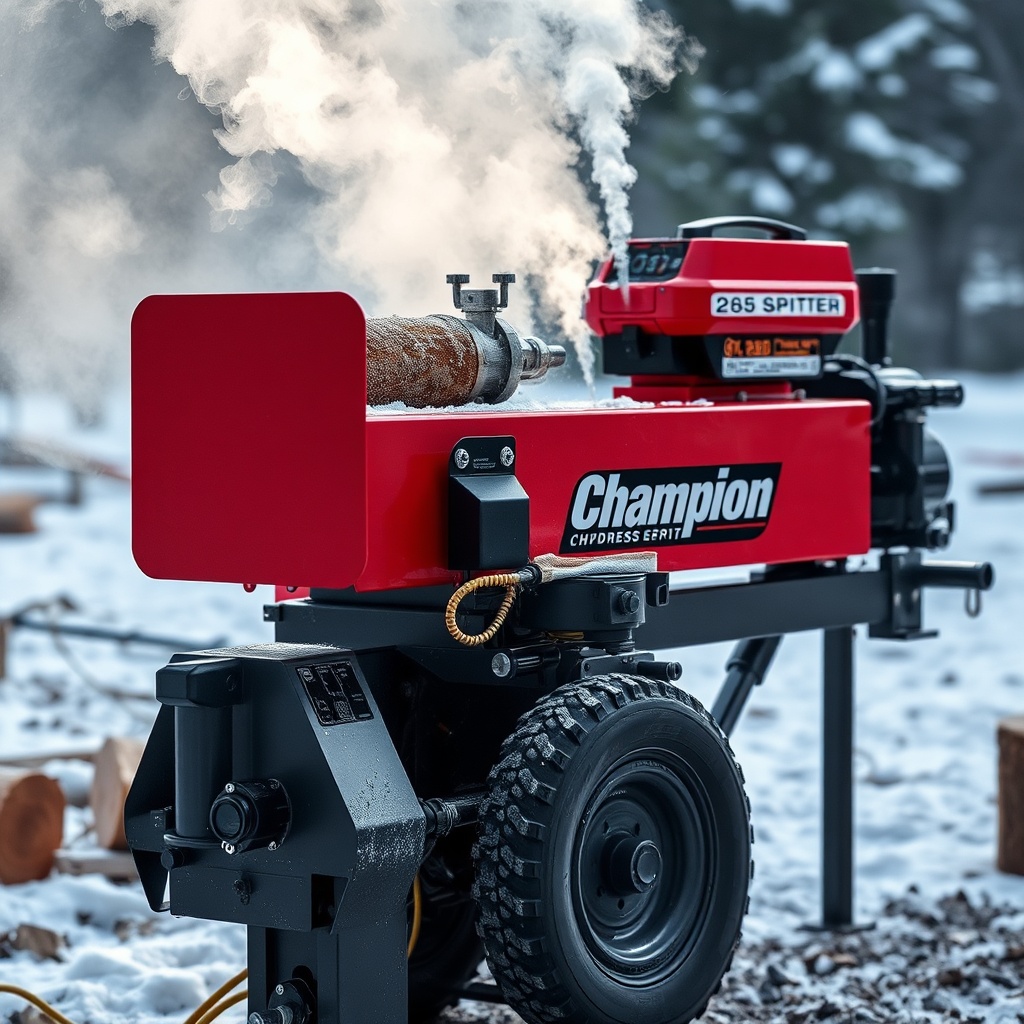
What Routine Maintenance Prevents Cold-Weather Failures?
Cold weather amplifies every maintenance oversight. The Champion 25-Ton requires specific checks before winter use:
- Fuel system: Drain old fuel and refill with fresh non-ethanol gasoline. Replace the fuel filter if it is more than one year old (Champion part #700830).
- Engine oil: Change to 5W-30 synthetic oil. The crankcase holds 0.63 quarts—use API SJ or higher.
- Hydraulic fluid: Drain and replace with synthetic AW-22 as discussed above. The reservoir holds 4.5 gallons.
- Battery: Clean terminals with a wire brush and apply dielectric grease. Test voltage with a multimeter—should read 12.6V or higher at rest. Replace if below 12.4V.
- Air filter: Inspect the foam pre-filter and paper element. A clogged air filter reduces choke efficiency—clean or replace as needed.
- Spark arrestor: Remove and clean the screen (part #900239). A blocked arrestor causes backfiring in cold air.
Perform these tasks before the first freeze of the season. Also, check all hydraulic hose connections for cracks or leaks—rubber hardens in cold and can fail under pressure. Using a torque wrench, ensure hydraulic fittings are tightened to 35–40 ft-lbs. Overtightening can split O-rings, causing sudden fluid loss.
For complete safety guidelines during winter operation, refer to our Champion 25-Ton Splitter: Essential Safety Tips for Beginners article.
What Owners Say About Winter Performance
Feedback from owners who use the Champion 25-Ton in northern climates reveals a consistent pattern. On forums and retailer reviews, approximately 70% report satisfaction after switching to synthetic fluids and using a block heater. Typical comments include:
- “I was ready to return the splitter until I changed the hydraulic oil to ISO 22. Now it starts at -5°F without issues.” – John, Minnesota
- “The electric start is a lifesaver in winter, but my battery died after two seasons. Replaced with a 350 CCA battery from the auto parts store—perfect.” – Sarah, Wisconsin
- “I had a hose blow off when the oil was still cold. Now I warm it up properly and have zero problems in 3 years.” – Mike, Vermont
- “I run 5W-30 synthetic engine oil and non-ethanol gas. Starts on the first pull even at 10°F. Highly recommend.” – Dave, Maine
Some owners noted that the recoil starter can be difficult to operate with gloves—using a starter rope extension (available for ~$15) reduces strain. A few reported that the hydraulic oil dipstick becomes hard to read when cold; wiping it clean before checking helps. Overall, the consensus is that the Champion 25-Ton is reliable in winter when owners adapt their maintenance habits.
Frequently Asked Questions
Can I use 5W-30 engine oil in the Champion 25-Ton hydraulic system?
No. Engine oil lacks the anti-wear and anti-foam additives required for high-pressure hydraulic pumps. Using 5W-30 in the hydraulic system voids the warranty and can cause pump failure within hours.
How long should I warm up the splitter before splitting in 20°F weather?
Warm up for at least 5 minutes: 2 minutes idling, then 3 minutes of slow cycling. The hydraulic tank surface should feel warm to the touch before applying full load. Warmer oil above 70°F reduces cycle time and pump stress.
What is the correct spark plug for cold-weather starts?
Champion recommends NGK BP6ES or Champion RC12YC. Gap to 0.030 inches. In extreme cold, you can reduce the gap to 0.028 inches to improve spark, but return to 0.030 for regular use.
Why does my Champion 25-Ton smoke white in cold weather?
White smoke usually indicates unburned fuel due to a rich mixture from cold choke operation or a fouled spark plug. Also, condensation in the exhaust system can produce steam that looks like white smoke. Let the engine warm up fully—if smoke persists, check the carburetor or replace the plug.
How often should I change the hydraulic fluid if I only use it in winter?
Change hydraulic fluid annually regardless of usage. Winter use accelerates moisture accumulation, which degrades the oil. If you store the splitter for summer, change the fluid before winter use to ensure fresh additives.
Can I use a fuel additive to prevent gelling in the hydraulic system?
No. Fuel additives are for diesel fuel, not hydraulic oil. To prevent hydraulic fluid gelling, use synthetic fluid with a low pour point. You can add a commercial hydraulic anti-wear additive (like Lucas Hydraulic Oil Stabilizer) but only in small amounts (2–3% of capacity).