Introduction
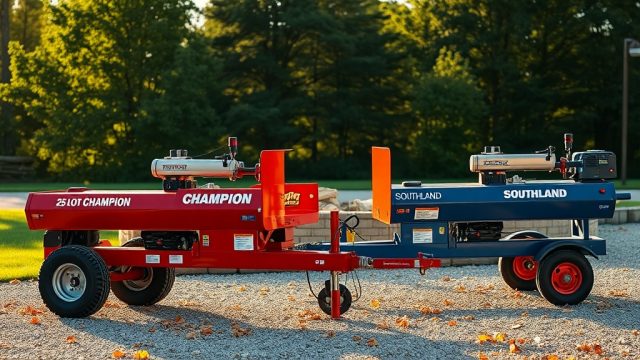
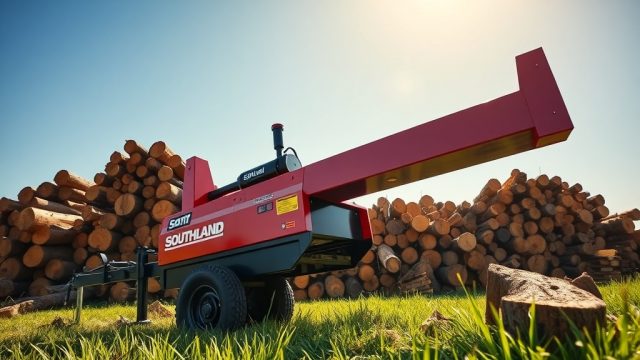
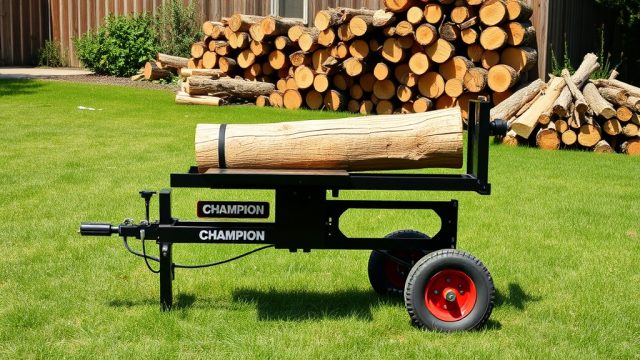
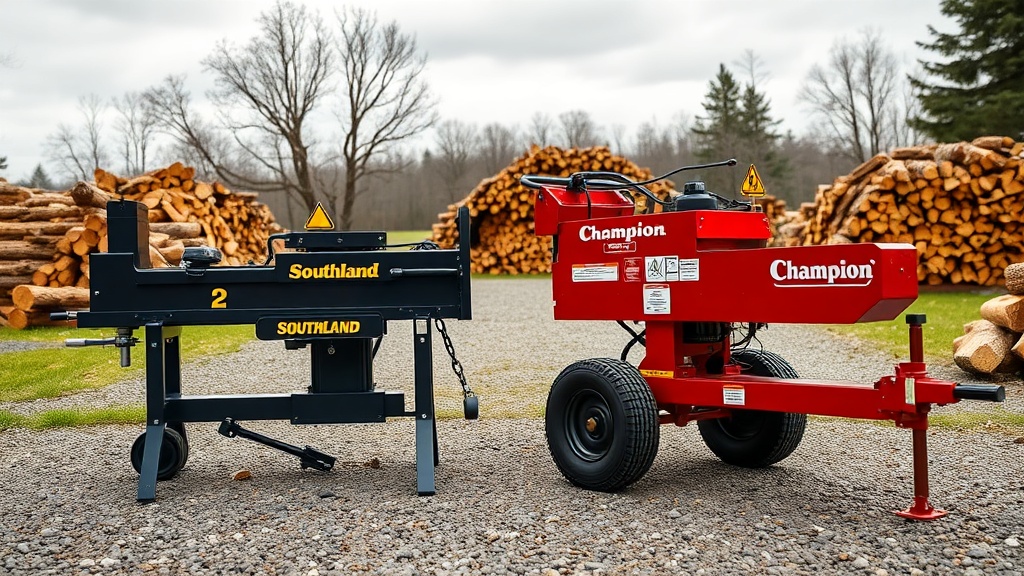
When the woodpile calls and the axe just isn’t cutting it, a hydraulic log splitter is the only sensible answer. Two gas-powered contenders, the Southland 22-Ton and the Champion 25-Ton, dominate the mid-range market for homeowners and part-time firewood producers. While both promise to turn rounds into splits with minimal fuss, distinct differences in power, cycle speed, and build quality separate them. This head-to-head comparison examines every major specification and real-world use case to help determine which machine earns a place in the shed.
How Do Their Specs Compare Head-to-Head?
A spec sheet tells the first part of the story. The Southland 22-Ton operates with a 208cc engine, while the Champion 25-Ton uses a larger 224cc engine. Tonnage is the headline figure, but cycle time and hydraulic flow matter just as much. The Southland delivers a 11-second cycle, while the Champion shaves that down to 9 seconds—meaning the Champion spits out about 20% more splits per hour. Both machines feature a two-stage hydraulic pump and a vertical beam design, but the Champion runs a 4.5-inch cylinder versus Southland’s 4-inch cylinder.
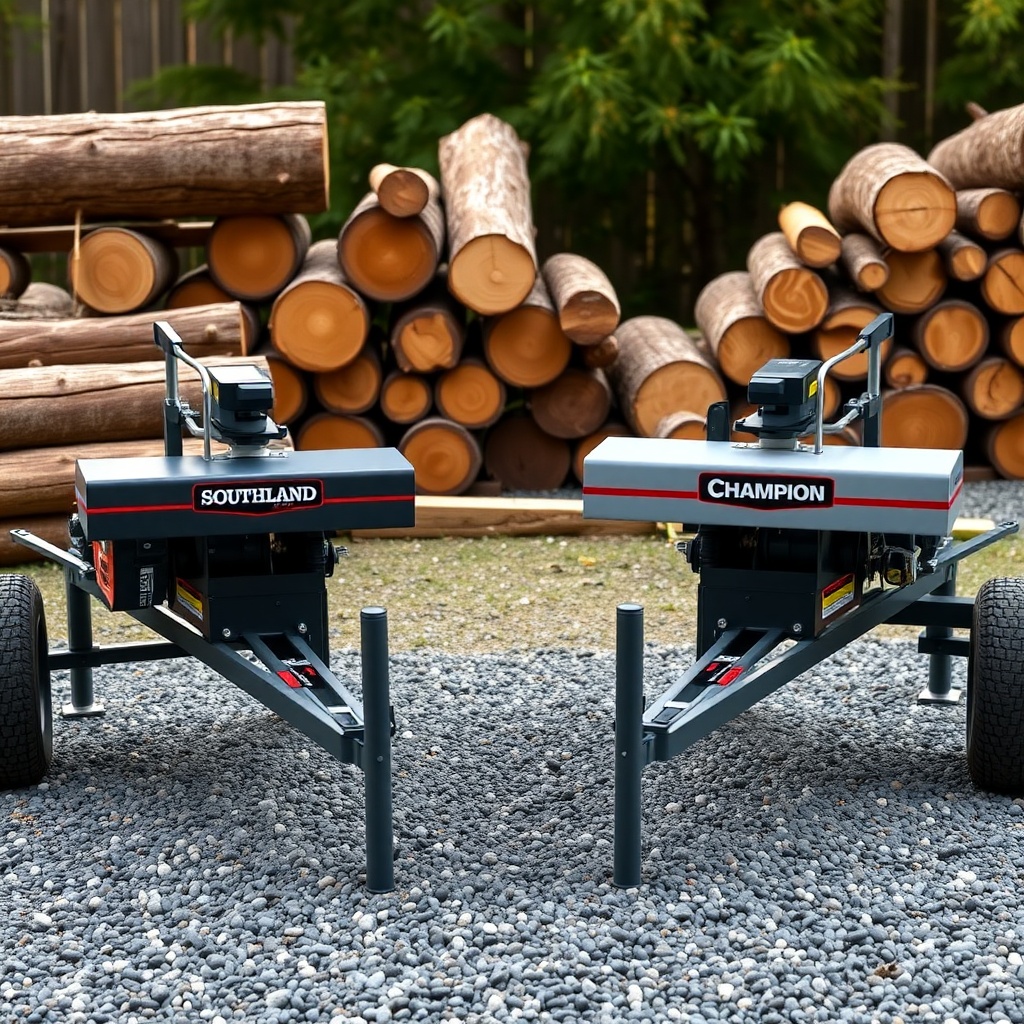
Below is a comprehensive spec comparison table for quick reference.
| Specification | Southland 22-Ton | Champion 25-Ton |
|---|---|---|
| Rated Power | 22 tons | 25 tons |
| Engine Displacement | 208cc | 224cc |
| Cycle Time (Full Cycle) | 11 seconds | 9 seconds |
| Hydraulic Cylinder Bore | 4 inches | 4.5 inches |
| Max Log Length | 25 inches | 25 inches |
| Log Lift Capacity | Not included | Not included |
| Weight (dry) | ~295 lbs | ~315 lbs |
| Frame Material | Welded steel beam | Heavy-duty welded steel |
| Transport Wheels | 13-inch tires | 12-inch tires |
| Price (Approx.) | $1,299 | $1,699 |
Which Splitter Handles the Toughest Wood Better?
Hardwood rounds from oak, hickory, or black locust demand real hydraulic pressure. The Champion’s 25-ton rating provides a full 3 tons of extra splitting force over the Southland. That extra tonnage makes a tangible difference when facing knotty crotches, stringy wet wood, or logs exceeding 20 inches in diameter. Owners report that the Southland 22-Ton struggles on large, gnarly hardwood rounds, sometimes requiring multiple wedge hits or repositioning. The Champion, with its higher cylinder displacement, drives the wedge through with noticeably less hesitation.
The wedge design also differs. The Southland uses a standard wedge, while the Champion employs a 4-way wedge as standard equipment. A 4-way wedge splits each round into four pieces in one push, dramatically increasing throughput when splitting straight-grained wood. For the Southland, a 4-way wedge kit is an aftermarket add-on. If splitting tough, dense wood is the primary task, the Champion holds a clear advantage in both raw force and wedge efficiency.
Which Machine Offers Better Build Quality and Longevity?
Neither splitter is a commercial-grade machine, but differences in construction stand out. The Champion 25-Ton uses a heavier-duty I-beam frame with extra gusset plates at stress points, while the Southland 22-Ton uses a simpler beam design that has shown some flex under heavy loads in user reports. Both use a two-stage hydraulic pump, but the Champion’s pump is mounted with a reinforced bracket to reduce vibration.
The hydraulic oil tank on the Champion holds 3.5 gallons versus the Southland’s 3.0 gallons. Larger oil capacity means better heat dissipation during long splitting sessions. Both machines ship with SAE 10W-30 hydraulic oil, but the Champion’s larger reservoir helps maintain consistent performance even on hot summer afternoons. Champion also includes a screened fill cap and a magnetic drain plug for easier maintenance, small touches the Southland lacks.
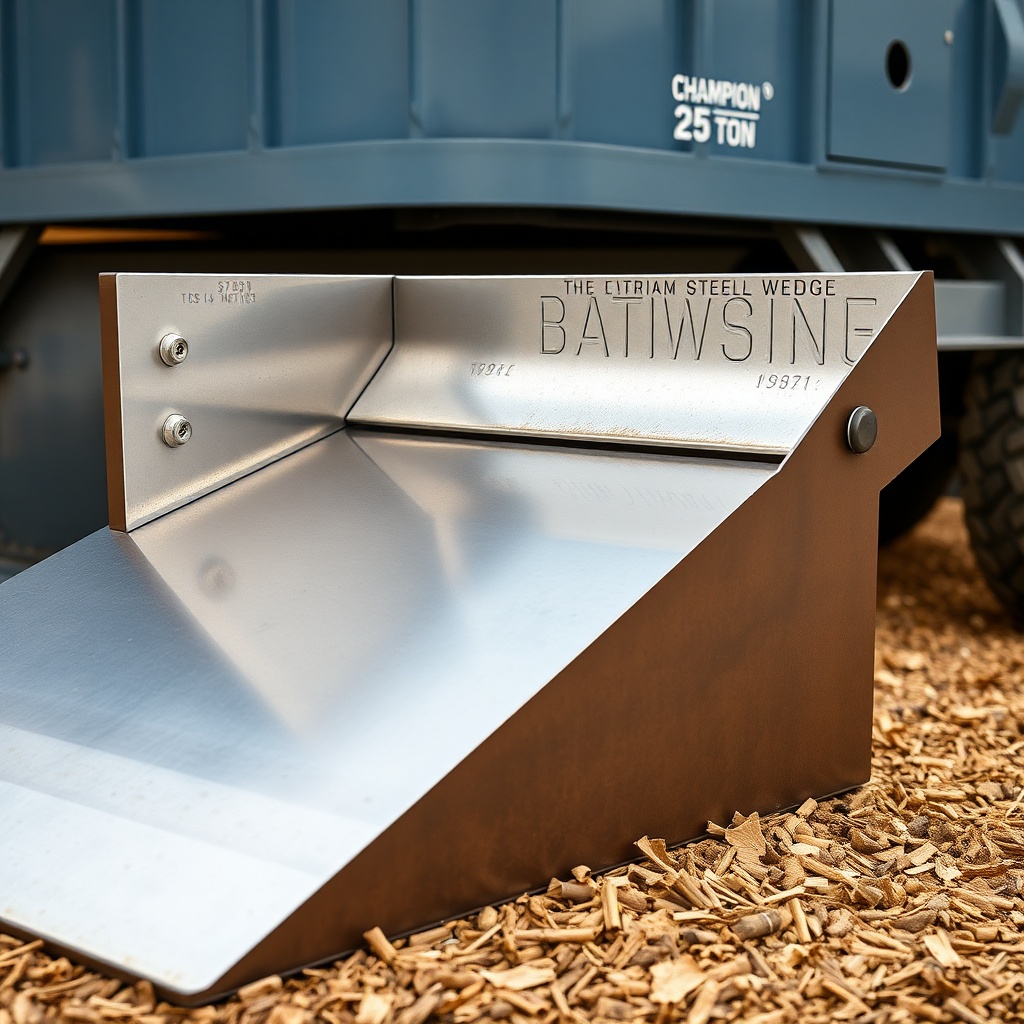
Weight is another indicator. The Champion 25-Ton tips the scales at around 315 pounds, while the Southland 22-Ton is about 20 pounds lighter. That 20-pound difference largely comes from thicker steel in the beam and wedge assembly. For a machine that lives outdoors in a shed or under a tarp, the Champion’s heavier frame suggests better resistance to fatigue and stress fractures over years of use.
How Do They Compare in Daily Usability and Convenience?
Ease of use can make or break a weekend splitting session. Both splitters use a manual, lever-activated control. The Southland’s lever is placed slightly lower on the beam, requiring more bending to reach, while the Champion positions its control lever at a more ergonomic height for most users. The Champion also comes with a spring-loaded auto-return valve, which returns the wedge to the starting position automatically after each split, saving a fraction of a second per cycle. The Southland requires the operator to hold the lever in the return position.
Transport wheels differ. The Southland rides on 13-inch tires, which roll more easily over uneven ground, while the Champion uses 12-inch tires. In practice, both tow well behind an ATV or small truck, but the Southland’s larger wheels give it a slight edge for rough terrain. Neither machine offers a tow hitch as standard; both require the operator to purchase a separate hitch kit if towing is planned.
Fuel tank capacity is identical at 1 gallon on both, but the Champion has a larger muffler and a quieter operation—rated at about 74 decibels versus the Southland’s 78 decibels under load. That four-decibel difference is noticeable over a full day of use and reduces operator fatigue.
What Do Owners Say About Their Experience?
Real-world reviews paint two distinct pictures. Southland 22-Ton owners typically praise the splitter’s ability to handle standard firewood—pine, birch, and small oak rounds—saying it offers excellent value for occasional users. Many note that for the price, it’s hard to beat. However, a recurring complaint is that the wedge sometimes fails to split large, knotty logs in one pass, requiring manual rework. Multiple owners also report the engine requires a longer break-in period than expected, with some carburetor tuning needed after the first few tanks of fuel.
Champion 25-Ton owners overwhelmingly highlight the machine’s reliability and raw power. “I split three full cords of mixed hardwood in one weekend without a single stall,” one owner wrote. Others appreciate the 4-way wedge’s time savings, saying it doubles the output of their previous splitter. The most common criticism is the price, with some owners noting that the extra cost is steep for those who only split a single cord per year. A smaller minority mention minor hydraulic leaks at the cylinder seals after heavy use, though Champion’s two-year limited warranty generally covers those repairs.
Which Splitter Offers the Better Value?
Value depends entirely on splitting volume and wood type. At roughly $1,299, the Southland 22-Ton is the budget-friendly choice for homeowners who split two cords or less per year of typical mixed wood. Its lower upfront cost makes it accessible, and for straight-grained, smaller-diameter logs, it performs adequately. The savings of $400 over the Champion could be redirected toward a 4-way wedge kit and extra hydraulic oil.
The Champion 25-Ton, priced around $1,699, commands a premium that pays off for heavier users. Splitting three or more cords annually, or frequent working of hard, large-diameter rounds, justifies the extra cost. The Champion’s 9-second cycle, 4-way wedge, and reinforced frame deliver measurably higher productivity. Over five years, the time saved by the Champion’s faster cycle and 4-way wedge could amount to many hours—something no price tag captures.
Resale value also favors the Champion. A well-maintained Champion 25-Ton typically retains a higher percentage of its original cost on the used market, due to the strong brand reputation and heavier build. Southland units, while reliable, do not command the same premium.
Frequently Asked Questions
1. Can the Southland 22-Ton split knotty wood?
Yes, but it may require multiple attempts or repositioning of the log. Knots and crotches are where the 3-ton advantage of the Champion becomes apparent.
2. Does the Champion 25-Ton require assembly?
Yes, both splitters ship partially assembled. The Champion requires mounting the engine and beam to the base, attaching the wheels, and connecting hydraulic hoses. Expect around 30-45 minutes with basic tools.
3. Which splitter is better for splitting eucalyptus or ironbark?
The Champion 25-Ton, due to its higher tonnage and 4-way wedge, handles dense Australian hardwoods with fewer passes. The Southland will struggle on the hardest rounds.
4. Are replacement parts easy to find for both?
Yes. Southland parts are available through major retailers like Tractor Supply, while Champion parts are widely stocked at hardware chains and online. Champion offers a broader network of service centers.
5. Can I use both splitters on a slope?
Both are designed for flat or gently sloping ground. The Champion’s slightly heavier frame provides better stability on mild inclines. Neither should be operated on steep slopes due to hydraulic system angle limits.
6. Which splitter is quieter?
The Champion 25-Ton, with its larger muffler and better engine tuning, is roughly 4 decibels quieter, a noticeable difference over several hours of operation.