
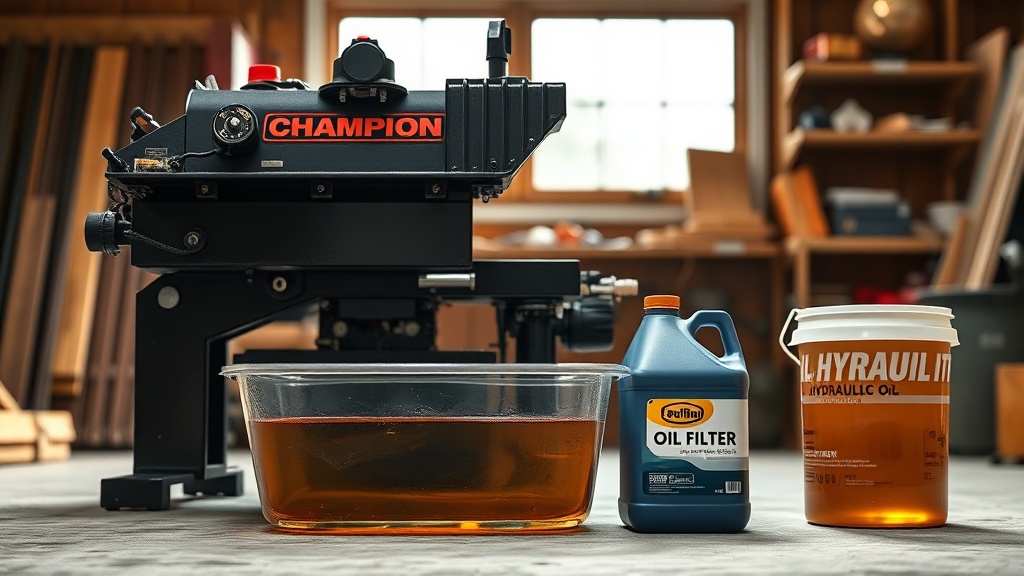
Keeping the Champion 25-Ton log splitter in top working order requires routine maintenance, and changing the hydraulic oil is one of the most critical tasks. Over time, the hydraulic fluid degrades, collects moisture, and accumulates debris, which can reduce splitting force and damage internal components. This article provides a complete step-by-step guide to changing the hydraulic oil on your Champion 25-Ton, including oil type, capacity, and common pitfalls to avoid.
Why Does the Champion 25-Ton Need Regular Hydraulic Oil Changes?
The hydraulic oil in your log splitter performs multiple roles: it transmits power, lubricates moving parts, and helps dissipate heat. As the machine operates, the fluid can break down thermally, leading to reduced viscosity and a drop in splitting performance. Additionally, moisture can condense inside the reservoir, especially if the splitter is stored outdoors or in a humid environment. Contaminated oil accelerates wear on the pump, valves, and cylinder seals. Champion recommends changing the hydraulic oil every 100 to 150 hours of operation or at least once per year, whichever comes first. For heavy-duty users, more frequent changes—every 50 to 75 hours—are advisable to maintain peak performance.
What Type and How Much Hydraulic Oil Does the Champion 25-Ton Use?
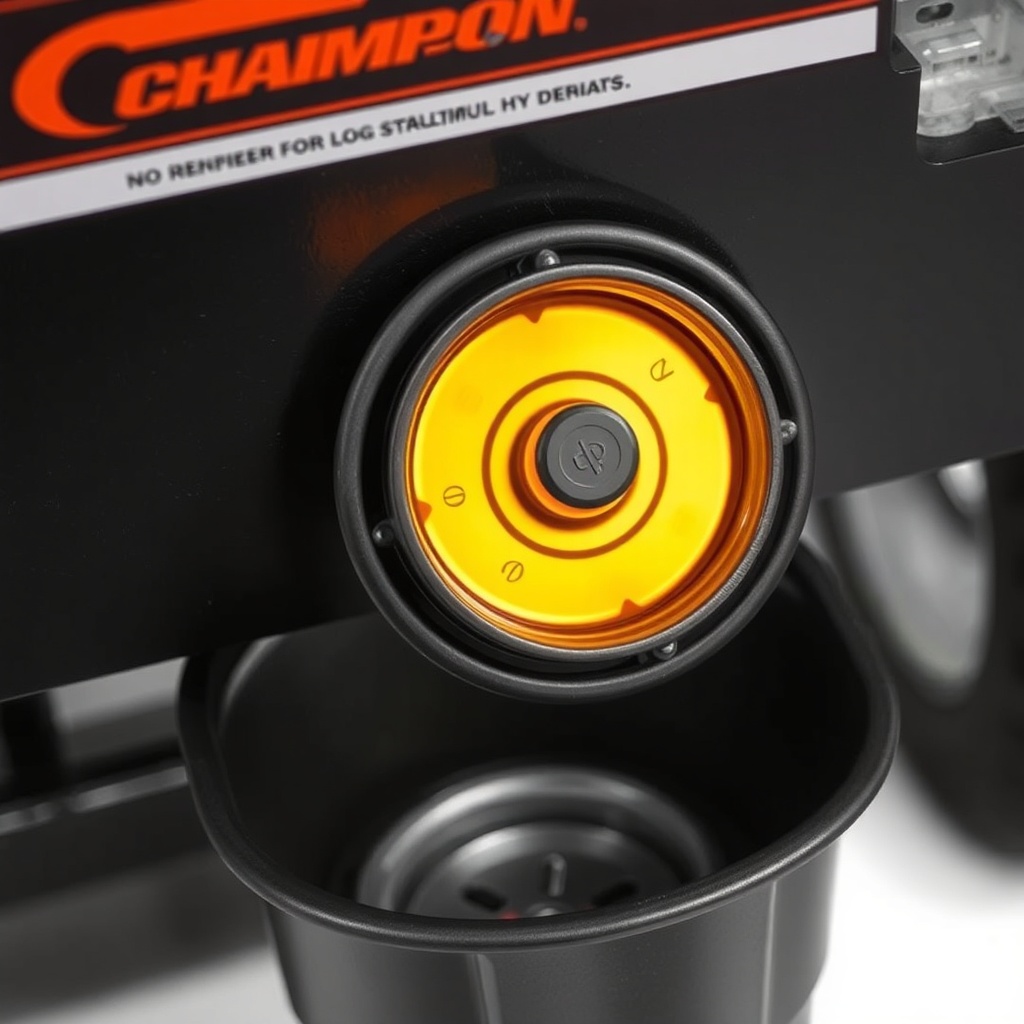
The Champion 25-Ton log splitter typically uses AW-32 or AW-46 hydraulic oil. The specific recommendation depends on your ambient operating temperature: AW-32 (ISO VG 32) is better for colder climates (below 50°F), while AW-46 (ISO VG 46) suits warmer environments. Always check your owner’s manual for the manufacturer’s exact specification—Champion often ships the splitter with AW-32 from the factory. The total system capacity is approximately 4.5 to 5 quarts (4.3 to 4.7 liters). A 5-gallon (18.9-liter) pail of AW-32 is a cost-effective purchase for multiple changes; expect to pay between £35 and £55 in the United Kingdom for a quality brand like Mobil DTE 24 or Shell Tellus S2.
Hydraulic Oil Specifications for Champion 25-Ton
| Parameter | Specification |
|---|---|
| Recommended Oil Grade | AW-32 (ISO VG 32) or AW-46 (ISO VG 46) |
| Total System Capacity | 4.5 – 5 quarts (4.3 – 4.7 L) |
| Reservoir Capacity | Approx. 3.5 – 4 quarts (3.3 – 3.8 L) |
| Viscosity at 40°C | 32 cSt (AW-32) / 46 cSt (AW-46) |
| Common Brands | Mobil DTE 24, Shell Tellus S2, Chevron Rando HD |
| Price per 5-Gallon Pail (UK) | £35 – £55 |
How to Drain the Old Hydraulic Oil from a Champion 25-Ton
Before beginning, ensure the log splitter is on a level surface, the engine is off, and the hydraulic system has cooled completely—hot oil can cause burns. You will need a drain pan with at least 6-quart capacity, a socket wrench set, and a clean funnel. First, locate the hydraulic oil drain plug at the bottom or side of the reservoir (the exact position may vary between the vertical and horizontal models). Place the drain pan directly underneath. Using a socket wrench, remove the drain plug slowly—oil will start flowing immediately. Allow the oil to drain completely, which typically takes 5 to 10 minutes depending on temperature. While draining, inspect the old oil for metallic particles or a milky appearance; these indicate internal wear or water contamination. If you spot excessive debris, consider flushing the system with fresh oil before refilling. For a detailed comparison of the two configurations, read our article on Champion 25-Ton Log Splitter: Vertical vs Horizontal Splitting Performance.
How to Replace the Hydraulic Oil Filter on the Champion 25-Ton
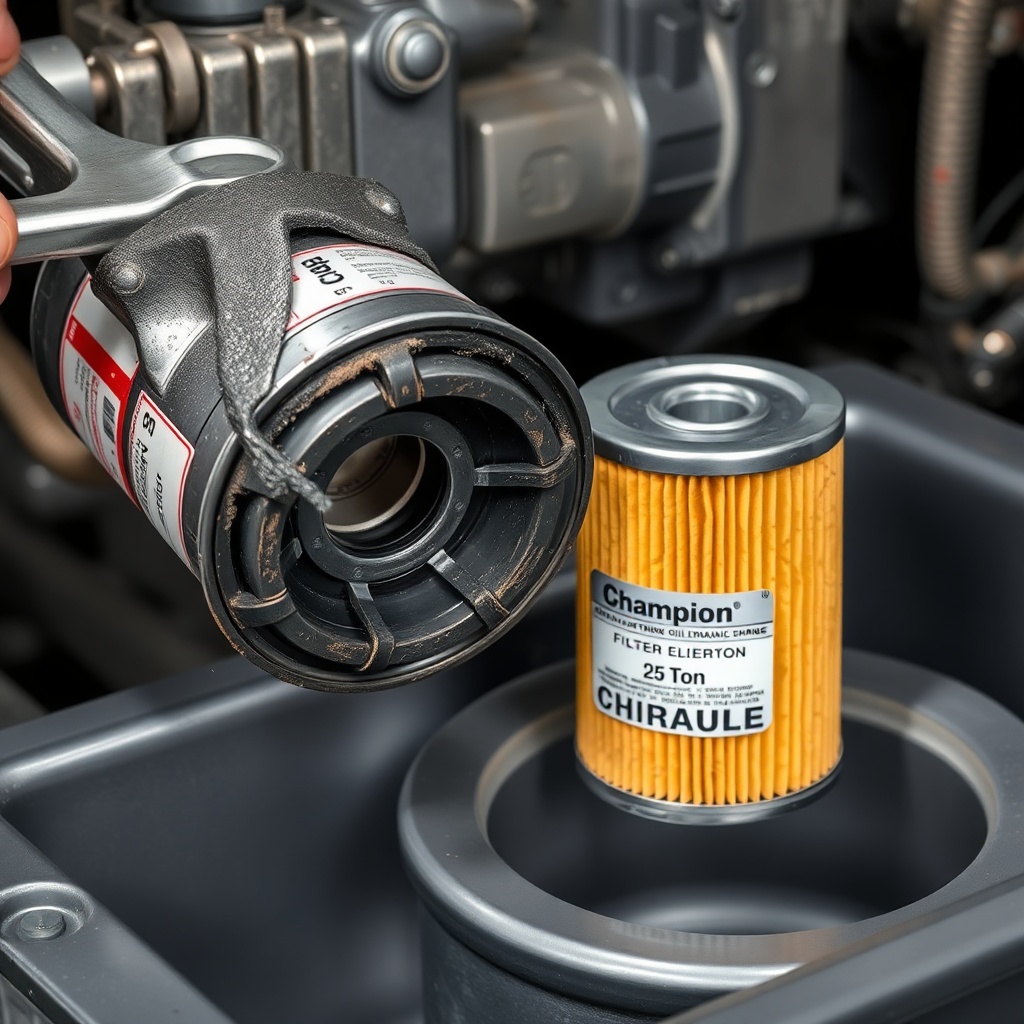
Most Champion 25-Ton models feature a spin-on hydraulic oil filter located near the pump or on the reservoir. Changing the filter is essential whenever you change the oil, as the old filter may be clogged with contaminants. Purchase a replacement filter from Champion’s OEM parts (part number typically ends in -HPF1 or similar) or a compatible cross-reference like WIX 51348 or Donaldson P550487. To remove the old filter, use a filter wrench or a strap wrench; turn counterclockwise. Clean the mounting surface with a lint-free cloth. Lightly lubricate the new filter’s gasket with fresh hydraulic oil, then hand-tighten it until the gasket contacts the base, then give an additional three-quarter turn. Do not use a tool to over-tighten. Install the filter after draining the old oil but before adding new oil to prevent dry starting the pump. For a deeper understanding of how the hydraulic system powers the wedge, see our performance guide on Champion 25-Ton Log Splitter: Vertical vs Horizontal Splitting Performance.
How to Refill and Bleed the Hydraulic System on the Champion 25-Ton
Once the old oil is drained and the new filter installed, replace the drain plug and tighten it securely. Locate the reservoir fill cap and remove it. Using a clean funnel, slowly pour in the new oil—begin with about 3 quarts and check the sight glass or dipstick (if equipped). The reservoir should be filled to the “Full” mark when the cylinder is fully retracted. After initial filling, start the engine and run the splitter at low idle for 30 seconds to circulate oil. Cycle the splitter wedge forward and backward a few times to purge trapped air from the system. Check the oil level again and top up as needed. An air-bound system can cause erratic wedge movement or a spongy feel; bleeding is critical. If the wedge moves slowly or hesitates, you may need to cycle it several more times while checking for leaks at the filter and drain plug. Never operate the splitter with low oil—it can cause catastrophic pump damage. For tips on maintaining consistent splitting force across different wood types, our article Champion 25-Ton Log Splitter: Vertical vs Horizontal Splitting Performance covers the impact of proper fluid levels.
What Owners Say About Changing Hydraulic Oil on the Champion 25-Ton
Experienced owners on forums such as Arboristsite and UK-based gardening groups consistently highlight a few key points. Many appreciate that the procedure is straightforward and requires no special tools beyond a socket wrench and filter wrench. Several users note that the factory-fill oil in some units appears to be a lower-grade fluid and recommend switching to a premium AW-32 or AW-46 immediately for better longevity. One common complaint is that the drain plug location on earlier models is awkward to access without tilting the splitter—owners suggest using a shallow drain pan and a flexible extension bar. Others emphasize the importance of changing the filter every second oil change, not just every time, as the filter can hold up to a cup of old oil. In terms cost, UK owners report spending between £40 and £60 for a 5-gallon pail of quality oil plus £10 to £15 for a replacement filter. The consensus is clear: regular oil changes dramatically extend the pump and valve life, with some reporting over 500 hours without major issues when changing oil every 100 hours.
Frequently Asked Questions
1. Can I use any brand of hydraulic oil in my Champion 25-Ton log splitter?
Yes, as long as it meets the AW-32 or AW-46 viscosity specification. Avoid using automotive engine oil or transmission fluid, as they lack the anti-wear and anti-foaming additives required for hydraulic systems.
2. What happens if I overfill the hydraulic oil reservoir?
Overfilling can cause excessive pressure inside the reservoir, leading to leaks from the fill cap or filter gasket, and may even force oil out of the breather. It can also cause foaming, which reduces lubrication and causes erratic wedge movement.
3. How often should I change the hydraulic oil filter on the Champion 25-Ton?
Most owners change the filter with every oil change (100–150 hours). However, if you use the splitter in dusty conditions or notice visible contamination, you should replace the filter more frequently—every 50 hours in extreme cases.
4. Can I recycle the old hydraulic oil from my log splitter?
Yes, absolutely. Used hydraulic oil is considered hazardous waste. In the UK, you can take it to a local household waste recycling centre (HWRC) that accepts oils, or to a garage that participates in oil collection schemes. Never pour it down drains or onto the ground.
5. Why does my Champion 25-Ton wedge move slowly after an oil change?
This is usually due to air trapped in the hydraulic system after refilling. Bleed the system by cycling the wedge several times with the engine running at low idle. If the problem persists, check for a loose filter or a partially closed drain plug that could be causing a suction leak.
6. What is the best way to check the oil level on the Champion 25-Ton?
Most models have a sight glass on the reservoir or a dipstick attached to the fill cap. Always check with the wedge fully retracted (cylinder closed) and the splitter on level ground. For models without a sight glass, the dipstick usually has a “Full” mark; insert it without screwing it in for the reading.