
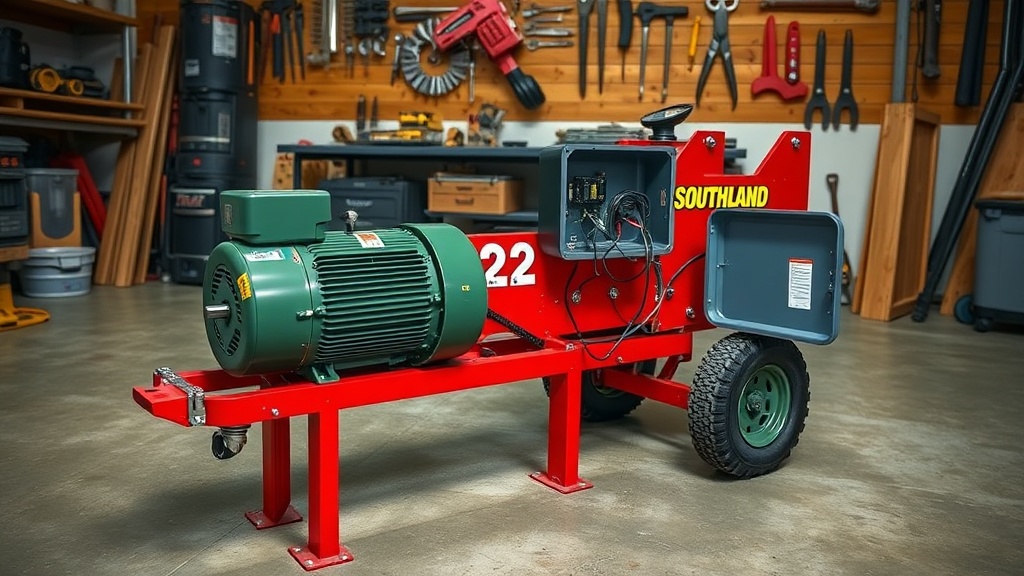
Why Would You Convert a Southland 22-Ton Splitter to Electric?
The Southland 22-Ton splitter is a rugged gas-powered machine, but many owners consider electric conversion to reduce noise, emissions, and ongoing fuel costs. This guide walks you through the entire process, from planning to final testing, ensuring your conversion is safe and effective. Whether you’re looking to use it in a residential area or want lower maintenance, electric operation offers significant benefits.
Converting to electric involves replacing the gas engine with a high-torque electric motor, wiring a compatible controller, and modifying the hydraulic system. We’ll cover every step, including deciding on motor wattage and power supply requirements. For more detailed hydraulic maintenance, see our guide on How to Replace Hydraulic Seals on Southland 22-Ton Splitter.
What Motor and Power Supply Do You Need for the Conversion?
Choosing the right electric motor is critical. The standard Southland 22-Ton uses about 6.5–7 HP gas engine. For equivalent electric power, you need a 5–7.5 HP motor (approximately 3.7–5.6 kW). A 240-volt, single-phase motor is typical for home shops. Here’s a quick spec comparison for common motor options:
| Motor Type | Horsepower | Wattage | Voltage | RPM | Torque (lb-ft) |
|---|---|---|---|---|---|
| Induction | 5 HP | 3.7 kW | 240V | 1725 | 15.2 |
| Induction | 7.5 HP | 5.6 kW | 240V | 1725 | 22.8 |
| Permanent Magnet | 6 HP | 4.5 kW | 240V | 1800 | 17.5 |
For power supply, you’ll need a dedicated 30-amp or 40-amp circuit breaker. Ensure wiring is 10 AWG or thicker for the run length. Many users also add a variable frequency drive (VFD) for soft-start and speed control. The motor must be mounted to the original engine plate using a custom adapter, which we’ll detail below.
How Do You Remove the Gas Engine and Prepare the Splitter?
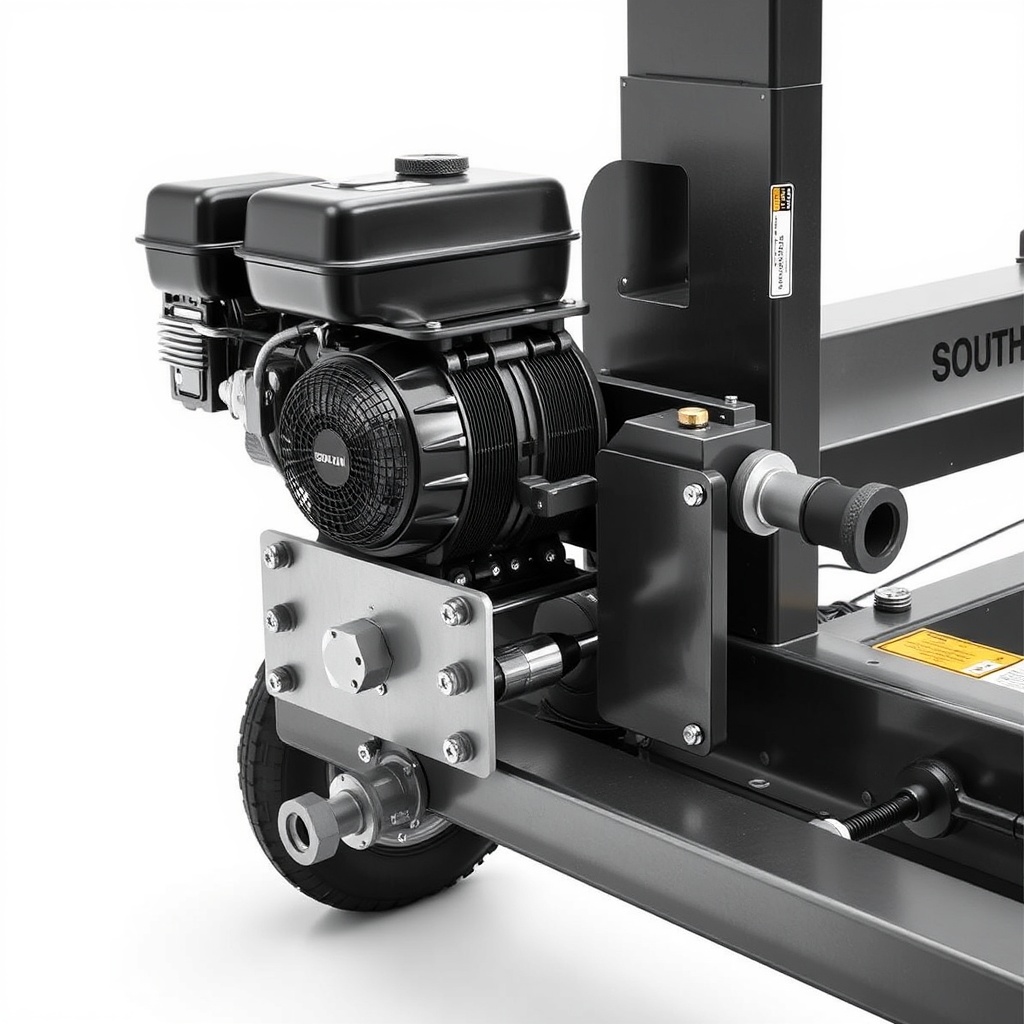
Start by disconnecting the spark plug and draining the fuel tank. Remove the gas engine bolts (typically four 3/8-inch bolts) and lift the engine off. You’ll need to remove the coupler that connects the engine shaft to the hydraulic pump. Many splitters use a Lovejoy coupler; carefully slide it off the pump shaft.
Next, clean the mounting plate thoroughly. Inspect the hydraulic pump shaft for damage. Most Southland 22-Ton models use a 1-inch keyed shaft. Measure the bolt pattern on the mounting plate—commonly 5.5 x 5.5 inches. You’ll use this to fabricate a motor adapter plate. For specific pump repairs, refer to How to Replace Hydraulic Seals on Southland 22-Ton Splitter. If the pump needs servicing, now is the time.
- Remove gas engine, drain oil and fuel properly.
- Unbolt and store coupler halves.
- Clean mounting surface and check pump shaft alignment.
- Measure bolt pattern and shaft height for motor mount.
What Steps Are Needed to Mount the Electric Motor?
Fabricate a steel adapter plate to match the motor’s bolt pattern to the splitter’s mounting plate. Use 1/4-inch or 3/8-inch steel plate. Cut a center hole for the motor shaft to pass through. Attach the motor using high-strength bolts (grade 8). Ensure the motor shaft aligns perfectly with the pump shaft—within 0.005 inches.
Install a new Lovejoy coupler that matches both shaft diameters (motor and pump). Many conversions require a custom bore coupler. Use a dial indicator to check alignment; adjust shims under the motor feet if needed. Once aligned, tighten all bolts to spec (typically 30–40 ft-lb). Then, wire the motor to your VFD or direct to the breaker.
How Do You Wire the Electrical System Safely?
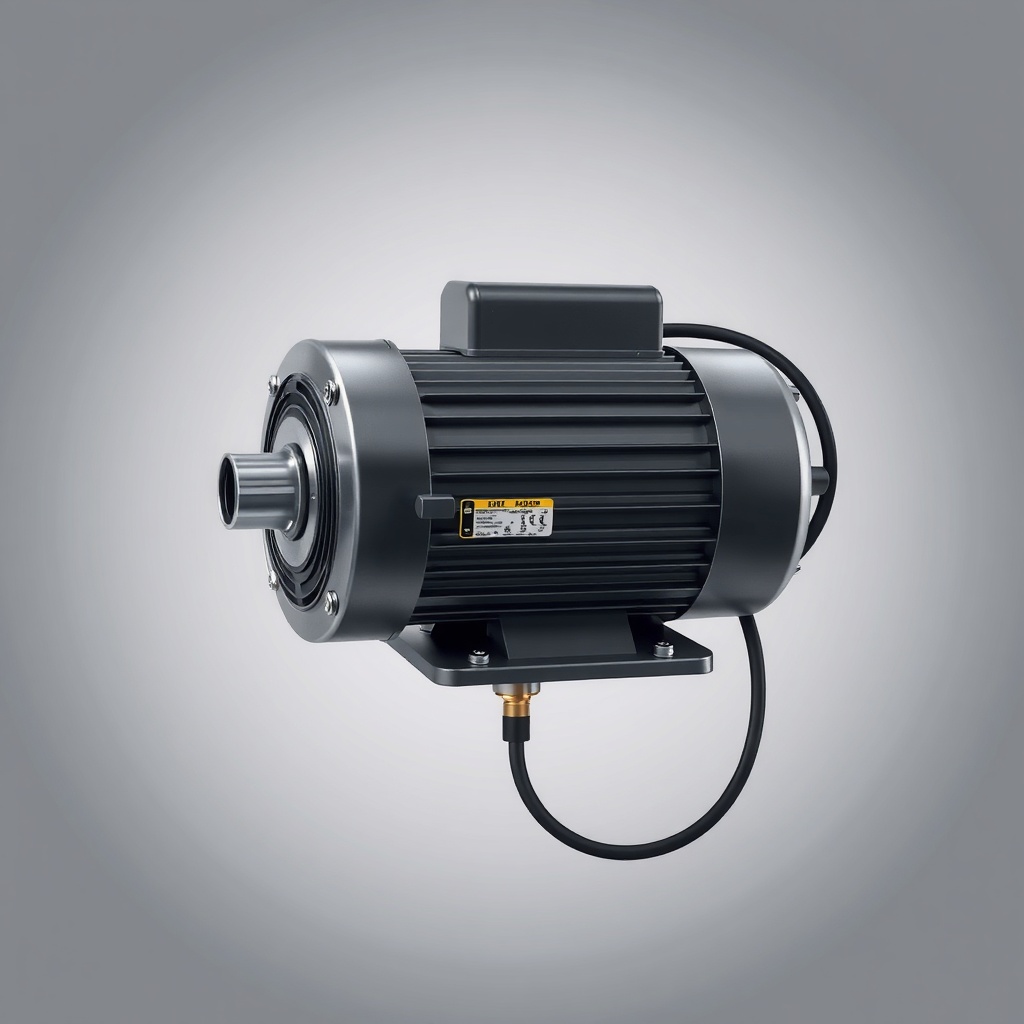
Electrical work should be done by a qualified electrician. For a 240V motor, wire the motor leads to a contactor or VFD. Install a disconnect switch within sight of the splitter. Use a NEMA 4X rated enclosure for outdoor use. The motor must have thermal overload protection—either built-in or via the VFD.
Ground the splitter frame to the earth using a ground rod if required by local code. All wiring must be in conduit or flexible cable. Test the system with no load first; verify rotation direction. If the pump runs backward, swap any two motor leads. Once tested, secure all wiring and add strain relief at entry points.
How Do You Test and Tune the Electric Splitter?
After wiring, fill the hydraulic reservoir with the correct oil (AW-32 or equivalent, about 4 gallons). Cycle the splitter without wood to purge air from the system. Run the motor for 30 seconds, then stop for 2 minutes; repeat 5 times. Check for fluid leaks at all seals and hoses.
Test under load by splitting a small log. Monitor motor temperature—it should not exceed 90°C. If using a VFD, adjust acceleration and deceleration times to avoid pressure spikes. Most users set acceleration to 2–4 seconds. For severe hydraulic issues, consult How to Replace Hydraulic Seals on Southland 22-Ton Splitter. If you encounter leaks, this guide is essential.
What Owners Say About the Southland 22-Ton Electric Conversion
Owners report significant improvements after conversion. Most note the near-silent operation compared to gas engines—around 60 dB versus 90 dB. They appreciate no fumes, so the splitter can be used indoors or in garages. One owner in Maine stated, “I converted my Southland 22-Ton and now split wood at night without bothering neighbors.”
Others mention lower maintenance: no oil changes, spark plugs, or carburetor cleaning. The main drawback cited is the need for a 240V outlet. Some owners added a portable generator for field use, but many prefer stationary setup. Overall, the conversion is rated highly for reliability, with consistent splitting force of 22 tons.
Frequently Asked Questions
Q: Can I use a 110V motor instead of 240V?
A: For 22-ton splitter, a 110V motor would need very high amperage (over 20 amps) and still may not provide enough torque. 240V is strongly recommended.
Q: How much does the conversion cost?
A: Costs vary: motor ($200–$400), VFD ($150–$250), coupler and plate ($50–$100), wiring ($100–$200). Total around $600–$1000. Savings from not buying gasoline offset this over time.
Q: Will the conversion void my warranty?
A: Yes, modifying the splitter voids the original manufacturer warranty. Ensure you’re comfortable with this before starting.
Q: What if the pump doesn’t reach full pressure?
A: Check motor rotation direction. Also inspect pump shaft and alignment. Low pressure may indicate worn seals; see our seal replacement guide.
Q: Can I switch back to gas later?
A: Possibly, but you’d need to reinstall the engine and remove the electric components. Most owners prefer electric permanently.
Q: How do I maintain the electric motor?
A: Keep motor clean and dry. Check bearings annually. Lubricate per manufacturer instructions. VFD may need firmware updates.