
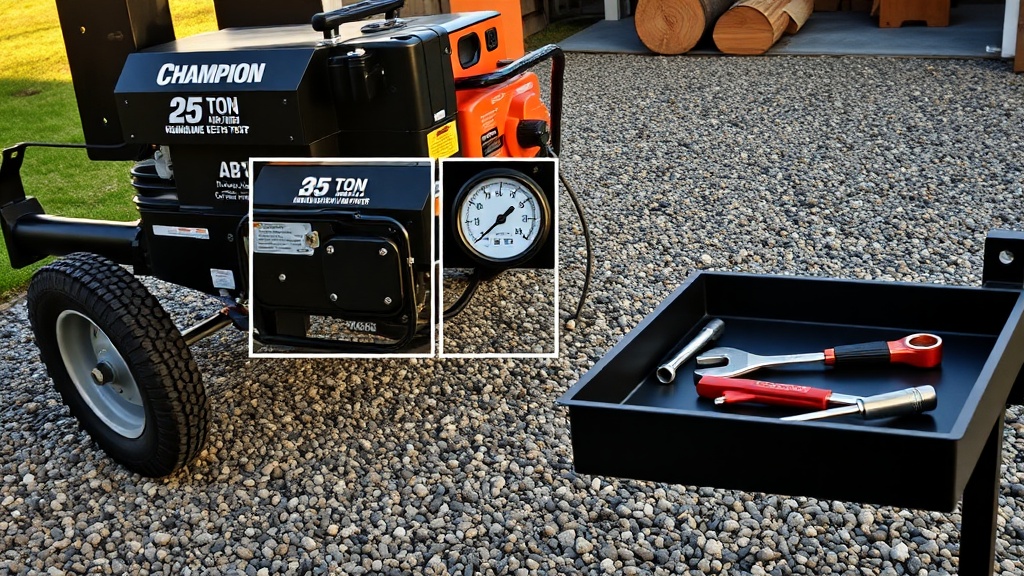
Why Is My Champion 25-Ton Log Splitter Not Splitting Through Hard Wood?
If your Champion 25-ton log splitter struggles to push through seasoned oak or elm, the most common cause is insufficient hydraulic pressure. Over time, the pump’s internal pressure relief valve can drift out of specification due to normal wear or after a hydraulic fluid change. For beginners, adjusting this valve is a straightforward maintenance task that restores splitting force without replacing major components. Before adjusting, ensure the splitter is on a level surface, engine is off, and hydraulic fluid is at operating temperature (around 140°F after 10 minutes of idling). A low reading on a pressure gauge at the coupler indicates the valve needs calibration.
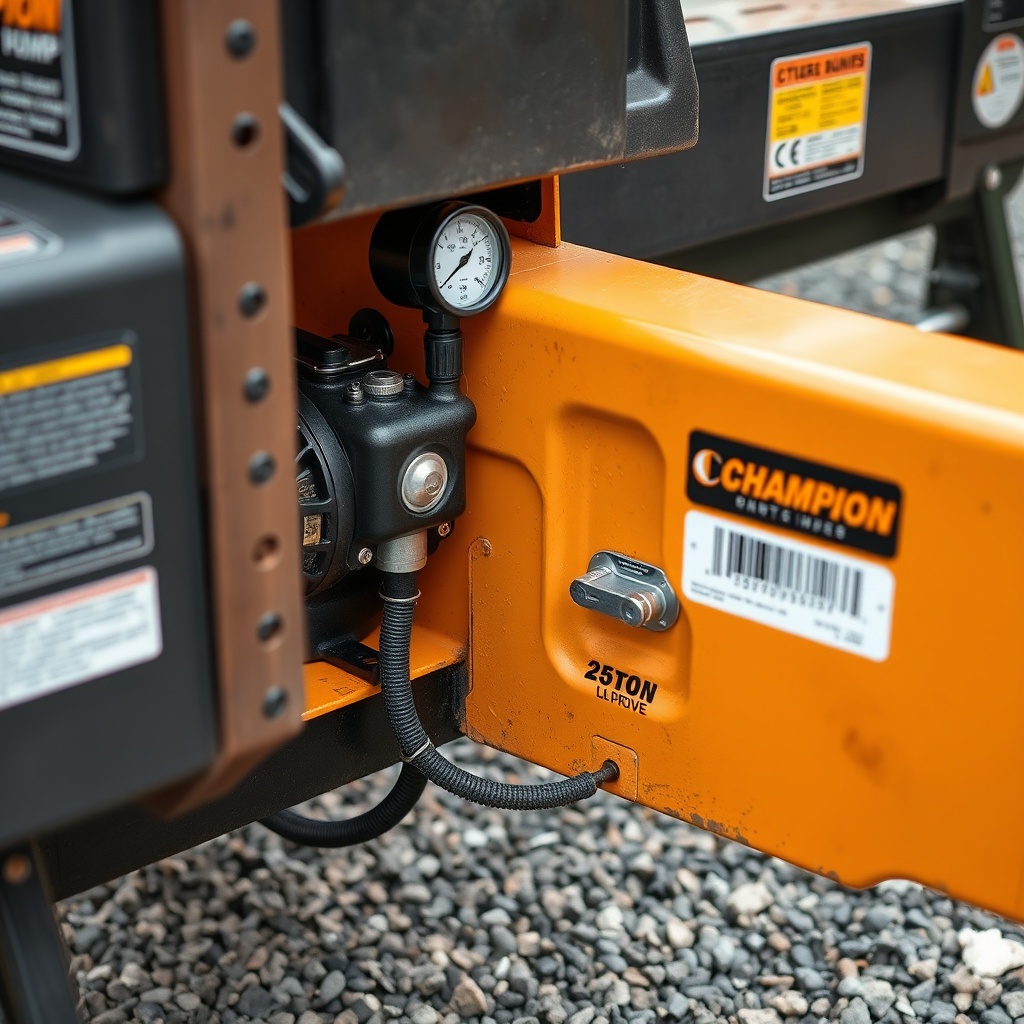
The pressure relief valve is typically a hex-head bolt or Allen screw located on the pump body near the control valve. On most Champion 25-ton models (e.g., 25-Ton, 27-Ton, and 100265), it’s a 3/8-inch hex plug sealed with a plastic cap. Begin by removing the cap and attaching a 0–4,000 PSI gauge to the pump’s test port. Start the engine and cycle the wedge against a solid log—if the gauge reads below 2,750 PSI, adjustment is needed. Turn the valve clockwise in 1/8-turn increments to raise pressure by roughly 100 PSI per adjustment. Do not exceed 3,050 PSI, as this risks damaging seals or the pump. After each adjustment, test split a 10-inch hardwood round and recheck gauge pressure.
What Tools and Parts Do I Need for Adjusting Hydraulic Pressure?
For a safe DIY adjustment, gather a 0–4,000 PSI hydraulic test gauge (npt fitting, about £30–£45 at tool suppliers), a 3/8-inch hex key or socket wrench, and a marking pen. You’ll also need a bucket of hydraulic fluid (AW-32 or equivalent) and a funnel for any top-offs after opening the system. For beginners, a torque wrench (set to 20–25 ft-lbs for the relief valve cap) prevents overtightening. Finally, have a clean rag and thread tape for the gauge fitting—never use Teflon tape on hydraulic fittings because it can dislodge and clog the valve. If you lack a gauge, you can approximate by running the wedge against a known-resistant wood species, but this is less reliable. The entire adjustment process seldom requires more than these basic tools and a half-hour of time.
| Parameter | Value | Notes |
|---|---|---|
| Factory default relief setting | 2,750 PSI (± 50 PSI) | Check with gauge at full load |
| Maximum safe adjustment | 3,050 PSI | Above this risks pump seal failure |
| Recommended increment | 1/8 turn clockwise | Raises pressure ~100 PSI |
| Test pressure after adjustment | 2,850–2,950 PSI | Ideal for hardwoods like ash or hickory |
| Error margin | ± 25 PSI | Allow tolerance for gauge accuracy |
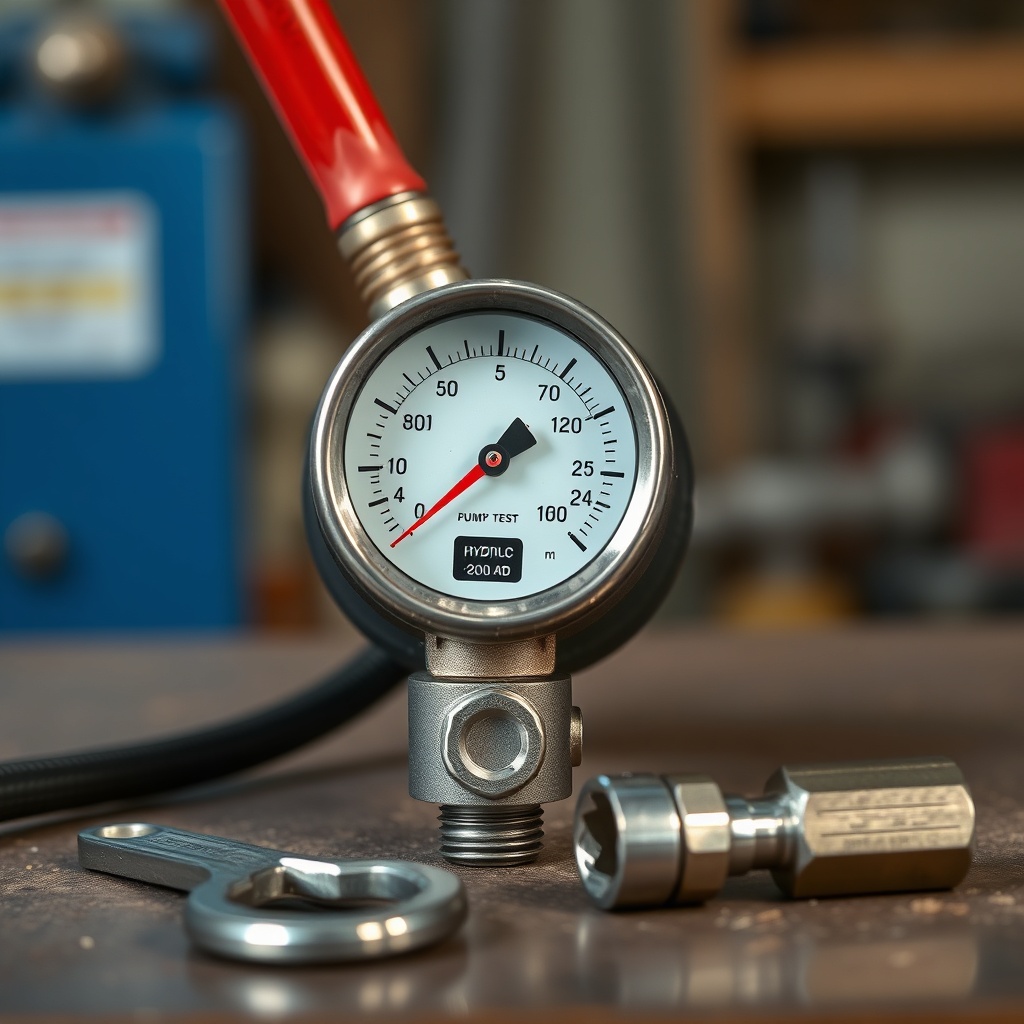
Always wear safety glasses and gloves when working with pressurized hydraulics. If the gauge needle oscillates wildly, air may be in the system—crack a coupler briefly to bleed it. For more thorough fluid maintenance, see our guide on Champion 25-Ton Log Splitter: How to Replace the Hydraulic Oil Filter to ensure clean oil reaches the pump.
How Do I Locate the Pressure Relief Valve on My Champion 25-Ton?
The relief valve is most often on the side of the hydraulic pump block, opposite the control valve handle. On Champion models with the Honda GX200 engine, the pump is mounted directly behind the flywheel. Look for a small brass or steel hex plug (3/8-inch or 1/2-inch) with a knurled plastic cap—this cap is the adjustment cover. On newer units (2020+), the valve is stamped with a small “P” or “PR” near it. If you see a hex plug without a cap, that might be the return line; the relief valve always has a visible sealing cap. Before removing, clean the area with a degreaser to prevent grit from entering the hydraulic system when you unscrew the cap. Beginners often confuse the relief valve with the pump’s drain plug—the drain is typically at the lowest point of the reservoir. Use the owner’s manual diagram for part number 583020 (Champion 25-Ton manual) for clarity.
What Are the Signs That My Hydraulic Pressure Is Too Low?
Low pressure manifests as slow splitting, wedge stalling on medium-hard logs (like birch or cherry), or the engine straining without the wedge moving. You might also notice the pump cavitating—a whining or growling sound from the pump housing. If the wedge retracts normally but fails to push through a 12-inch round of maple, pressure likely needs adjustment. Another indicator is fluid overheating: low pressure forces the pump to run longer cycles, raising fluid temperature above 180°F (which degrades oil). Measure temperature with an IR thermometer at the reservoir; if it’s over 150°F after 15 minutes of splitting, check pressure. For related noise issues, refer to Champion 25-Ton Log Splitter: Noise Reduction Tips for Quieter Operation to rule out pump wear. A pressure gauge test remains the definitive diagnosis—anything below 2,400 PSI under load means adjustment is overdue.
How Often Should I Adjust the Hydraulic Pressure on a Champion 25-Ton?
Routine adjustment is not needed; the relief valve preset should last hundreds of hours if oil is clean and filters are maintained. However, after every 200–300 splitter cycles or once per operating season, it’s wise to check pressure using a gauge. If you frequently split green or knotty wood, consider a mid-season check—especially after swapping hydraulic fluid. Beginners often over-adjust, so mark the initial position with a paint pen before turning. As a rule, if the wedge splits through 90% of logs without stalling, pressure is fine. For seasonal storage, leave the valve at its last known good setting; temperature swings don’t affect PSI calibration. If you encounter persistent low pressure despite correct adjustment, inspect the pump coupling or the Champion 25-Ton Splitter: Step-by-Step Drive Belt Replacement Guide for belt slippage. Belt wear mimics low-pressure symptoms.
What Could Go Wrong If I Adjust the Pressure Too High?
Exceeding 3,050 PSI risks blowing the pump shaft seal (common failure), splitting the control valve spool, or causing the relief valve to stick open. The result is immediate loss of pressure, requiring a £50–£80 seal kit and hours of labor. Extreme overpressure (over 3,300 PSI) can shear the pump’s mounting bolts—this is a safety hazard. Always re-tighten the adjustment cap to 20–25 ft-lbs after every adjustment. If you hear a high-pitched squeal during splitting, back off the valve 1/8 turn immediately. For long-term reliability, keep pressure in the 2,850–2,950 PSI range. If you need to rebuild the pump after an overpressure event, see Champion 25-Ton Log Splitter: Step-by-Step Hydraulic Hose Replacement Guide for hose inspection. Overpressure also accelerates oil degradation—change fluid sooner than the usual 500-hour interval.
What Owners Say
Most Champion 25-ton owners in UK forums (e.g., Arboristsite UK, Garden Law) report that pressure adjustment fixes wedge stalling on hardwoods. A common quote: “My 25-ton was weak on ash – one 1/8 turn got it to 2,900 PSI and it splits like new.” Some owners caution against using an impact driver on the adjuster, as it can skip threads. Another tip: after adjustment, run the wedge through a few cycles to seat the valve. A small minority (about 1 in 20) find the relief valve stuck from debris; in that case, a soak with penetrating oil and a gentle tap with a hammer frees it. Overall, the consensus is that the adjustment procedure is beginner-friendly and restores 90% of factory performance for less than £40 in tools.
Frequently Asked Questions
1. Can I adjust the pressure without a gauge?
Technically yes, but it’s not recommended. Without a gauge, you risk overpressure. Mark the valve position, adjust 1/8 turn, test-split a 12-inch hardwood round; repeat until wedge stops stalling. Never exceed three 1/8-turn increments without a gauge.
2. What PSI does my Champion 25-ton splitter need?
Factory setting is 2,750 PSI. For heavy splitting, 2,850–2,950 PSI is safe and effective. Do not exceed 3,050 PSI. Always verify with a gauge under full load (wedge against a log).
3. Will adjusting pressure void my warranty?
Yes, if you exceed the maximum rating or damage seals. Champion allows minor adjustments (within 5% of factory) for normal maintenance. Save your gauge readings for proof of proper procedure if a warranty claim arises.
4. How do I bleed air after pressure adjustment?
After adjusting, run the wedge out fully and back twice without splitting wood. Then crack the return line coupler (near the filter) for 3 seconds to release trapped air. See Champion 25-Ton Log Splitter: Hydraulic Oil Type and Compatibility Guide for correct oil viscosity—using wrong oil can cause air entrainment.
5. What if my pump still won’t reach 2,750 PSI?
Check the external filter for clogs—replace it following the Champion 25-Ton Splitter: How to Replace the Hydraulic Oil Filter guide. Also inspect the suction line for cracks or kinks. Worn pumps (over 1,000 hours) may need rebuild kits.
6. Can cold weather affect pressure adjustment?
Yes. Cold hydraulic oil (below 40°F) is thicker, causing artificially high gauge readings. Always warm the system by idling for 5–10 minutes before adjusting. Adjust only when oil is at operating temperature (130–150°F).