
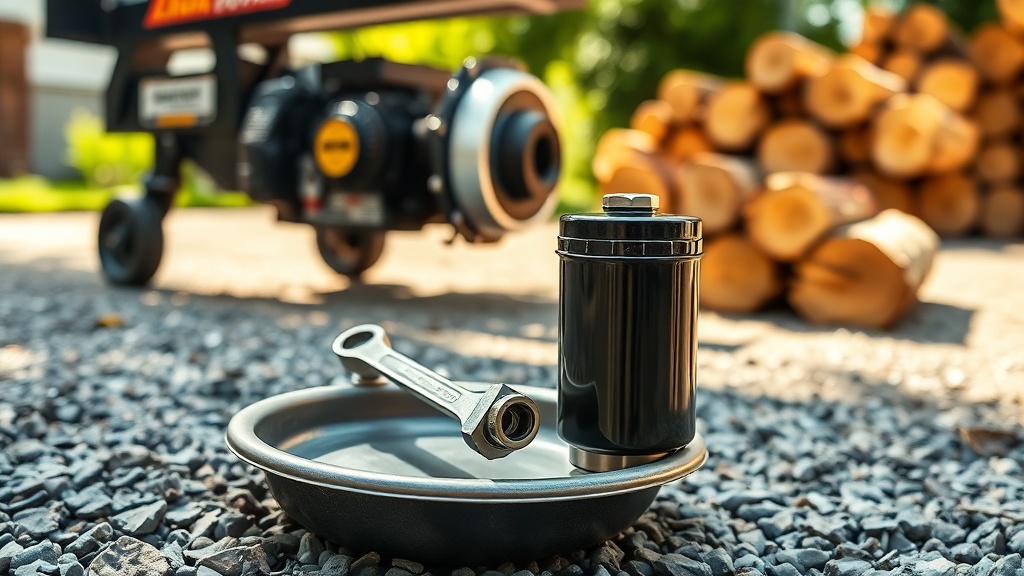
Champion 25-Ton Log Splitter: How to Replace the Hydraulic Oil Filter
When your Champion 25-Ton log splitter struggles to cycle or builds pressure slowly, a clogged hydraulic oil filter is often the culprit. Replacing it every 50–100 operating hours—or at the first sign of sluggish performance—keeps the hydraulic system clean and extends pump life. This guide covers the complete filter swap, including part specifications, step-by-step procedure, and post-replacement checks.
What Tools and Parts Do I Need for the Filter Replacement?
You’ll need a few basic tools and the correct replacement filter. Using the wrong micron rating can restrict oil flow or allow contamination to circulate, so always match Champion’s spec. Here’s your shopping list:
- Replacement hydraulic oil filter – Champion part number 100099 (also compatible with WIX 51410 or NAPA 1410). Cost: £12–£18.
- Hydraulic oil (AW-32 or ISO 32) – Approximately 1.5–2 litres to top up after the filter change. Cost: £10–£15 per 5-litre jug.
- Oil drain pan – At least 3-litre capacity to catch spillage.
- 17 mm wrench or socket – For the filter housing bolt.
- Filter wrench – To loosen the spin-on cartridge.
- Clean rags and nitrile gloves – Keep the work area clean.
- Torque wrench (optional) – For precise tightening of the filter housing nut (25–30 Nm).
How Do I Prepare the Splitter for a Safe Filter Change?
Safety is critical when working on hydraulic systems. The oil can be scalding hot, and pressurised lines can spray fluid. Follow these steps to prep the machine:
- Shut off the engine and remove the spark plug wire or disconnect the battery (if electric-start).
- Let the splitter cool for at least 30–45 minutes after use. Check the oil sump temperature with a glove—it should be warm but not hot.
- Relieve hydraulic pressure by activating the control lever in both directions with the engine off. This cycles any trapped pressure back to the tank.
- Position the splitter on level ground and chock the wheels if it’s a towable model.
- Place the drain pan under the filter area – the filter is mounted near the pump, usually on the left side of the engine as you face the wedge.
Now the machine is safe to work on without risk of hot oil spray or accidental engine start.
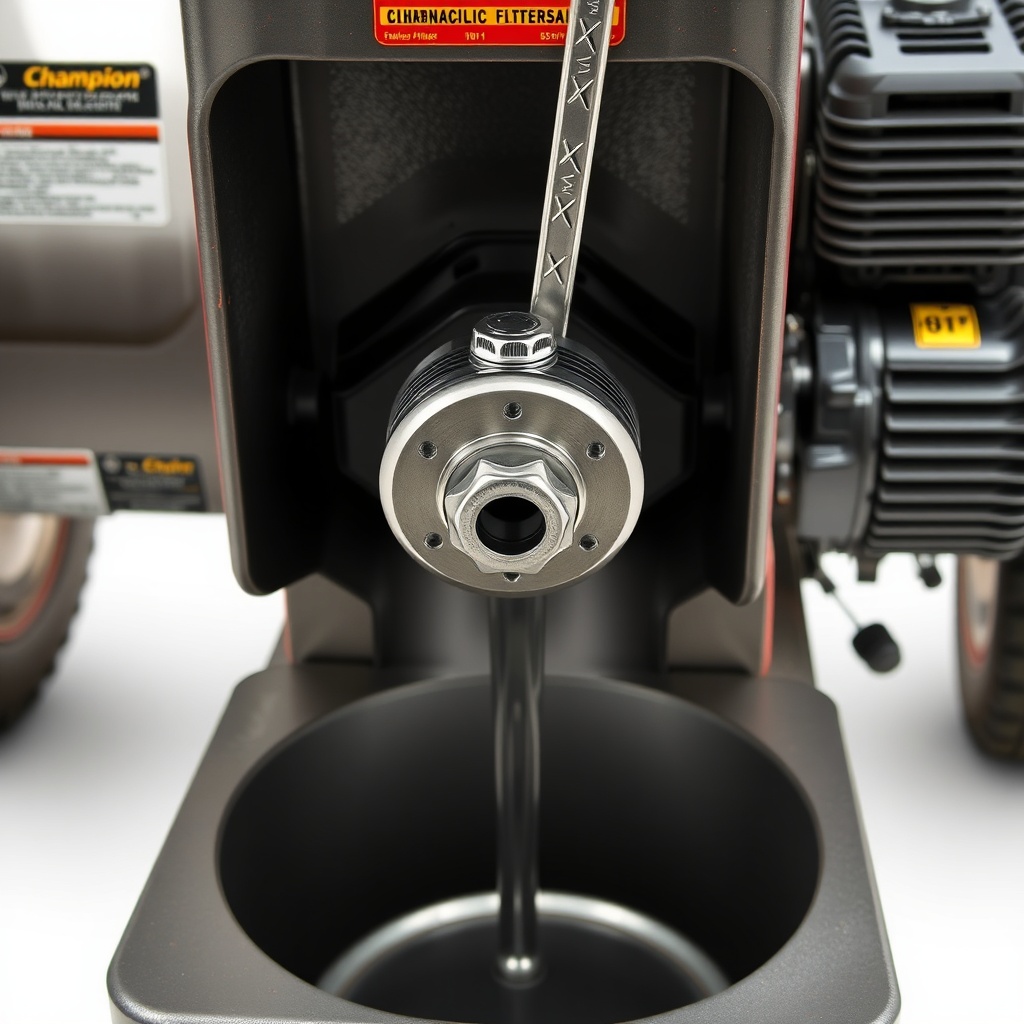
What Is the Exact Procedure for Removing and Replacing the Filter?
With the splitter prepped, follow these steps to remove the old filter and install the new one. Work methodically to avoid introducing debris into the system.
Step 1 – Drain the Hydraulic Oil
Locate the drain plug at the bottom of the hydraulic tank (usually a hexagonal bolt). Remove it with a 17 mm wrench and let the oil flow into the pan. Full drainage takes 3–5 minutes. Reinstall the plug and tighten to 25–30 Nm once the flow stops.
Step 2 – Remove the Old Filter
Use a filter wrench to unscrew the spin-on cartridge counter-clockwise. If it’s stuck, tap the rim lightly with a rubber mallet. Expect some residual oil to spill—keep the pan under the filter. Clean the mounting surface with a rag to remove dirt or old gasket residue.
Step 3 – Prepare the New Filter
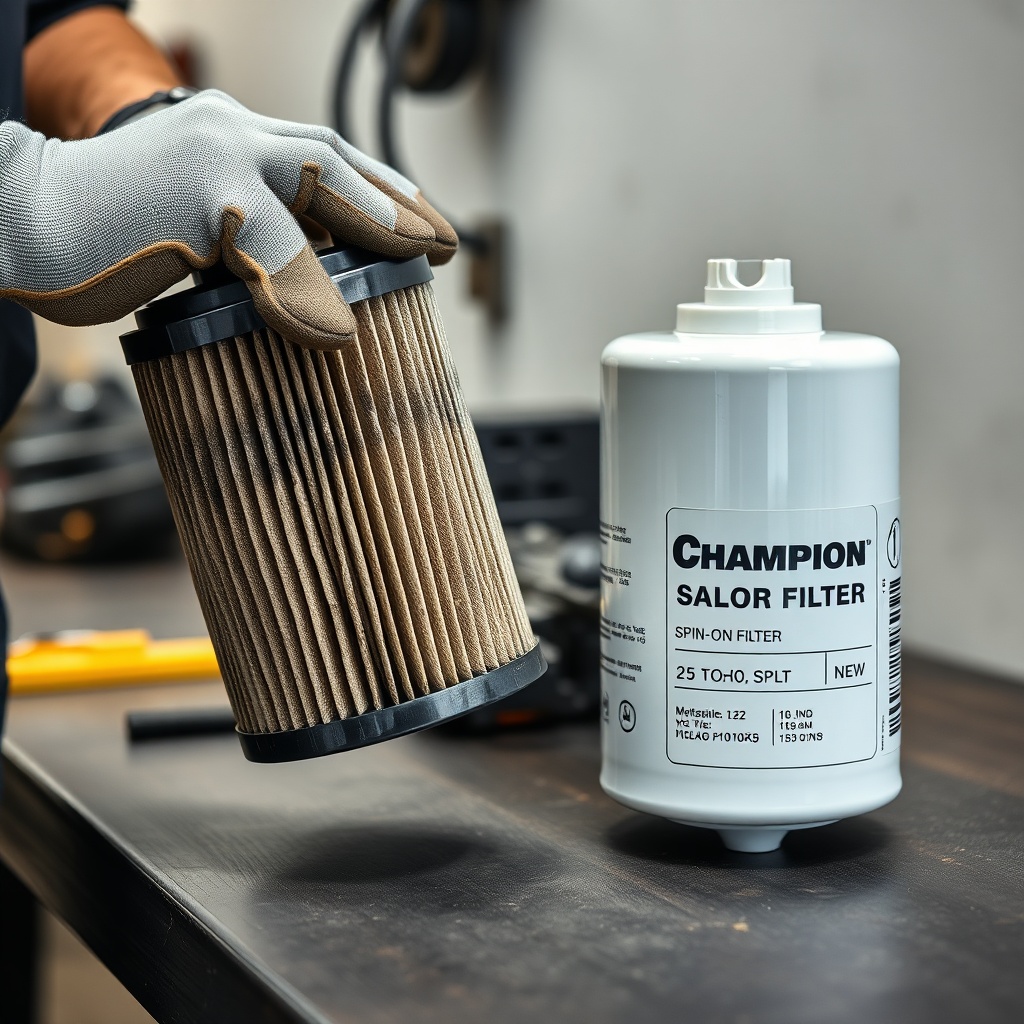
Take the new Champion 25-Ton hydraulic filter and rub a thin layer of fresh oil on the rubber gasket with your finger. This lubricates the seal so it doesn’t tear during tightening. Do not pre-fill the filter with oil—that can introduce air pockets and cause cavitation.
Step 4 – Install the New Filter
Screw the new filter onto the mounting base by hand until the gasket contacts the surface. Then tighten by hand an additional 3/4 to 1 full turn. Over-tightening can strip threads or distort the gasket. If you use a torque wrench, the spec is 12–15 Nm for the filter canister itself.
Step 5 – Refill the Hydraulic System
Remove the oil fill cap (usually on top of the tank) and pour in fresh AW-32 hydraulic oil until the level reaches the “Cold” mark on the dipstick. Start with 1.5 litres, then check the dipstick. Add small increments until the level is correct. Do not overfill—expansion during operation can blow seals.
How Do I Test the System After the Filter Change?
Before putting the splitter to work, you need to purge air from the system and confirm proper pressure. Follow these steps:
- Reconnect the spark plug wire or battery.
- Start the engine and let it idle (no throttle) for 30 seconds. Pull the hydraulic control lever to extend the wedge slowly—this pushes air bubbles through the return line back to the tank.
- Cycle the wedge full-stroke three to five times at low RPM. Listen for cavitation (a rattling or whining sound). If you hear it, stop immediately and let the splitter sit for two minutes to allow air to rise, then repeat the slow cycling.
- Once the sound is smooth, increase the engine throttle to full operating speed (usually 3,600 RPM). Run the splitter through 10–15 full cycles. Check for leaks around the filter housing and drain plug.
- Stop the engine, wait 1 minute, then check the oil level dipstick. Top up if needed with small amounts of AW-32 oil.
If the wedge moves sluggishly or the engine bogs down, the filter may be incorrectly installed or there’s still air in the system. In that case, refer to our Champion 25-Ton Splitter: DIY Hydraulic Pump Replacement Guide for deeper diagnostics.
What Are the Symptoms of a Clogged Hydraulic Filter on the Champion 25-Ton?
Knowing when to change the filter—before it causes damage—saves you time and money. Here are the telltale signs:
| Symptom | Severity Level | What Happens Next |
|---|---|---|
| Wedge moves slower than usual, especially under load | Moderate | Filter is partially blocked; change within 5 operating hours. |
| Hydraulic pump makes a high-pitched whine or groan | High | Filter is severely clogged; cavitation risk. Stop use immediately. |
| Oil feels gritty or looks milky/cloudy | Critical | Contamination present; change filter and consider a full oil flush. |
| Splitter reaches full pressure but doesn’t hold during a split | High | Filter bypass valve may be stuck open; replace filter and inspect valve. |
| Oil temperature rises above 75°C (170°F) quickly | Moderate | Restricted flow; replace filter and check oil level. |
If you notice any of these symptoms, don’t delay the filter swap. Prolonged operation with a clogged filter accelerates wear on the hydraulic pump—an expensive repair best avoided. For preventive care, see our Champion 25-Ton Log Splitter: Proactive Maintenance Schedule to Extend Life.
What Owners Say About the Filter Change Process
Real-world feedback from Champion 25-Ton owners highlights a few common themes. Many praise the filter’s easy access compared to some competitor machines, but a few note that the housing bolt can seize if over-tightened by a previous owner. One longtime user reports, “I change the filter every two tanks of gas (about 8 hours of heavy splitting) and have never had a pump failure in four years. The whole swap takes 20 minutes.” Others recommend applying anti-seize compound to the drain plug threads to prevent galling. A consistent tip: “Always keep a spare filter in your toolbox—when you start noticing slower ram speed, you’re already on borrowed time.” For those who’ve upgraded aftermarket components, pairing a high-flow filter with a pressure adjustment (see Champion 25-Ton Splitter: How to Adjust Hydraulic Pressure for Better Performance) yields noticeable splitting speed gains.
Frequently Asked Questions
Q1: How often should I change the hydraulic oil filter on my Champion 25-Ton splitter?
A1: Champion recommends changing the filter every 50 operating hours or once per season, whichever comes first. If you split heavy, knotty wood or work in dusty conditions, reduce that interval to 25–30 hours.
Q2: Can I use a generic automotive oil filter instead of the Champion-specific part?
A2: No. Generic automotive filters often have wrong thread pitch, micron rating, or bypass valve setting. Always use Champion part 100099 or its cross-references (WIX 51410, NAPA 1410). Using the wrong filter can lead to inadequate filtration or oil starvation.
Q3: What happens if I don’t replace the hydraulic oil filter?
A3: A clogged filter restricts oil flow, causing the pump to work harder. This generates excess heat, accelerates wear, and can lead to cavitation and pump failure. In severe cases, the filter bypass valve opens, letting unfiltered debris circulate and damage valves and cylinders.
Q4: Do I need to change the hydraulic oil at the same time as the filter?
A4: It’s not mandatory, but it’s best practice. Hydraulic oil degrades over time and collects moisture and particulates. If your oil looks dark, smells burnt, or feels gritty, drain it completely and refill with fresh AW-32 oil (about 3.5 litres total system capacity) when swapping the filter.
Q5: How do I prime the hydraulic system after a filter change?
A5: Priming isn’t usually necessary on Champion 25-Ton splitters because the pump is self-priming. However, to remove air pockets, run the engine at idle for 30 seconds, then cycle the wedge slowly three times. Check for smooth operation and top off oil if the level drops after the first few cycles.
Q6: Can a dirty filter cause the engine to stall under load?
A6: Indirectly, yes. A severely clogged filter forces the hydraulic system to bypass high-pressure oil back to the tank, which can create excessive backpressure. This loads the engine, causing it to bog or stall under heavy splitting. Replacing the filter often restores normal operation. If stalling persists, check the fuel system using our Champion 25-Ton Splitter: Fuel System Cleaning Guide for Better Performance.