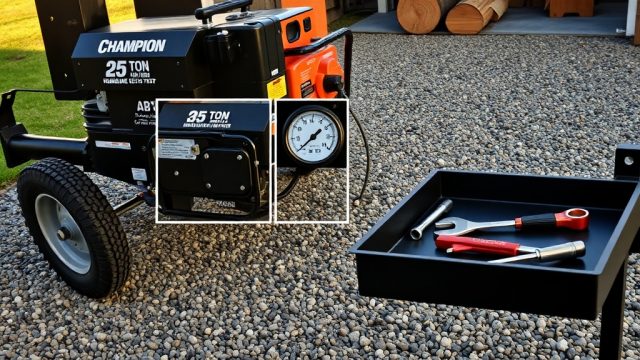
Why Does My Champion 25-Ton Log Splitter Engine Need Regular Carbon Cleaning?
Carbon buildup on your Champion 25-Ton log splitter’s engine—specifically on the piston, cylinder head, and valves—is a natural byproduct of combustion. Over time, this soot-like residue hardens, reducing compression and causing hard starting, rough idling, and decreased splitting power. Regular carbon cleaning restores engine efficiency, extends motor life, and ensures consistent hydraulic output for your toughest splitting jobs.
Neglecting carbon deposits can lead to more serious issues like valve sticking or pre-ignition (engine knocking). A cycle of drying out fuel and running the engine under heavy load accelerates accumulation. Performing a thorough cleaning every 25-50 hours of operation, or at the start of each splitting season, prevents these problems and keeps your Champion 25-Ton Log Splitter: Step-by-Step Hydraulic Hose Replacement Guide working smoothly.
What Are the Key Signs That Carbon Buildup Is Affecting Performance?
Recognizing the symptoms of carbon accumulation early saves time and money. The most common indicators include:
- Hard Starting: Requires multiple pulls on the recoil starter, especially after the engine has cooled. Carbon on the spark plug or piston crown reduces compression.
- Rough Idling: The engine hunts or surges at low RPMs due to carbon disrupting the air-fuel mixture in the combustion chamber.
- Reduced Splitting Force: You notice less pop when the wedge meets the log, indicating the engine can’t sustain full power under load.
- Excessive Exhaust Smoke: Black or gray smoke suggests unburned fuel passing through clogged combustion chambers.
- Increased Fuel Consumption: You’re refueling more often than usual because the engine runs richer to compensate for lost power.
If you experience any of these, especially after prolonged use, it’s time to inspect the engine’s combustion system. For hydraulic issues unrelated to engine power, reference our Champion 25-Ton Log Splitter: Hydraulic Oil Type and Compatibility Guide.
Which Cleaning Methods Work Best for the Champion 25-Ton Engine?
There are three primary approaches to carbon cleaning, each suited for different deposit severity levels:
| Method | Severity Level | Time Required | Cost Estimate (USD) | Effectiveness |
|---|---|---|---|---|
| Fuel Additive (e.g., Sea Foam, Techron) | Light (yellow/brown deposits) | 1-2 hours (run through fuel system) | $10-$20 | Moderate; prevents buildup |
| Manual Cleaning (spark plug removal + intake spray) | Moderate (black, crusty deposits) | 30-60 minutes | $15 (for cleaner + new plug) | High; removes thick layers |
| Full Decarbonization (cylinder head removal) | Severe (hard, flakey deposits on valves) | 2-4 hours | $50-$100 (gasket, carb cleaner) | Very High; restores compression |
Tip: Start with the fuel additive method quarterly. If you already have rough running, skip straight to manual cleaning. Only attempt full decarbonization if manual cleaning fails to restore performance, as it requires removing the cylinder head and valve train.
For engine issues that persist after cleaning, check the drive components. See our Champion 25-Ton Splitter: Step-by-Step Drive Belt Replacement Guide for belt wear diagnosis.
How Do I Perform a Manual Carbon Cleaning on the Champion 25-Ton Engine?
Manual cleaning is the most accessible method for owners comfortable with basic tools. Follow this step-by-step process:
Materials Needed:
– New spark plug (Champion RC12YC or equivalent)
– Carburetor/intake cleaner spray (non-chlorinated)
– Soft-bristled brass brush
– Torque wrench (for spark plug)
– Safety glasses and gloves
Step 1: Prepare the Engine
Ensure the log splitter is on level ground, engine cool, and the spark plug wire removed. Disconnect the fuel line and drain carburetor (if possible) to prevent flooding.
Step 2: Remove Spark Plug
Use a spark plug socket to extract the old plug. Examine the electrode—it should be light tan or gray. If covered in black soot, carbon cleaning is overdue. Set aside for disposal.
Step 3: Clean the Combustion Chamber
Reach into the spark plug hole with a brass brush and gently scrub the piston crown and cylinder head ceiling. Turn the engine over (by hand, slowly) to bring the piston to top dead center and access more surface area. Use an air compressor to blow out loose debris.
Step 4: Apply Intake Cleaner
With the air filter removed, spray a generous amount of carburetor cleaner into the throttle bore while the engine is off. Let it soak for 15 minutes to dissolve deposits on the intake valves. Crank the engine (with fuel off) to expel loosened carbon through the exhaust.
Step 5: Install New Spark Plug
Be careful not to overtighten—torque to 18-22 ft-lb (check manual). Reconnect spark plug wire.
Step 6: Test Operation
Reconnect fuel, start the engine, and idle for 5 minutes. Listen for smooth operation. If vibration persists, the carbon may be deeper in the valve guides, requiring professional decarbonization.
What Preventative Measures Reduce Carbon Buildup Over Time?
Stopping carbon before it starts is always easier than removing it. Implement these habits to keep your Champion 25-Ton engine clean:
- Use Premium Fuel: High-octane gasoline (91+ octane) burns cleaner and contains fewer additives that leave residue. Avoid ethanol blends above E10 if possible.
- Add Fuel Stabilizer: Treat every tank with a stabilizer that includes a carbon-cleaner additive. This is critical if the splitter sits unused for weeks.
- Run Engine Hot: Short, cold runs produce the most carbon. Always let the engine warm up for 2-3 minutes before heavy splitting, and run it until the cooling fins are warm to the touch.
- Change Oil Frequently: Old oil with sludge contaminates the combustion chamber. Replace oil every 25 hours of use or annually.
- Clean the Air Filter: A dirty filter causes the engine to run rich, increasing carbon formation. Inspect and clean it before each use.
For noise or vibration that may indicate carbon-related compression issues, read our Champion 25-Ton Log Splitter: Noise Reduction Tips for Quieter Operation for supplementary fixes.
How Does Carbon Cleaning Differ From Hydraulic System Maintenance?
Carbon cleaning focuses solely on the engine’s combustion chamber, while hydraulic system maintenance addresses the pump, oil, and hoses. A clean engine won’t fix hydraulic leaks or low pressure, and vice versa. Use this comparison to differentiate symptoms:
- Carbon Issue Symptoms: Hard starting, rough idle, power loss under load, smoke.
- Hydraulic Issue Symptoms: Slow wedge speed, inability to split, oil leaks, whining from pump, no movement.
If you notice hydraulic fluid on the ground or the splitter won’t cycle after a clean engine startup, the problem isn’t carbon. Refer to accurate pressure settings in our Champion 25-Ton Log Splitter: Hydraulic Pressure Adjustment for Beginners guide.
Always check both systems independently. A well-maintained engine with a neglected hydraulic system still results in poor performance.
What Do Owners Say About Carbon Cleaning on Their Champion 25-Ton?
Owner experiences with carbon cleaning on the Champion 25-Ton are largely positive, with most noting immediate improvements in starting and power. Common feedback includes:
- “Night and day difference.” Many report that a simple fuel additive treatment eliminated 90% of starting issues after a season of heavy use.
- “Save the heavy cleaning for when it’s really needed.” Several owners caution against removing the cylinder head unless absolutely necessary, citing gasket replacement complexity.
- “Combine with spark plug change.” Nearly unanimous advice: replace the spark plug during manual cleaning for best results.
- “Watch for over-cleaning.” A few users warn that aggressive spray cleaning can wash lubricant from cylinder walls, causing accelerated wear. Always follow with brief light-load operation to reseat rings.
- “Not a cure-all.” Owners emphasize that carbon cleaning doesn’t fix worn-out hydraulic seals or low pump pressure. It’s part of a balanced maintenance routine.
For persistent hydraulic issues after cleaning, many recommend our Champion 25-Ton Splitter: Hydraulic Pressure Adjustment for Beginners article for DIY troubleshooting.
Frequently Asked Questions
Q1: How often should I clean carbon from my Champion 25-Ton engine?
A: Perform a fuel additive cleaning every 25-50 hours of operation, or at least once per splitting season. If you notice hard starting or roughness before that interval, clean manually.
Q2: Can I use ordinary carburetor cleaner for carbon removal?
A: Yes, but choose a non-chlorinated formula designed for 4-stroke engines. Chlorinated cleaners can damage oxygen sensors or catalytic converters if equipped. Avoid spraying into the carburetor while the engine is running; that can cause a fire.
Q3: Will carbon cleaning fix a spark plug that’s fouled?
A: Cleaning the plug may temporarily help, but replacing it is more reliable. A fouled plug often indicates underlying carbon buildup that will foul the new plug again if the engine isn’t cleaned.
Q4: My engine still starts hard after cleaning. What else could be wrong?
A: Check the valve clearance, compression (using a gauge), and fuel system for stale gas or clogged jets. Also inspect the air filter and automatic choke operation. Deep carbon on valve stems may require professional removal.
Q5: Are there risks to using heavy fuel additives every month?
A: Yes. Overuse can thin the crankcase oil or damage rubber fuel lines. Follow manufacturer dosing instructions. Many owners use a stabilizer like Sta-Bil or Sea Foam at double strength only for the first treatment, then reduce to standard dose.
Q6: Does carbon buildup affect hydraulic pressure?
A: Indirectly, yes. Reduced engine RPM from carbon deposits lowers pump output, resulting in slower wedge speed and reduced splitting force. However, if your hydraulic pressure read is below 2,500 PSI on the gauge, the issue is in the system, not the engine. See our Champion 25-Ton Log Splitter: Hydraulic Pressure Adjustment for Beginners for pump tuning.