
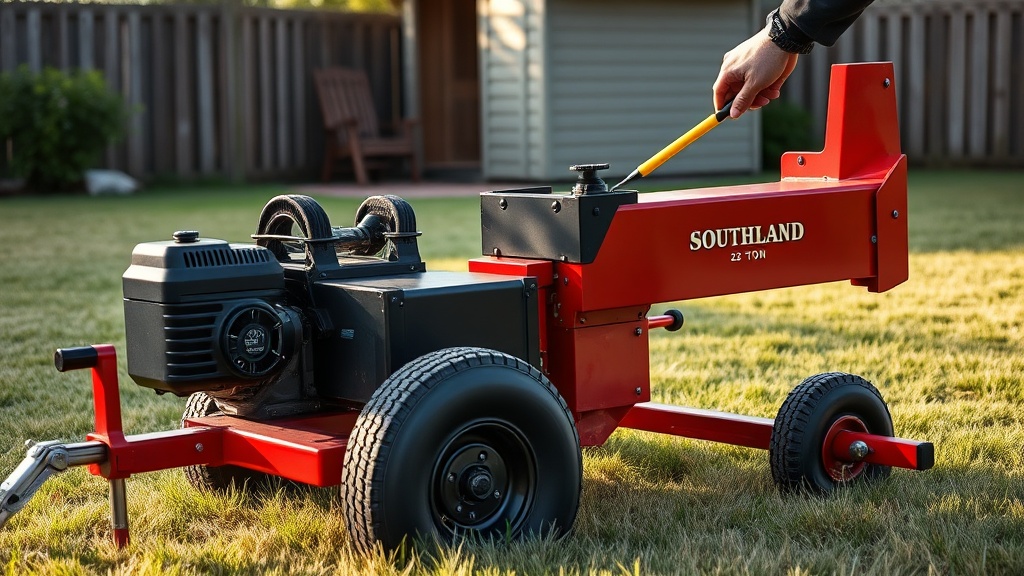
Why Checking and Topping Up Hydraulic Fluid on the Southland 22-Ton Log Splitter Is Critical
Neglecting the hydraulic fluid level in your Southland 22-Ton log splitter is like running a chainsaw without bar oil—it will lead to premature wear, overheating, and eventual failure. The reservoir is small, typically holding only 3.5 to 4 gallons, so even a one-quart deficit can cause the pump to cavitate, scoring the internal components. This guide walks you through the complete inspection and top-up procedure, helping you avoid costly repairs like a full hydraulic pump replacement or cylinder reseal.
How Do I Locate the Hydraulic Fluid Reservoir on the Southland 22-Ton?
The reservoir is the rectangular or cylindrical metal tank mounted directly above the pump and below the engine or motor on the Southland 22-Ton. On most vertical models, it sits on the left side (when facing the control valve). Look for a dipstick or a breather cap with a small oil-level window. On horizontal units, the reservoir is often integrated into the frame near the tow hitch. Clean the area around the filler cap with a rag before opening to prevent dirt from falling into the system.
What Type of Hydraulic Fluid Does the Southland 22-Ton Require?
- Recommended viscosity: ISO 32 (AW-32) for ambient temperatures between 40°F and 90°F; ISO 46 for warmer climates (above 90°F).
- Fluid spec: Standard anti-wear hydraulic oil (AW-32 or AW-46). Do not use motor oil, transmission fluid, or universal tractor fluid unless the manual explicitly permits it.
- Capacity: Roughly 3.5 to 4 gallons (13 to 15 liters) for most Southland 22-Ton units. Always verify with your specific model’s dipstick markings.
If you are performing a full hydraulic seal replacement, you will need to drain and refill the system entirely—that job requires about 4.5 gallons after the cylinder has been fully extended and retracted.
What Is the Step-by-Step Process for Checking the Fluid Level?
Always park the splitter on level ground and retract the wedge to the fully retracted (closed) position. The fluid must be cold or at ambient temperature for an accurate reading. Here is the exact procedure:
- Locate the dipstick or viewing window. If it has a dipstick, unscrew it and wipe it clean.
- Insert the dipstick back into the filler neck without screwing it in (just rest it on the opening).
- Pull it out and read the level. The fluid should reach the “Cold” mark (usually a crosshatch or line).
- If using a sight glass, the fluid level should be between the upper and lower marks when the cylinder is fully retracted.
- If it’s low, proceed to top up.
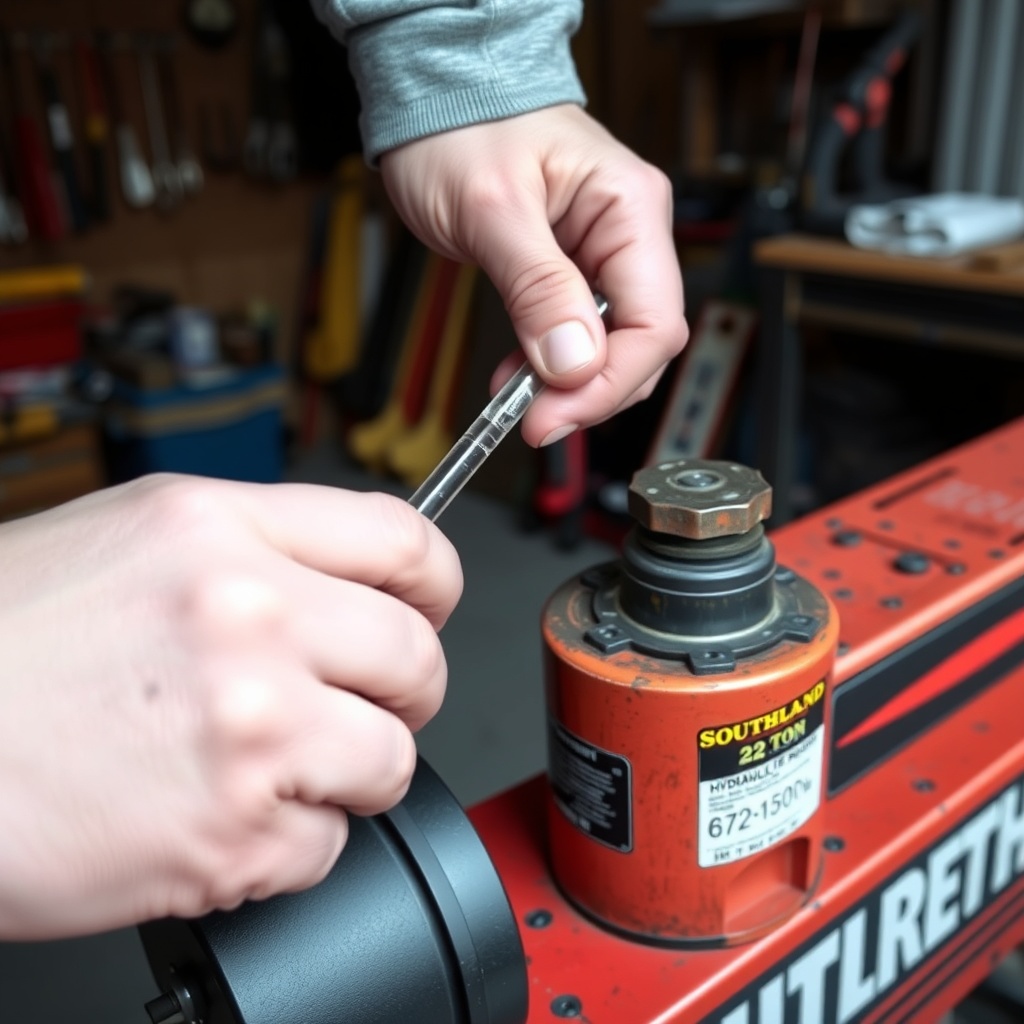
How Do I Safely Top Up the Hydraulic Fluid?
Topping up is straightforward but requires caution because hot hydraulic fluid can burn. Let the splitter cool for at least 10 minutes after operation. You will need a clean funnel and the correct fluid.
- Remove the filler cap or dipstick assembly.
- Insert a clean funnel into the filler neck.
- Slowly pour the recommended oil (AW-32 or AW-46) until the level reaches the “Cold” mark on the dipstick or the midpoint of the sight glass.
- Do not overfill—an overfilled reservoir can cause foaming and overflow when the fluid heats up.
- Replace the cap or dipstick and tighten securely.
- Run the splitter for a few cycles, then recheck the level with the wedge retracted. Add small amounts as needed.
Common mistake: Filling the reservoir while the wedge is extended. This will cause the level to read high and then drop below safe limits when the cylinder retracts. Always retract the wedge first.
What Are the Signs of Low or Contaminated Hydraulic Fluid?
| Issue | Severity | Visible Indicator | Action Required |
|---|---|---|---|
| Low fluid level (1 quart below) | Moderate | Oil streaks on dipstick below “Cold” mark; wedge moves slowly | Top up immediately and inspect for leaks |
| Low fluid level (1+ gallon below) | Severe | Pump whining; wedge stalls under load; erratic operation | Stop use, investigate leaks (see cylinder replacement guide) |
| Contaminated fluid (water) | Critical | Milky or cloudy oil; rust particles in filter | Drain, flush, replace fluid and filter |
| Contaminated fluid (dirt/debris) | High | Gritty feel when rubbing oil between fingers; black specks | Drain, replace fluid and filter, inspect pump for wear |
| Aerated fluid (foam) | Moderate to High | Bubbles in reservoir; sponge-like wedge movement | Check for air leaks in suction line; top up if low |
Foam and milky oil are the two most dangerous conditions. Foam indicates air entering the system—often from a loose suction line or a low fluid level. Milky oil means water has infiltrated, which can happen if the breather cap is damaged or if the splitter was stored in the rain without cover. If you see either, stop immediately and consult winter storage and antifreeze tips to prevent recurrence.
When Should I Flush and Replace the Entire Hydraulic Fluid?
Most manufacturers recommend a complete hydraulic fluid change every 200 to 300 hours of operation, or every two seasons for weekend users. However, if any of the following occur, flush the system sooner:
- The oil smells burnt (indicating thermal breakdown).
- It appears dark brown or black (carbon deposit contamination).
- The splitter has been sitting for more than 12 months without use (moisture can condense inside).
- You performed a pump replacement—always flush old fluid to remove debris from the failed pump.
To flush, drain the reservoir by removing the drain plug at its lowest point. Extend and retract the cylinder several times to push fluid from the lines. Refill with fresh AW-32 or AW-46, run the splitter for 10 minutes to circulate, then check the filter (if equipped). If the filter is not serviceable, replace it. This is also a good time to inspect the suction strainer for debris.
What Owners Say
Southland 22-Ton owners on various forums and review sites consistently emphasize that low fluid is the most common cause of poor performance, often mistaken for a mechanical failure. One user reported that after a full season, their unit began hesitating under heavy loads—the culprit was exactly 0.75 quarts low. After topping up, the splitter returned to full splitting force. Another owner noted that using universal tractor fluid (UTF) instead of AW-32 caused foaming and erratic movement; switching to proper hydraulic oil solved it immediately. Several owners also caution against overtightening the filler cap, as it can cause pressure buildup and rupture the dipstick O-ring. The takeaway: check fluid level at the start of each use day, and always use the recommended spec.
Frequently Asked Questions
Can I use 10W-30 motor oil in the Southland 22-Ton hydraulic system?
No. Motor oil lacks the anti-foam and anti-wear additives required for hydraulic systems. It will cause excessive wear and foaming. Use only AW-32 or AW-46 hydraulic fluid.
How do I know if my hydraulic fluid is foaming?
Foam appears as a frothy, bubbly layer on top of the fluid in the reservoir. The wedge will feel “spongy” or move erratically. Stop the engine and check the suction line for air leaks.
What should I do if I accidentally overfill the reservoir?
Overfilling can cause fluid to blow out the breather cap during operation. Remove the filler cap and use a suction bulb or clean syringe to remove excess until the level falls to the Cold mark.
Can I mix different brands of hydraulic fluid?
Yes, as long as both are AW-32 or AW-46 with the same viscosity grade. Mixing different viscosities (e.g., AW-32 and AW-46) is not recommended, as it will alter the overall viscosity.
How often should I change the hydraulic filter?
If your Southland 22-Ton has a replaceable filter, change it every 100 hours or at every fluid change. Some models use a suction strainer that should be cleaned annually.
Why does my Southland 22-Ton splitter lose hydraulic fluid overnight?
This indicates a leak. Check the cylinder rod seals (evidenced by wetness on the rod), hose connections, and the pump shaft seal. A slow leak may require cylinder seal replacement or tightening of fittings.
Regular hydraulic fluid checks are the simplest and most effective way to extend the life of your Southland 22-Ton log splitter. Investing five minutes before each use can save hundreds in pump and cylinder repairs down the line.