
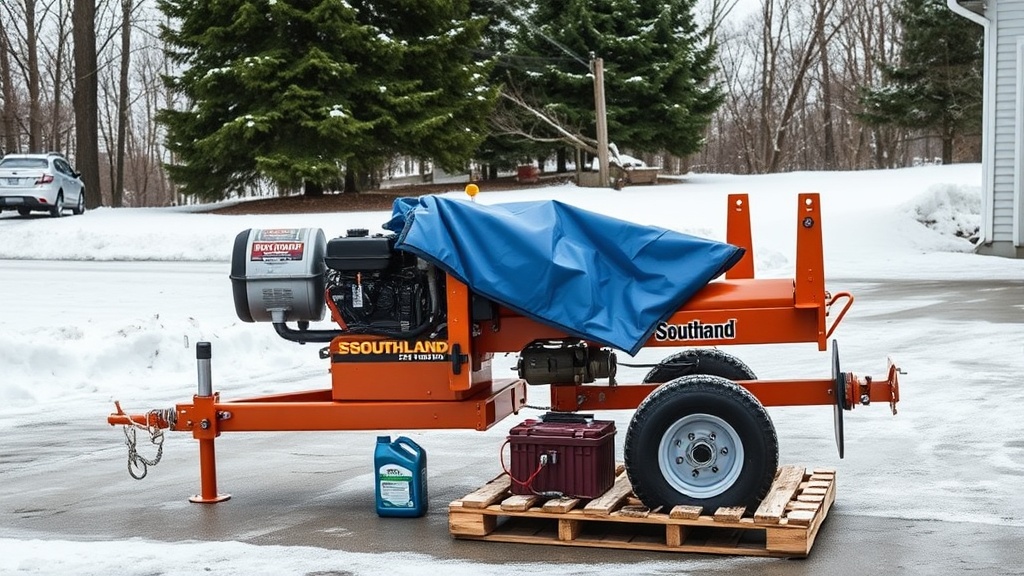
Introduction: Why Winter Storage Matters for the Southland 22-Ton Log Splitter
When the cold months arrive, your Southland 22-Ton log splitter deserves more than just a tarp thrown over it. The hydraulic system, engine, and pump components are vulnerable to freezing temperatures, condensation, and corrosion when left unattended. Proper winter storage and antifreeze maintenance can prevent costly repairs and extend the life of your splitter by several seasons. In this guide, you will learn specific steps to protect your Southland 22-Ton from winter damage, including fluid selection, battery care, and seal preservation.
How Does Cold Weather Affect the Southland 22-Ton Hydraulic System?
The Southland 22-Ton uses hydraulic fluid to transfer power from the pump to the cylinder. Standard hydraulic oil thickens as temperatures drop below freezing, reducing flow and increasing strain on the pump and seals. Water condensation inside the reservoir can freeze, causing blockages or cracking the tank. Additionally, rubber seals and O-rings become brittle, leading to leaks when the system warms up again. The engine’s fuel system can also suffer from gelling if standard gasoline is left untreated. The graph below illustrates the viscosity increase of typical 32-weight hydraulic oil at various temperatures.

To combat these issues, you must drain or add antifreeze (winter-grade hydraulic fluid) before the first frost. If you plan to store the splitter for more than two months, consider How to Replace Hydraulic Seals on Southland 22-Ton Splitter as a proactive measure, as seals that have been exposed to extreme cold may need replacement upon spring startup.
What Is the Correct Hydraulic Fluid for Winter Use?
Your Southland 22-Ton requires hydraulic fluid with a viscosity of ISO 32 or ISO 46 for most conditions. For winter storage and operation in temperatures below 0°C (32°F), switch to a multi-grade hydraulic oil rated for cold weather, such as AW-32 with a pour point below -30°C (-22°F). Avoid using automotive antifreeze (ethylene glycol) in the hydraulic system—it will damage seals and reduce lubrication. The table below compares common fluid options.
| Fluid Type | Viscosity (cSt at 40°C) | Pour Point | Winter Suitability | Cost per 5 Litres (AUD) |
|---|---|---|---|---|
| Standard ISO 32 Hydraulic Oil | 32 | -15°C (5°F) | Marginal below -10°C | $45 |
| Cold-Weather AW-32 Hydraulic Oil | 32 | -35°C (-31°F) | Excellent to -30°C | $65 |
| Universal Tractor Hydraulic Fluid | 46 | -25°C (-13°F) | Good for mild winters | $55 |
| Automotive Antifreeze (5% mix) | N/A | -40°C (-40°F) | Not recommended | $20 but damages seals |
Always check the owner’s manual for capacity—the Southland 22-Ton holds about 7.6 litres (2 US gallons) of hydraulic fluid. When draining, use a clean container and dispose of old oil at a recycling centre. Top up with cold-weather fluid and run the splitter for 2–3 minutes to circulate the new oil through the pump and cylinder.
How to Drain and Flush the Hydraulic System Correctly
Before winter sets in, draining the existing hydraulic fluid is a crucial step. Begin by positioning the splitter on level ground and engaging the cylinder to relieve pressure. Locate the drain plug on the underside of the reservoir—it is typically a ⅜-inch bolt. Remove the plug and allow the fluid to fully drain into a catch pan. If you notice any metal shavings or cloudy fluid (indicating water contamination), flush the system with a few litres of clean, inexpensive hydraulic oil before adding fresh winter-grade fluid. After draining, replace the drain plug and refill with 7.6 litres of cold-weather AW-32. Cycle the cylinder full-stroke three times to purge air from the lines. This is also an excellent time to inspect the hydraulic cylinder for leaks—visit How to Replace the Hydraulic Cylinder on a Southland 22-Ton Log Splitter if you notice any weeping from the rod or seals.
Should You Add Fuel Stabilizer and Change Engine Oil for Winter?
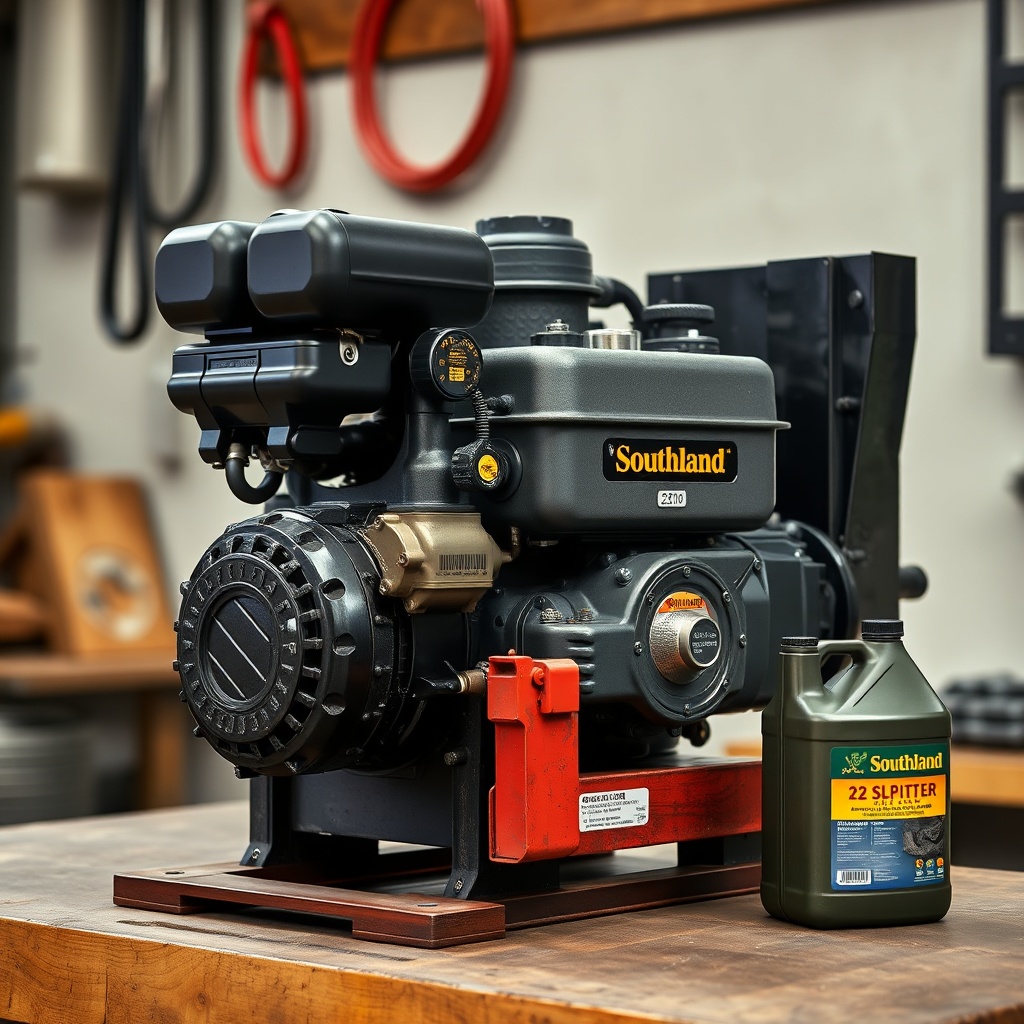
Yes, especially if your Southland 22-Ton uses a petrol engine (typically a 7–9 HP horizontal shaft engine). For storage longer than 30 days, add a fuel stabilizer (such as STA-BIL) to the tank at the recommended ratio (e.g., 30 mL per 10 litres of fuel). Run the engine for five minutes to circulate the stabilised fuel through the carburettor. Then, either drain the carburettor bowl or turn off the fuel valve and run the engine until it stalls to prevent gumming. Change the engine oil to a 10W-30 winter grade; this ensures easy starting in spring. The oil capacity is about 0.6 litres for most Southland engines. Dispose of old oil properly. Do not forget to remove the spark plug and spray a small amount of fogging oil into the cylinder to protect the cylinder walls from rust.
How to Protect the Battery and Electrical Components
If your Southland 22-Ton has an electric start (optional on some models), remove the battery and store it in a dry, temperature-stable location (ideally above 0°C). A lead-acid battery loses about 35% of its capacity at 0°C. Charge it to 100% before storage, then connect a trickle charger monthly. For the electric starter solenoid and wiring, apply dielectric grease to terminals to prevent corrosion. If you plan to convert your splitter to all-electric operation in the future (for indoor or quiet use), read Southland 22-Ton Splitter: Step-by-Step Guide to Electric Conversion for a permanent solution. For standard models, cover the control box and ignition switch with a plastic bag and tie it shut to keep out moisture.
What Owners Say About Winter Storage Practices
Users on Australian and North American forums consistently report that following a winterisation routine prevents springtime headaches. One owner in Tasmania noted that after using cold-weather hydraulic fluid for three seasons, his seals remained supple and he avoided any leaks. Another owner in Canada shared that adding fuel stabilizer and running the carburettor dry saved him from cleaning a clogged carburettor every spring. Several users recommend storing the splitter on a wooden pallet to avoid ground moisture wicking into the steel frame. A common complaint is rust on the wedge and beam—apply a light coat of WD-40 or boiled linseed oil to bare metal surfaces before storage. The consensus is that a 30-minute winter prep saves at least 2 hours of repair work in spring.
Frequently Asked Questions
Q1: Can I use standard engine antifreeze in my Southland 22-Ton hydraulic system?
No. Engine antifreeze (ethylene glycol) corrodes rubber seals and reduces hydraulic lubrication. Always use cold-weather hydraulic oil designed for hydraulic systems.
Q2: How often should I change the hydraulic fluid for winter storage?
At least once per year before winter. If you run the splitter less than 20 hours per season, every two years may suffice, but a yearly change ensures no water accumulation.
Q3: What is the best way to store the splitter if I have no shed?
Cover it with a heavy-duty, breathable canvas tarp that allows condensation to evaporate. Avoid plastic tarps, which trap moisture. Raise the splitter off the ground with concrete blocks or a wooden skid.
Q4: Do I need to remove the hydraulic hoses for storage?
No, but inspect them for cracks. Slight UV damage can be treated with rubber protectant. If hoses have external cracks deeper than 1 mm, replace them before storage.
Q5: My splitter won’t start after winter. What did I do wrong?
Most common issues are stale fuel (not stabilised), a weak battery, or water in the hydraulic system. Drain the fuel and clean the carburettor, charge the battery overnight, and cycle the hydraulic system to expel any water-laden oil.
Q6: Does the hydraulic cylinder need special winter grease on the rod?
Apply a thin coat of lithium-based grease to the cylinder rod before storage to prevent rust. Wipe it clean before the first use in spring to avoid attracting dirt.