
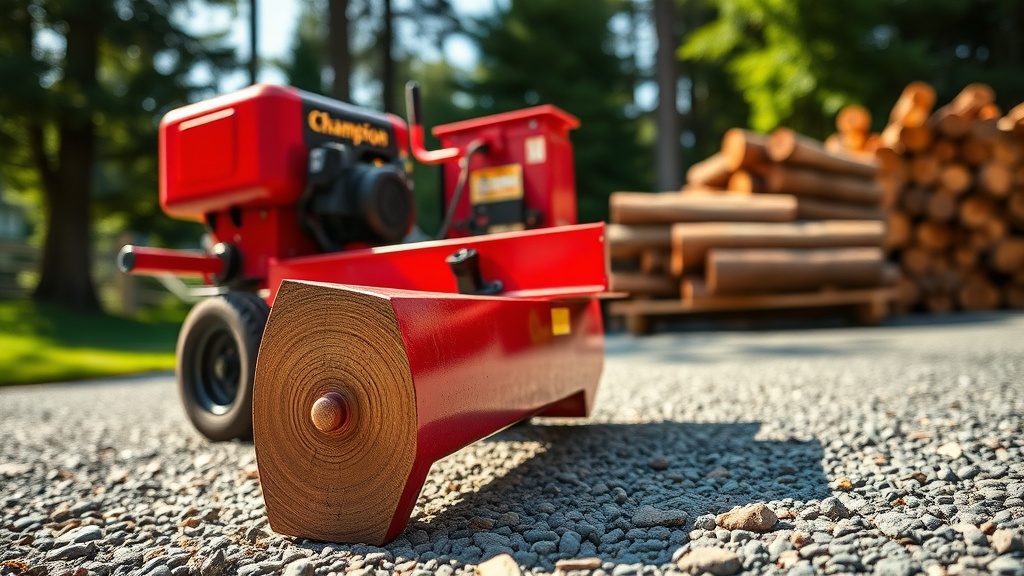
Why Does the Wedge on a Champion 25‑Ton Splitter Dull Over Time?
Even the toughest Champion 25‑Ton log splitter wedge—made from hardened alloy steel—will eventually lose its edge after repeated impact with gritty bark, frozen wood, and the odd rock or nail. Dulling isn’t a sign of failure; it’s normal wear. What matters is that a dull wedge forces your hydraulic pump to work harder, reducing splitting speed and increasing fuel consumption. You might also notice more “squibs” (partial splits) or logs that stick halfway through the cycle. Sharpening restores a narrow cutting angle that parts fibres cleanly rather than crushing them.
Before you reach for a grinder, understand that the stock wedge on most Champion 25‑Ton models (like the 25‑Ton Horizontal/Vertical #100258) has a factory bevel angle of roughly 25–30 degrees. Sharpening beyond that—say, down to 20 degrees—makes the wedge cut faster but also makes it more prone to chipping against hard knots. Factory spec strikes a balance between longevity and bite.
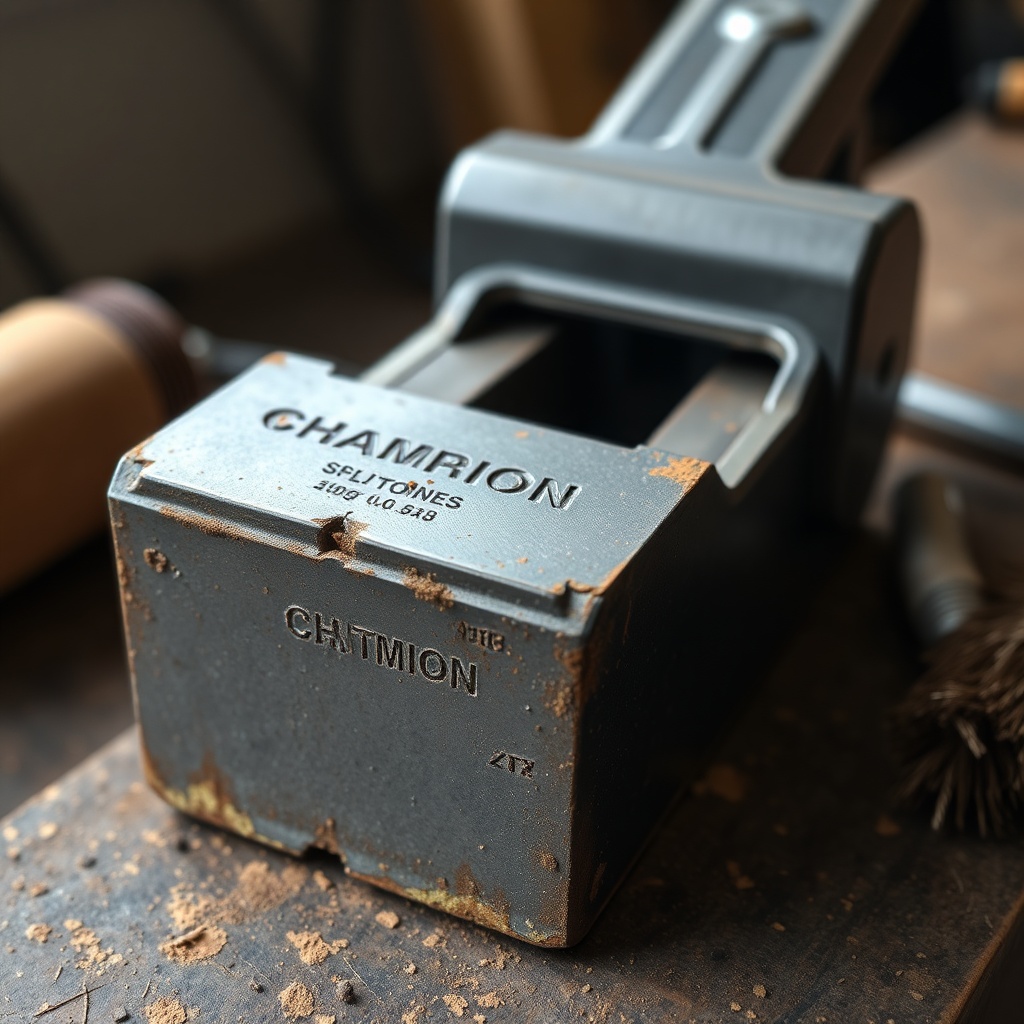
What Tools Do I Need to Sharpen a Champion 25‑Ton Wedge?
You can sharpen in the field with hand tools or at the bench with power tools. Here’s what you need:
- Angle grinder (4.5‑inch) with a 40‑grit ceramic flap disc—fastest for removing nicks and re‑establishing bevel. Avoid grinding wheels; they can overheat the steel and soften the edge.
- Mill bastard file (10‑inch or longer) for touch‑ups between heavy grinds. A file is gentler and lets you feel the edge.
- Flat sharpening stone (800–1000 grit) or fine diamond plate to deburr and polish.
- Scraper or wire brush to remove sap, rust, and dirt from the wedge face and beam.
- Wrench set (typically 10 mm and 13 mm) to unbolt the wedge from the beam—recommended for bench work.
- Protective gear: gloves, safety glasses, and a dust mask (grinding produces fine metallic dust).
If you plan to keep the wedge on the splitter, you’ll also need a log splitter support stand or cradles to safely access the entire edge without the machine tipping.
How Do I Sharpen the Wedge on a Champion 25‑Ton—Step by Step?
Follow this procedure for a clean, safe edge restore:
- Step 1: Safety first. Disconnect the spark plug (see our spark plug replacement guide for the correct grounding procedure). Chock the wheels if it’s a towable model.
- Step 2: Remove the wedge. Unbolt the two or four fasteners holding it to the I‑beam. On newer models (post‑2020), the wedge is bolted through a threaded plate. Note washer placement for reassembly.
- Step 3: Clean the wedge. Use a brass brush and mineral spirits to remove sap and tar. Dry thoroughly.
- Step 4: Establish the bevel. Clamp the wedge in a bench vise (jaw protectors prevent marring). With a flap disc on an angle grinder, work from the heel of the bevel to the tip, maintaining a consistent 25–30° angle. Use light pressure; let the disc do the cutting. Move in one direction along the edge—no back‑and‑forth.
- Step 5: Finish with file and stone. After grinding, pass a mill file over the edge to smooth grind marks. Then run a fine stone along the edge a few times to remove the burr (wire edge). A sharp wedge should scrape your thumbnail without slipping.
- Step 6: Reinstall. Apply a thin layer of anti‑seize to the bolts (prevents corrosion in the threaded holes). Torque to manufacturer spec—typically 25–30 ft‑lb for M8 bolts; check your manual.
Pro tip: Never grind a “V” groove into the wedge tip. The wedge should have a continuous convex arc from the centre to the wings. Grinding a notch only creates weak points.
When Should I Sharpen vs. Replace the Wedge?
Not every edge issue requires sharpening. Use this severity table to decide:
| Condition | Visual Cue | Action | Estimated Time |
|---|---|---|---|
| Light dullness | Edge still has a visible line, no chips. Splits slowly on softwoods. | File & stone touch‑up | 15–20 minutes |
| Moderate wear | Edge is rounded, minor nicks (< 1 mm deep). Snags on bark. | Flap disc grind + file | 30–45 minutes |
| Heavy damage | Multiple chips (> 2 mm deep), rolled edge, or cracks. | Flap disc deep grind OR replace if base metal thinned. | 1–2 hours grind; 30 min replace |
| Cracked wedge | Visible hairline crack extending from edge into body. | Replace immediately—cracks propagate under hydraulic shock. | 30–45 minutes (swap) |
If you find the wedge is bent or the mounting holes are elongated, replacement is often cheaper than a machine shop repair. Genuine Champion replacement wedges run about £45–£70 (≈ $55–$85 USD) depending on model. Aftermarket wedges from brands like Oregon or Powerhorse may fit but check bolt pattern—Champion uses a proprietary 4‑hole layout on some 25‑Ton units.
For a cracked wedge, don’t attempt welding unless you’re a certified fabricator; heat distortion can misalign the wedge with the beam and cause binding during the split cycle. If you’re already considering a pump replacement, a fresh wedge is a smart pairing.
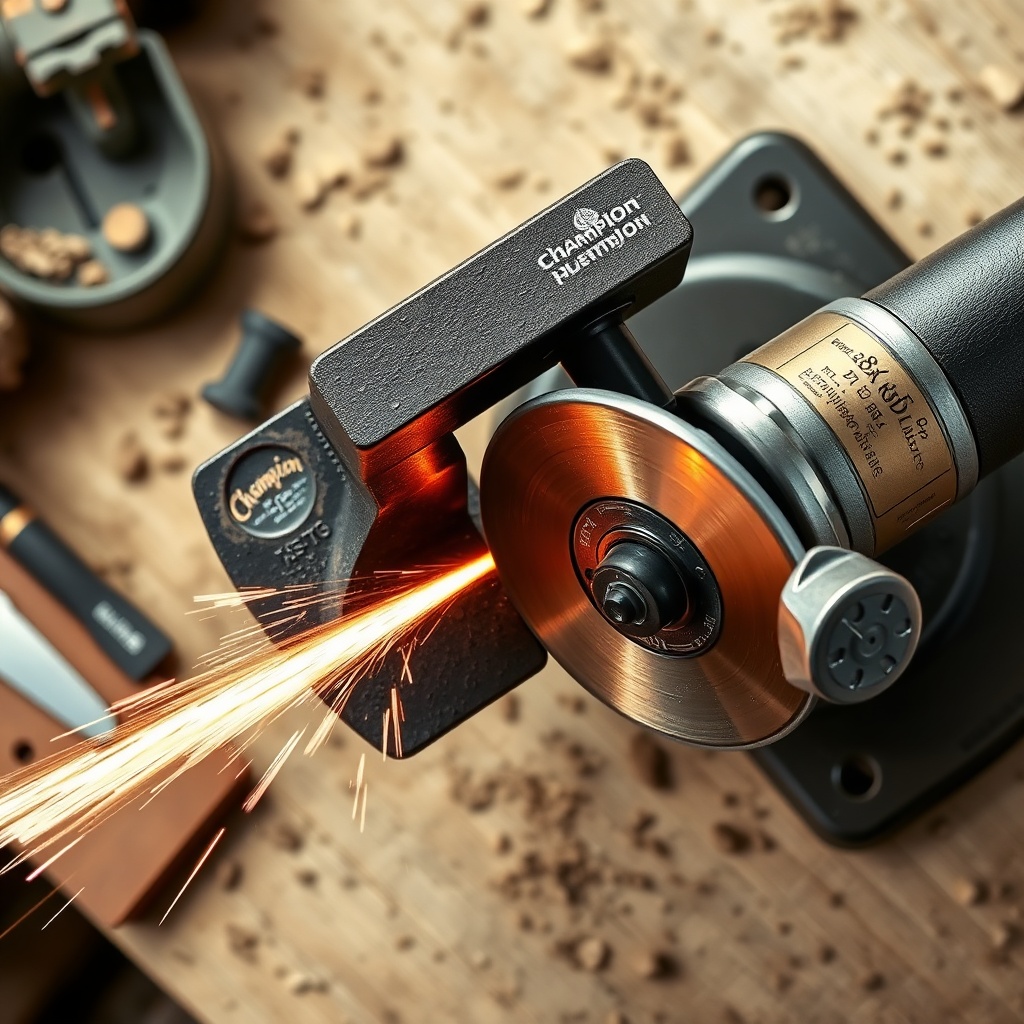
What Owners Say About Sharpening Their Champion 25‑Ton Wedge
Across forums and review aggregators, owner feedback is consistent: the wedge holds an edge longer than budget brands, but the factory edge is “okay, not great.” Many report that after one good sharpening with a flap disc, splitting speed improves by 20–30%. One longtime user on a DIY splitter forum noted, “I used to fight with stringy elm—after putting a 25° bevel on it, the splitter chews through like butter.”
Negative feedback centres on the wedge’s tendency to develop small chips when splitting frozen oak or ash—something a file touch‑up fixes in minutes. Others warn against using a bench grinder with a stone wheel: “It turned the edge blue in seconds—softened it to the point the wedge rolled on the next log.” Overall, owners advise investing in a quality file (Nicholson or Pferd) and learning hand‑sharpening for quick field touch‑ups. For major re‑edging, they prefer a flap disc over grinding wheels.
If you’re storing the machine over winter, a sharp wedge is more resistant to rust because water beads on a smooth edge. Combine that with proper winter storage and antifreeze tips to keep everything in top shape until next season.
How Does Wedge Sharpness Affect Hydraulic System Performance?
It’s a direct relationship: a dull wedge forces the hydraulic pump to work at higher pressure to push through wood fibres that haven’t been cleanly cut. That extra resistance increases hydraulic fluid temperature—every 10°C rise above 60°C reduces pump seal life. Over a season, a dull wedge can cause the pump to cycle longer, wasting fuel and accelerating wear on the control valve and cylinder seals.
Sharpening helps maintain optimal system pressure. If you’ve noticed the wedge needing to “push harder” or the engine lugging on softwoods like poplar, start with the edge before adjusting anything else. It’s often the cheapest fix. For deeper hydraulic issues—like a pressure drop that persists with a sharp wedge—consult our pressure adjustment guide to dial in your system.
Also keep in mind: a wedge that’s too sharp (under 20°) can dig into the beam’s slide surface if chips force the wedge sideways. That can damage the beam or wedge mounting. Stick to the 25–30° range for a safe balance.
Frequently Asked Questions
- Can I sharpen the wedge without removing it from the splitter?
Yes, but it’s messy. Use a flap disc on a 4.5‑inch grinder while the wedge is in the horizontal position. Cover the beam slide area with a tarp to catch grit. You’ll get a less consistent bevel than on a bench, but it works for quick touch‑ups. - How often should I sharpen the Champion 25‑Ton wedge?
Depends on wood type and volume. For occasional use (2–3 cords/year), sharpen once at the start of the season. For heavy use (10+ cords/year), check after every 20–30 hours of splitting. Sap‑heavy woods like pine dull faster than oak. - Will a sharp wedge damage my hydraulic cylinder?
No. A sharp wedge reduces resistance, so the cylinder moves easier. The only risk is if you oversharpen to a thin tip that chips, but that doesn’t damage the cylinder—just the wedge itself. - What’s the best lubricant to use after sharpening to prevent rust?
Apply a light coat of food‑grade mineral oil or WD‑40 Specialist Corrosion Inhibitor. Avoid heavy greases—they attract dust and form a grinding paste that accelerates dulling. - Can I hand‑file a badly chipped wedge?
For chips deeper than 1.5 mm, a file alone will take hours. Use a flap disc to flatten the edge first, then finish with a file. If the wedge is cracked, file only for temporary use; replace as soon as possible. - Does wedge sharpness affect the fuel economy of a Champion 25‑Ton?
Yes. A dull wedge adds 10–15% more load to the engine, especially in the final third of the split. That extra load increases fuel consumption by roughly 0.3–0.5 litres per cord (about £0.40–£0.70 per cord at current UK fuel prices). Sharpening pays for itself quickly.