
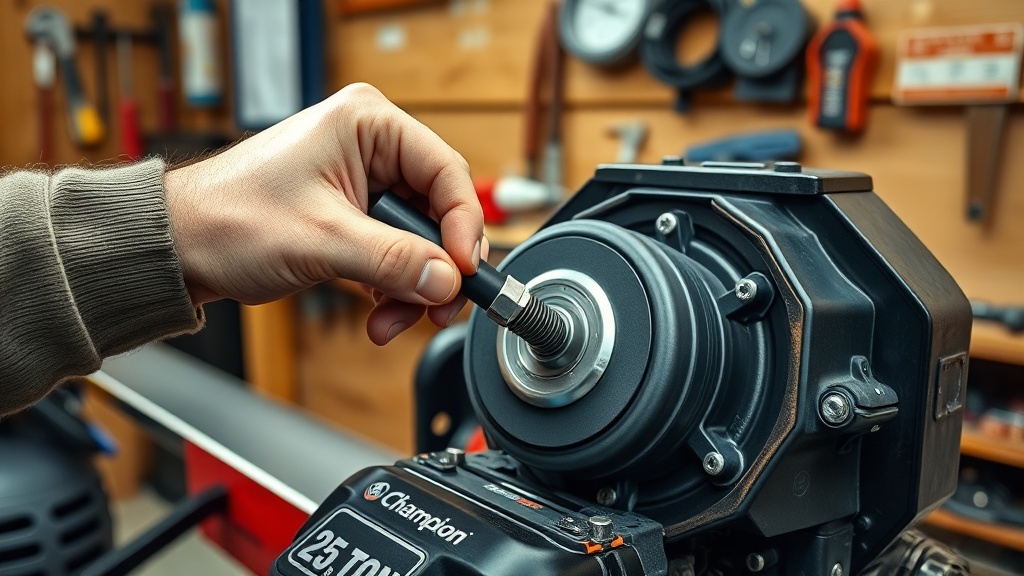
Why Does the Champion 25-Ton Need a Spark Plug Replacement?
Regular spark plug maintenance is crucial for the Champion 25-Ton log splitter’s reliable operation. Over time, spark plugs can become fouled with carbon deposits, worn electrodes, or cracked insulators, leading to inconsistent starting, rough idling, or reduced splitting performance. A fresh spark plug ensures a consistent spark, efficient fuel combustion, and prevents unburned fuel from damaging the engine. This guide provides a complete, step-by-step walkthrough for replacing the spark plug on your Champion 25-Ton, helping you maintain peak performance and extend the life of your splitter.
What Tools and Parts Do I Need?
Before starting, gather the following items to ensure a smooth replacement process. Most are common household tools, but the spark plug socket is essential.
- Replacement spark plug: Use a Champion RC12YC or equivalent (e.g., NGK BPR6ES). Double-check your owner’s manual for the exact model.
- Spark plug socket (5/8-inch): This deep-well socket prevents damage to the porcelain.
- Ratchet wrench with extension: A 3/8-inch drive works well.
- Feeler gauge: For checking and setting the spark plug gap.
- Torque wrench: Recommended for accurate tightening (15-20 ft-lb typical).
- Clean rag or shop towel: For cleaning around the plug area.
- Wire brush or compressed air: To remove debris from the cylinder head.
- Anti-seize compound (optional): A thin layer on threads helps prevent seizing.
Using the correct spark plug is critical for reliable cold weather starting in your Champion 25-Ton Log Splitter: Cold Weather Starting and Performance Tips.
How Do I Locate the Spark Plug on My Champion 25-Ton?
The spark plug is located on the engine’s cylinder head, typically on the side of the engine behind a rubber boot. On the Champion 25-Ton (models like 100418 or 100519), the engine is a horizontal-shaft design, often a 196cc or 208cc OHV engine from Champion’s own line or a generic Chinese-made engine. Follow these steps to find it:
- Safety first: Ensure the engine is cold and the ignition key is removed. Disconnect the spark plug wire to prevent accidental starting.
- Locate the engine: The engine sits on the left side of the splitter (when facing the wedge). The spark plug is on the top or side of the cylinder head, covered by a thick rubber boot.
- Remove the boot: Gently pull the boot straight off the plug. Do not yank the wire itself—grip the boot firmly and twist slightly if stuck. Clean any debris from around the plug area with compressed air or a brush.
- Visual inspection: Look for a small metal electrode at the tip. The plug is typically recessed slightly into the cylinder head.
For optimal performance, ensure you are working in a well-ventilated area away from flammable materials, as discussed in our Champion 25-Ton Splitter: Essential Safety Tips for Beginners.
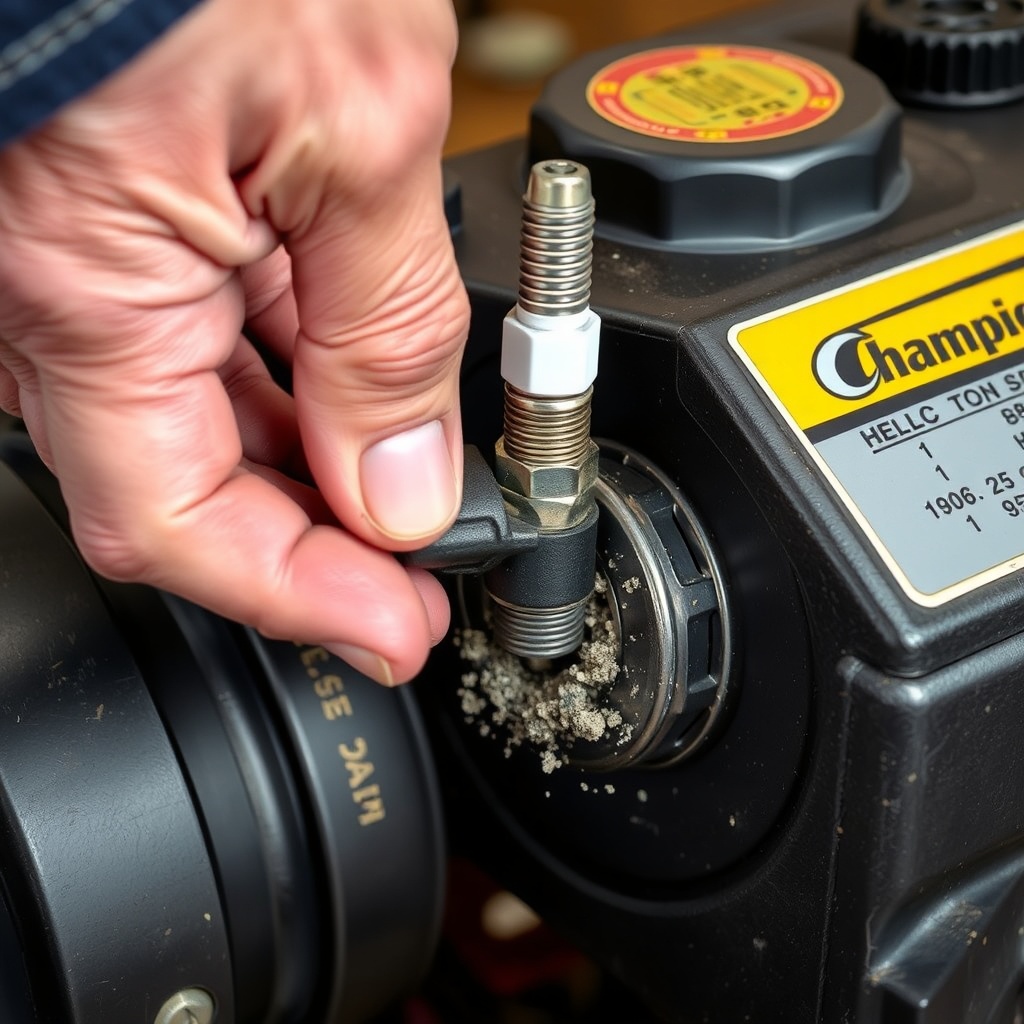
What Is the Correct Spark Plug Gap and How Do I Set It?
The correct spark plug gap for the Champion 25-Ton is typically 0.025 to 0.030 inches (0.6–0.8 mm). Always confirm this specification in your owner’s manual, as variations exist. Setting the gap improperly can cause misfiring, poor fuel economy, or difficult starting—especially in cold temperatures.
| Gap Issue | Symptom | Solution |
|---|---|---|
| Too wide | Weak spark, hard starting, misfire under load | Bend the ground electrode gently with a feeler gauge tool |
| Too narrow | Fouling, rough idle, carbon buildup | Bend the ground electrode outward slightly |
| Correct gap | Reliable starting, smooth idle, max power | No adjustment needed |
To set the gap: Use a feeler gauge. Slide the appropriate blade between the center electrode and the ground electrode. There should be a slight drag. If not, gently bend the ground electrode using the tool’s gap tool (not the spark plug porcelain). Avoid prying hard or tapping the electrode, as it can crack the insulator. Re-check the gap with the feeler gauge after adjustment.
Step-by-Step: How to Replace the Spark Plug on a Champion 25-Ton
Follow these steps carefully to avoid damaging the engine or the new plug. Take your time, especially if the old plug is seized.
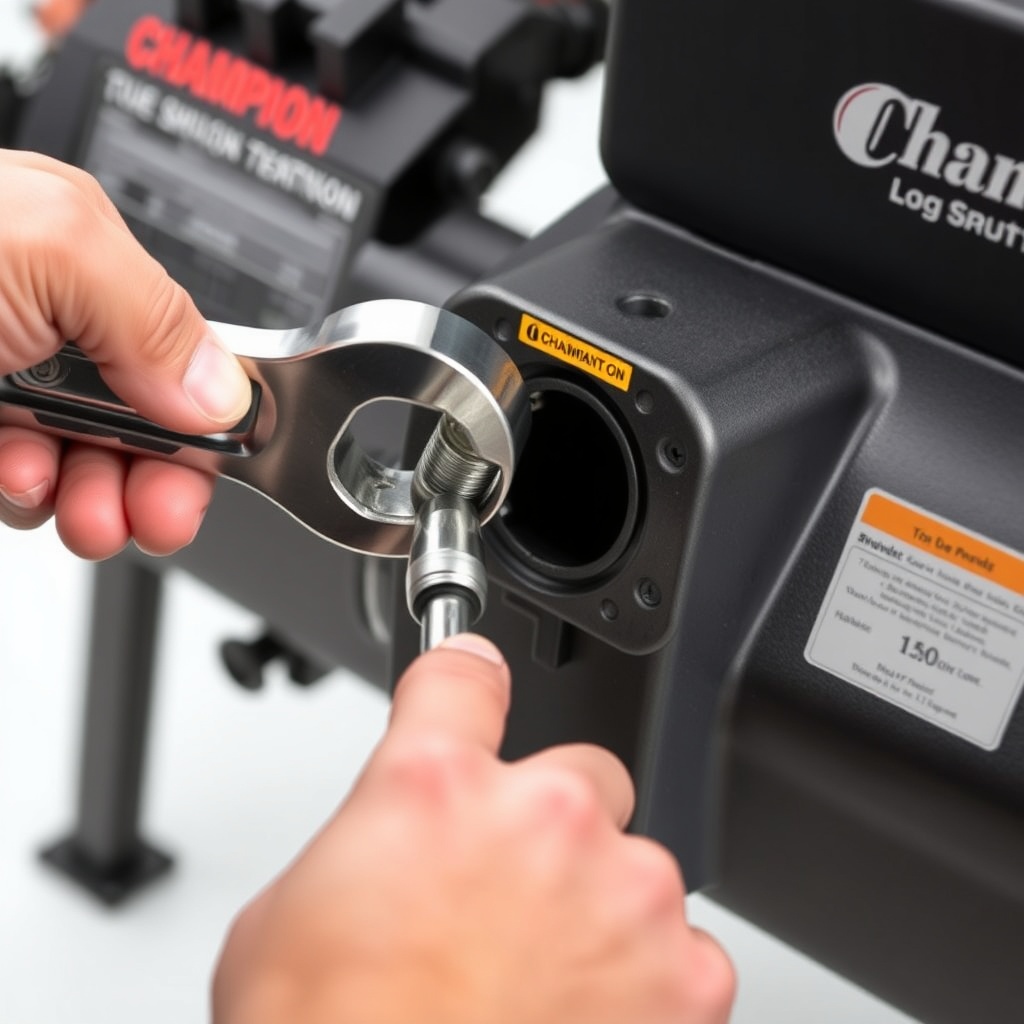
- Remove the old spark plug: Attach the 5/8-inch spark plug socket to the ratchet extension. Place it over the plug and turn counterclockwise. If the plug is tight, use a slow, steady force. Do not wrench back and forth, as it can damage the threads.
- Inspect the old plug: Look at the electrode and insulator. A light tan or gray color indicates good combustion. Heavy black soot or oil deposits suggest a rich mixture or oil leakage. A white, blistered insulator means overheating.
- Clean the cylinder head: Use a clean rag and compressed air to remove any carbon or debris from around the spark plug hole. This prevents foreign material from falling into the cylinder.
- Prepare the new plug: If using anti-seize, apply a very thin layer to the threads (avoid the tip). Check and set the gap as described above.
- Install the new plug: Start threading the plug by hand to avoid cross-threading. Once finger-tight, use a torque wrench to tighten to 15-20 ft-lb (or ½ turn after gasket contact for non-tapered plugs). Over-tightening can damage the cylinder head; under-tightening can cause blow-by.
- Reattach the spark plug wire: Push the rubber boot firmly onto the new plug until it clicks into place. Ensure it’s fully seated and snug.
- Test the splitter: Reconnect the battery (if equipped), insert the ignition key, and start the engine. It should start within a few pulls or with a single turn of the key. Listen for smooth idle and watch for stable operation.
For best results, replace the spark plug annually or every 100 hours of use. This helps maintain consistent power for tough splitting jobs, as covered in our Champion 25-Ton Log Splitter: Vertical vs Horizontal Splitting Performance article.
What If My Engine Still Won’t Start After Replacement?
If the engine doesn’t start after replacing the spark plug, check these common issues:
- Spark plug gap incorrect: Re-set the gap to the correct specification.
- Faulty spark plug wire: Test the wire for resistance (should be a few thousand ohms). Replace if cracked or corroded.
- Fuel system problem: Check if the fuel is fresh, the fuel valve is open, and the carburetor is clean. Stale fuel or a clogged jet is a frequent culprit, especially after winter storage.
- Safety switch engaged: The Champion 25-Ton has a low-oil shutdown sensor. Verify the oil level is correct. Also, check that the handle is in the neutral position.
- Compression loss: If the spark plug gap is fine but no spark exists, use a spark tester to confirm. No spark could indicate a faulty ignition coil or magneto. This may require professional service.
- Cold weather issues: In freezing temperatures, the engine may need more cranking. Refer to our Champion 25-Ton Log Splitter: Cold Weather Starting and Performance Tips for specific cold-start strategies.
What Owners Say About Spark Plug Replacement
Many Champion 25-Ton owners report that replacing the spark plug resolves hard-starting issues, particularly after prolonged storage or when using ethanol-blended fuel. John from Pennsylvania shares, “My splitter wouldn’t start after sitting for 8 months. Changed the plug to an NGK BPR6ES (gapped to .028), and it fired right up.” Another owner, Maria in Wisconsin, notes that using a torque wrench prevented a stripped thread incident: “I used a cheap socket set and overtightened. Now I use a torque wrench at 18 ft-lb, and it’s perfect.” However, some users warn about the difficulty of accessing the plug on certain models due to engine cowling; removing a small plastic cover helps. A few also advise buying OEM Champion plugs from a dealer to avoid counterfeit parts that may have incorrect gaps or poor insulation. Overall, the consensus is that this is a simple 10-minute maintenance task that dramatically improves reliability.
Frequently Asked Questions
Q1: How often should I replace the spark plug on my Champion 25-Ton log splitter?
A1: Replace the spark plug every 100 hours of operation or at the start of each season, whichever comes first. If the engine is hard-starting or idling roughly, inspect the plug sooner.
Q2: Can I use a different brand spark plug besides Champion?
A2: Yes, but the equivalent size and heat range must match. Popular alternatives include NGK BPR6ES, Autolite 3923, and Denso W20EPR-U. Always check that the thread length, reach, and gap specifications are identical to the OEM Champion RC12YC.
Q3: What happens if I don’t gap the spark plug correctly?
A3: Incorrect gap leads to inefficient combustion—too wide causes misfires and hard starting; too narrow accelerates fouling and carbon buildup. This can also affect your splitter’s performance on tough knots, as covered in our Champion 25-Ton Log Splitter: Expert Tips for Splitting Knotty Wood.
Q4: How do I know if the spark plug is actually bad?
A4: Signs include visible cracks in the porcelain, heavy black soot, oil fouling, or a worn electrode that appears rounded. Also, if the engine runs rough or won’t start, testing the plug with an ohmmeter (should have continuity) or a spark tester can confirm functionality.
Q5: Should I use anti-seize on the spark plug threads?
A5: It’s optional but recommended, especially in humid climates or for steel plugs in aluminum heads. Use a very thin layer—excess can cause the plug to overheat or loosen. Avoid getting it on the electrode.
Q6: My spark plug wire looks damaged—can I replace just the wire?
A6: Yes, but ensure the new wire has the correct resistor (typically 5,000-10,000 ohms) and proper boot length. A damaged wire can bleed voltage, reducing spark intensity. For simplicity, replacing the entire ignition coil and wire assembly is sometimes easier, but a new spark plug wire alone works with proper crimping.