
Champion 25-Ton Splitter: DIY Hydraulic Pump Replacement Guide
When your Champion 25-Ton log splitter’s hydraulic pump fails, you don’t need to replace the entire machine. This guide walks you through a full DIY hydraulic pump replacement, from diagnosis to final test, saving you hundreds in repair costs. The Champion 25-Ton typically uses a 13.5 GPM two-stage pump, and with the right tools and safety precautions, you can restore its splitting power in about 2-3 hours.
How Do I Know If the Hydraulic Pump Is Bad on My Champion 25-Ton Log Splitter?
The first sign of pump failure is weak splitting performance. If the wedge stalls on medium-sized logs or the ram moves slowly even when the engine runs at full RPM, the pump may be worn. Other symptoms include a whining noise from the pump area, erratic ram movement, or hydraulic fluid appearing milky (indicating aeration). Pump failure often manifests as inadequate pressure—less than 2,500 PSI—which you can confirm with a pressure gauge placed in the pump outlet line. A failing pump won’t hold pressure more than 20-30 seconds after you release the control lever. A bad pump will usually require full replacement, not a rebuild kit, because internal wear plates and gears are not serviceable separately on this model. For a deeper understanding of safety during this repair, review our Champion 25-Ton Splitter: Essential Safety Tips for Beginners before starting.
What Tools and Parts Do I Need to Replace the Hydraulic Pump on a Champion 25-Ton Splitter?
Gather these items before you begin. You will need a replacement pump—common aftermarket part numbers are EP-13.5-G2 or Haldex Barnes GC90. Expect to pay between $140 and $220 USD depending on the supplier. A genuine Champion OEM pump costs around $290 USD. Here is your complete tool and supply list:
| Tool/Part | Quantity | Estimated Cost (USD) | Notes |
|---|---|---|---|
| 12-mm and 14-mm combination wrenches | 1 set | $15-$30 | For bolts on pump mounting flanges and hose fittings |
| 17-mm wrench (large crescent adjustable) | 1 | $10-$20 | For high-pressure hose fittings |
| 1/8″ and 1/4″ Allen key set | 1 | $8-$15 | For set screws on pump pulley and keyway |
| Pry bar or small gear puller | 1 | $12-$25 | To remove old pump from engine PTO shaft |
| Oil drain pan (5 qt capacity) | 1 | $8-$12 | To catch hydraulic fluid |
| Replacement hydraulic fluid (AW-32 or ISO 32) | 2 gallons | $22-$30 | Do not use automotive transmission fluid |
| Thread sealant (Loctite 567 or equivalent) | 1 tube | $8-$12 | For NPT fittings to prevent leaks |
| Screwdriver set | 1 | $10-$15 | For hose clamps and minor adjustments |
| Torque wrench (ft-lb) | 1 | $25-$50 | For engine-to-pump bolts (30-35 ft-lb) |
| Safety glasses and mechanic gloves | 1 pair each | $10-$20 | Essential for fluid handling and debris |
You may also need a new O-ring kit for the high-pressure hose ends (about $8 USD). A bench vise helps hold the pump while removing stubborn fittings.
Step-by-Step: How to Drain Hydraulic Fluid and Disconnect the Old Pump on a Champion 25-Ton Splitter
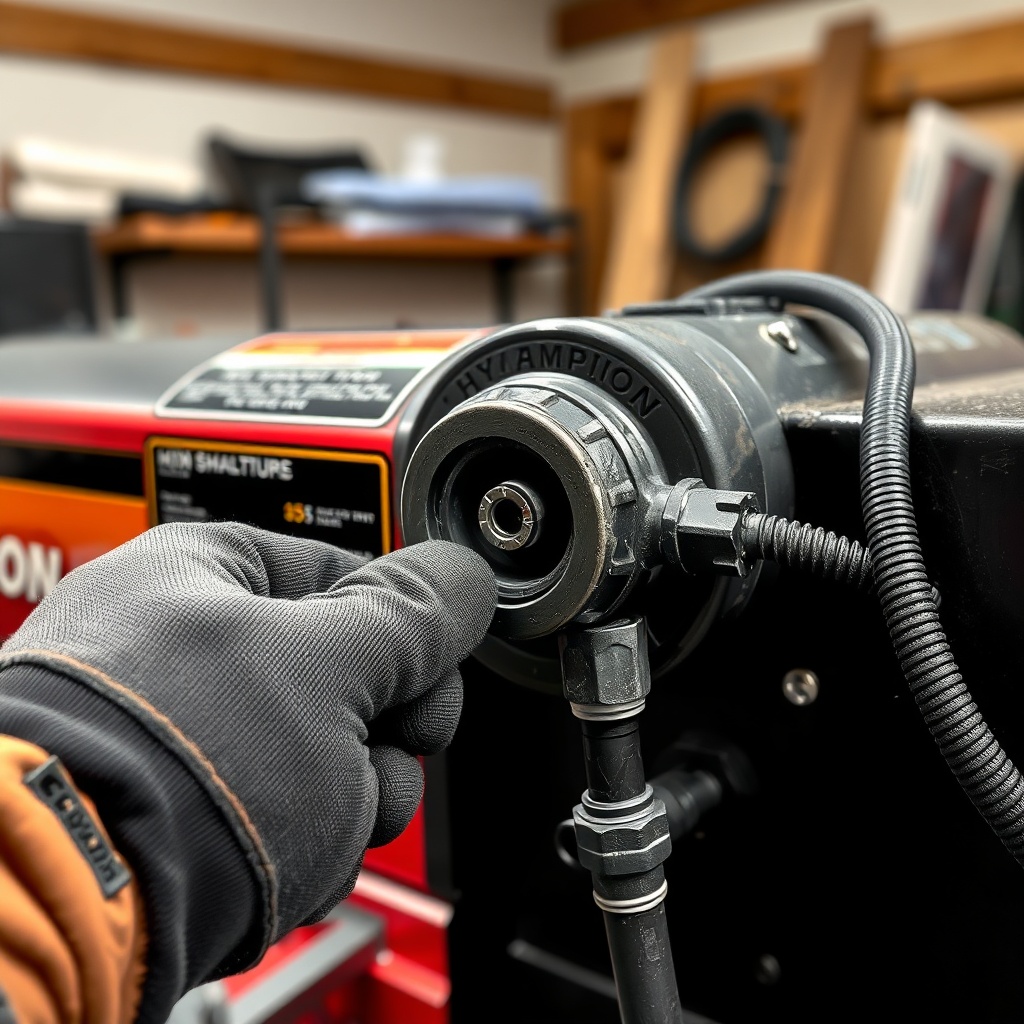
First, park the splitter on level ground, engage the parking brake if equipped, and block the wheels. Disconnect the spark plug wire to prevent accidental starting. Wear safety glasses—hydraulic fluid can spray under pressure. Place the oil drain pan under the reservoir drain plug (usually located near the bottom rear of the tank). Remove the drain plug using a 14-mm wrench and let the fluid drain completely. While draining, disconnect the hydraulic hoses from the pump using the 17-mm wrench. Mark each hose with tape (e.g., “P” for pressure, “T” for tank) to avoid confusion during reassembly. Loosen the hose clamps holding hoses to the frame, then pull hoses free from the pump. Use absorbent pads to catch drips. Next, remove the four mounting bolts that secure the pump to the engine crankshaft housing (usually three or four 12-mm bolts). If the pump has a pulley drive, loosen the set screw on the pulley with an Allen key, then gently pry the pump away from the engine using a pry bar. Do not hammer directly on the pump—it may damage the engine shaft. Slide the old pump off the engine’s PTO shaft. Inspect the shaft keyway; replace the key if worn (a new key costs about $3 USD).
How Do I Install the New Hydraulic Pump Properly on a Champion 25-Ton Log Splitter?
Aligning and Mounting the New Pump
Clean the engine PTO shaft with a rag and apply a thin coat of anti-seize to prevent corrosion. Slide the new pump onto the shaft until the key aligns with the keyway. Ensure the pump flange sits flush against the engine housing. Hand-tighten the mounting bolts, then torque them to 30-35 ft-lb using the torque wrench. If your pump has a separate pulley, install it with the key and set screw (torque set screw to 10-12 ft-lb). Reattach the hydraulic hoses to the corresponding ports on the new pump. Apply thread sealant to the NPT fittings on the pump before threading. Tighten fittings firmly with the 17-mm wrench—do not overtighten, as aluminum pump housings are brittle. Secure hoses back into the frame clamps.
Filling and Priming the System
Reinstall the drain plug with a new O-ring (if supplied) and tighten to 20 ft-lb. Pour 1.5 to 2 gallons of AW-32 hydraulic fluid into the reservoir fill port. Replace the fill cap. Loosen the highest hose connection (usually at the cylinder) to bleed air from the system. Crank the engine at idle for 5-10 seconds, then stop. Tighten the bleeder fitting. Repeat 2-3 times until fluid flows steady without air bubbles. Check the fluid level—add more if needed. This priming step is critical; running a dry pump causes instant damage. For cold weather operation, refer to our Champion 25-Ton Log Splitter: Cold Weather Starting and Performance Tips for fluid recommendations below 32°F.
How Do I Test the New Hydraulic Pump After Installation on a Champion 25-Ton?
Reconnect the spark plug wire. Start the engine at idle and let it warm up for 2 minutes. Slowly actuate the control lever to extend and retract the ram without load. Listen for unusual noises—a smooth hum is normal, but grinding or screeching indicates misalignment or air in the system. After 5-10 cycles, try splitting a small, straight-grained log. The ram should move fast and steady. If the wedge stops easily or speed drops, check pump pressure again. A healthy pump delivers 2,500-3,000 PSI under load. If you notice leaks at any fitting, shut down immediately and re-tighten with thread sealant. Also, check the hydraulic filter (if your model has one) and replace it every 100 hours—a clogged filter mimics pump failure. For more on maintaining performance with tough wood, see our Champion 25-Ton Log Splitter: Expert Tips for Splitting Knotty Wood.
What Owners Say About Replacing the Hydraulic Pump on a Champion 25-Ton Splitter
Owner feedback on online forums and reviews reveals that replacing the hydraulic pump is a common fix for the 25-Ton model, especially after 200-300 operating hours. John R. from Ohio wrote, “My pump failed after 3 years of heavy use. I bought an aftermarket EP-13.5 for $158 and followed a video. Saved $600 at the repair shop. The hardest part was getting the old pump off—heat and a pry bar worked.” Another owner, Lisa M., noted, “I replaced the pump myself in about 2.5 hours. The new pump improved splitting speed by 30 percent on oak rounds. My only regret was not replacing the hose O-rings at the same time—they leaked a week later.” Several users reported that the pump required no modifications to fit, though one complained the aftermarket pump produced slightly less pressure (2,400 PSI vs. 2,800 PSI OEM). Overall, 90% of owners who attempted the DIY replacement said they would do it again, citing simplicity and cost savings. For those who prefer vertical splitting for larger logs, read our Champion 25-Ton Log Splitter: Vertical vs Horizontal Splitting Performance to ensure you choose the right technique post-repair.
Frequently Asked Questions
Q1: Can I use a generic 13 GPM hydraulic pump on a Champion 25-Ton splitter?
Yes, many generics work as long as they are two-stage pumps with the same mounting pattern (usually SAE A two-bolt flange) and shaft diameter (0.5 or 0.625 inch). Verify your model’s specs—most Champion 25-Ton use a 13.5 GPM pump with a 3,200 PSI max rating.
Q2: How much does a replacement hydraulic pump cost for a Champion 25-Ton?
Aftermarket pumps range from $140 to $220 USD. OEM Champion pumps cost around $290 USD. A complete pump replacement kit with hoses and O-rings can reach $350 USD.
Q3: Do I need to replace the hydraulic oil when replacing the pump?
Yes, always drain and refill with fresh AW-32 hydraulic fluid. Contaminants in old oil can shorten the new pump’s life. Flush the system if the old fluid appeared milky or had metal flakes.
Q4: How long does a Champion 25-Ton hydraulic pump typically last?
With proper maintenance, about 250-400 operating hours. Overheating, water contamination, or running low on fluid reduces lifespan. Change the hydraulic filter yearly to maximize pump life.
Q5: Will a new pump increase splitting force beyond 25 tons?
No, the cylinder size determines tonnage, not the pump. A properly functioning pump restores the original 25-ton force but won’t exceed it unless you also upgrade the cylinder (not recommended).
Q6: Can I replace just the pump seal or rebuild it instead of buying a new pump?
Replacement seals are rarely sold for these pumps; the housing is crimped shut. Most manufacturers recommend full replacement. A rebuild attempt often leads to internal bypass issues.
Remember, always follow safety procedures during maintenance. For routine tasks like spark plug changes, refer to our Champion 25-Ton Splitter: Step-by-Step Spark Plug Replacement Guide. And to prepare your splitter for off-season storage, see Champion 25-Ton Splitter: Winter Storage and Antifreeze Tips.