
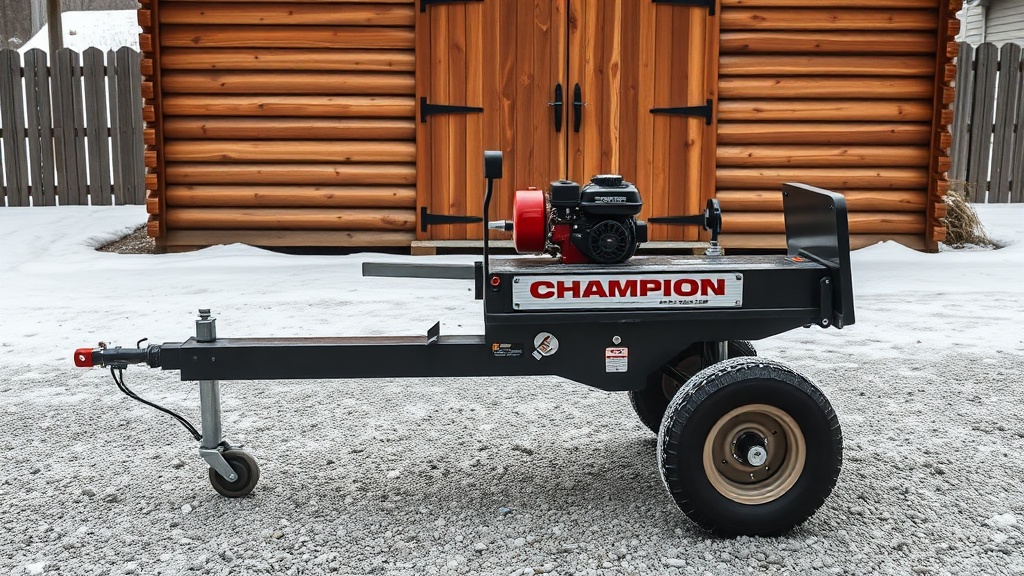
Why Is Winter Storage Critical for Your Champion 25-Ton Splitter?
When the splitting season winds down and temperatures begin to drop, neglecting proper winter storage can lead to costly repairs and a machine that refuses to start in the spring. The Champion 25-Ton log splitter, powered by a robust 208cc engine and a hydraulic system designed for demanding tasks, requires specific antifreeze and storage procedures to survive freezing conditions. Water trapped in the hydraulic reservoir, engine block, or pump can expand and crack castings, while stale fuel can gum up the carburetor.
This guide provides actionable steps to prepare your splitter for winter, focusing on fluid protection, engine preservation, and hydraulic system care. By following these tips, you can extend the lifespan of your investment and ensure reliable performance when warmer weather returns. For comprehensive maintenance advice, see our Champion 25-Ton Log Splitter: How to Change Hydraulic Oil guide.
What Is the Best Antifreeze for the Hydraulic System?
The hydraulic system on the Champion 25-Ton splitter holds approximately 5.6 litres (6 quarts) of fluid. Standard AW-32 or AW-46 hydraulic oil does not contain antifreeze additives and can thicken or freeze at temperatures below -20°C (-4°F). For winter storage in unheated sheds or outdoors, you have two options: drain and replace with a winter-grade fluid, or add a hydraulic antifreeze additive.
Most owners opt for a full fluid change using a synthetic multigrade hydraulic oil rated for cold weather, such as a SAE 10W-30 or ISO VG 32 with a pour point below -40°C. Alternatively, a dedicated hydraulic antifreeze concentrate mixed at 10-15% by volume will depress the freezing point. Never use automotive engine antifreeze (ethylene glycol) in the hydraulic system—it can damage seals and pumps. Check the owner’s manual for exact specifications; the recommended fluid is typically a premium-grade hydraulic oil with rust and oxidation inhibitors.
Hydraulic Fluid Antifreeze Options Comparison
| Product Type | Pour Point | Cost (approx.) | Ease of Use | Risk Level |
|---|---|---|---|---|
| ISO VG 32 synthetic winter oil | -45°C (-49°F) | £55 per 5 litres | Easy (drain & fill) | Low |
| AW-46 standard oil + additive | -30°C (-22°F) | £12 additive + £30 oil | Moderate | Medium (mixing errors) |
| Drain system dry | N/A (empty) | Free | Easy | High (air moisture, pump damage) |
| Automotive coolant (DO NOT USE) | N/A | £15 | Easy | Very high (seal failure) |
Severity assessment: Using the wrong fluid or leaving the system with water contamination is a critical error. Always drain and replace hydraulic oil before prolonged winter storage—never rely solely on additives for long-term protection.
How Do You Drain the Fuel System and Carburetor?
Fuel left in the tank and carburetor over winter can degrade into varnish and gum, clogging jets and causing hard starts. The Champion 25-Ton uses a standard 4-stroke engine with a fuel tank capacity of around 3.8 litres (1 gallon). The best practice is to run the engine dry by closing the fuel shutoff valve (if equipped) and letting it idle until it stops. Alternatively, completely drain the tank and carburetor bowl.
Start by locating the fuel shutoff valve on the underside of the tank. Turn it to the OFF position, then remove the fuel line from the carburetor and drain the tank into an approved container. Next, use a socket wrench to remove the carburetor drain bolt (usually a 10mm or 12mm head) and let the remaining fuel drain. For extra protection, add a fuel stabiliser to the tank before running the engine dry—this coats internal passages. After draining, reinstall the bolt and fuel line.
If you live in a region with extreme cold (below -30°C), consider removing the battery (if equipped with an electric start) and storing it indoors. For more cold-weather starting tips, refer to our Champion 25-Ton Log Splitter: Cold Weather Starting and Performance Tips article.
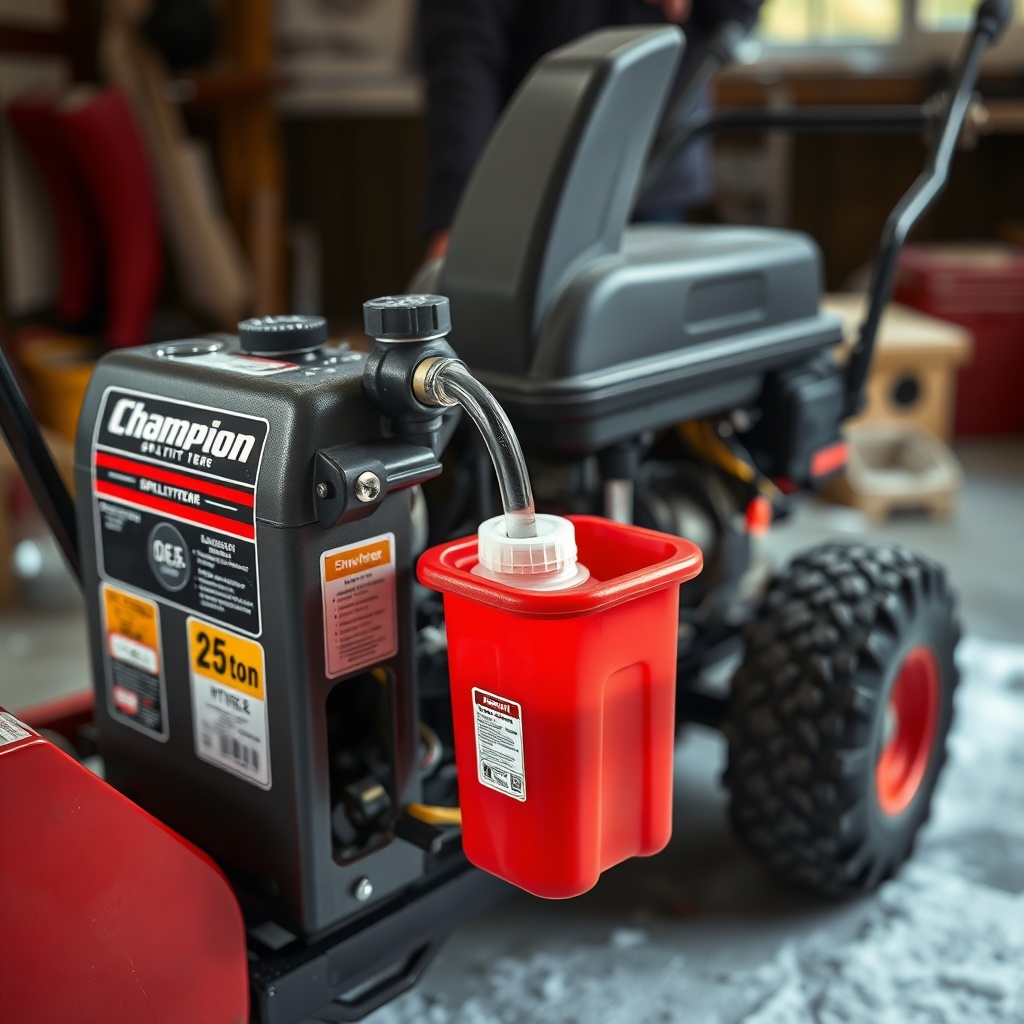
Should You Remove the Hydraulic Filter Before Winter?
The hydraulic filter on the Champion 25-Ton is a spin-on type, usually rated for 10 micron filtration. During winter storage, moisture can condense inside the filter, leading to rust and contamination when the system is next used. While you don’t need to remove the filter entirely, it is wise to wrap it in a plastic bag or cover it with a waterproof cap to prevent moisture ingress.
If you plan to store the splitter for more than three months, replace the filter after draining the oil and before refilling with winter-grade fluid. The filter should be tightened to approximately 20 Nm (15 ft-lb) by hand, then an additional quarter turn with a filter wrench. Filter part numbers are listed in the owner’s manual; a compatible replacement costs about £15-£25. Never run the splitter without a filter—particles will quickly damage the pump and control valve.
What About the Engine Oil and Spark Plug?
Engine oil should be changed before winter storage because used oil contains acids and moisture that can corrode internal components. The 208cc engine holds approximately 0.9 litres (1 quart) of SAE 10W-30 or 5W-30 oil (check your manual). Run the engine for five minutes to warm the oil, then drain the old oil through the dipstick tube or side drain plug. Refill with fresh oil to the full mark on the dipstick.
The spark plug should also be removed, inspected, and replaced if the electrode is worn or the gap exceeds 0.76 mm (0.030 inches). A Champion CJ8 or equivalent spark plug costs about £6-10. Clean the area around the plug before removal to prevent dirt from falling into the cylinder. After removal, pour a teaspoon of clean engine oil into the spark plug hole, rotate the engine a few times by pulling the starter cord to coat the cylinder walls, then reinstall the plug loosely. This prevents rust on the piston rings and cylinder bore. For a detailed procedure, see our Champion 25-Ton Splitter: Step-by-Step Spark Plug Replacement Guide.
Where Should You Store the Splitter and How to Protect Tires?
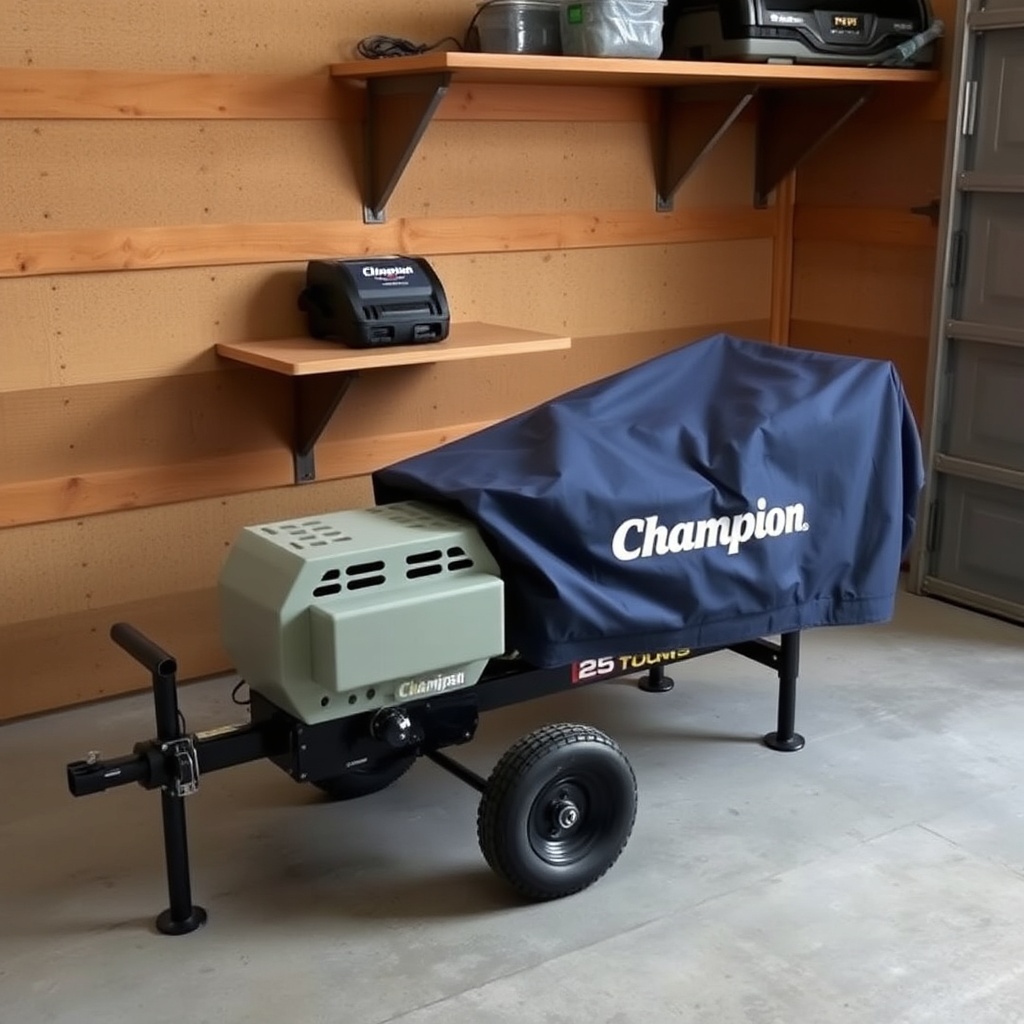
Indoor storage is ideal for the Champion 25-Ton, even if only in a dry shed or garage. If outdoor storage is unavoidable, use a waterproof, breathable cover that prevents rain and snow from accumulating. The splitter weighs approximately 136 kg (300 lbs) on its two 13-inch wheels, so consider placing it on a concrete pad or wooden blocks to prevent the tires from sitting in mud or water. Tires can develop flat spots if left under load in cold temperatures; you can slightly overinflate them to 30-35 psi to reduce deformation.
If storing outdoors, also tilt the splitter slightly so that water runs off the engine cowling and hydraulic reservoir. Remove the battery (if fitted) and store it in a warm, dry place on a trickle charger. Cover the exhaust outlet with a plastic bag secured with a rubber band to keep out insects and rodents. Never plug the exhaust hole permanently—remove the bag before starting.
What Owners Say About Winter Storage
Champion 25-Ton owners who follow annual winter storage procedures report trouble-free restarts after months of inactivity. John M. from Northumberland states, “I drain the hydraulic oil and replace it with ISO 32 synthetic every November. The splitter starts on the first pull every spring, even after -10°C nights.” Another owner, Sarah T. from Yorkshire, notes that “forgetting to drain the fuel was a nightmare—I had to clean the carburetor three times. Now I always use stabiliser and run it dry.”
Several owners on forums emphasise the importance of keeping the hydraulic breather cap clean and free of moisture. “I store mine in an unheated barn,” writes Martin L. “I wrap the filter in a plastic bag and put a small dehumidifier in the barn. Zero issues in five years.” A minority who neglected antifreeze steps report cracked pump housings—a repair costing over £400. The consensus is clear: invest a couple of hours in November to save days of work in March.
Frequently Asked Questions
Q: Can I use regular automotive antifreeze in the hydraulic system?
A: No. Automotive antifreeze (ethylene glycol) will attack the seals in hydraulic pumps and cylinders, leading to leaks and system failure. Only use hydraulic-specific fluids or additives.
Q: How often should I replace the hydraulic oil for winter storage?
A: Once per year, before the first hard freeze. If you use standard AW-46 oil, drain it completely and replace with a winter-grade fluid. Synthetic oils can last two seasons if tested for water content.
Q: What is the minimum temperature the Champion 25-Ton can handle?
A: With proper winter-grade hydraulic fluid and fuel drained, the metal components can withstand -30°C without damage. However, starting the engine below -18°C requires cold-weather oil and a fully charged battery.
Q: Do I need to remove the hydraulic pump for storage?
A: No. The pump is sealed and lubricated by hydraulic oil. Simply protect the system by using winter-grade fluid and keeping moisture out.
Q: Will a cover alone protect the splitter from frost damage?
A: A cover only protects against rain and snow. It does not prevent freezing of fluids or condensation. Always drain fluids or use antifreeze additives.
Q: How do I know if my hydraulic fluid has frozen?
A: If the fluid turns cloudy, slushy, or won’t pump when you try to start the splitter in cold weather, it may have frozen. Warm the splitter in a heated space, then drain and replace the fluid immediately.