Champion 25-Ton Log Splitter: Expert Tips for Splitting Knotty Wood
Splitting knotty wood with the Champion 25-Ton log splitter demands a sharp focus on technique and safety, as these dense, twisted sections can turn a routine chore into a high-risk operation. The machine’s 25-ton splitting force (rated at 2,800 PSI) can handle most hardwood challenges, but improper handling—especially with knotty logs—increases the chance of kickback or stuck wedges. This guide provides expert, safety-first techniques to help you split knotty wood efficiently while avoiding common pitfalls.
How Does the Champion 25-Ton Handle Knotty Wood Without Stalling?
The Champion 25-Ton log splitter uses a 208cc engine (typically a Champion or Subaru OHV) driving a two-stage hydraulic pump. In low-pressure mode, the pump moves high volumes of oil for fast cycle times (11–13 seconds); when the wedge meets resistance like a knot, it shifts to high-pressure mode, delivering the full 25 tons of force. This design prevents stalling on gnarly wood, but the operator must set the log correctly. For knotty pieces, always position the wedge to strike the knot at a slight angle (5–10 degrees off perpendicular). This allows the wedge to shear through the knot’s fibers rather than compressing them, reducing strain on the hydraulic system. If the wedge stalls, do not force it—release the control lever, let pressure drop, then reposition the log.
Never use the “split-on-contact” technique (where you simply ram the wedge into the log without repositioning) for knotty wood. Instead, start the split at the log’s outer edge, where fibers are less tangled. Once the wedge penetrates 2–3 inches, the knot will often crack open naturally. For especially tough knots, consider cross-cutting the log at the knot site to reduce the split length. This is a safer approach than trying to split through the entire knot in one pass. For comparative cycle times, see our Champion 25-Ton Log Splitter: Vertical vs Horizontal Splitting Performance.
What Personal Protective Equipment (PPE) Is Mandatory for Knotty Wood Splitting?
Knotty wood dramatically increases projectile risks. When the wedge hits a knot, small wood chips, bark, even entire chunks can fly with significant force. The following PPE is non-negotiable when using the Champion 25-Ton:
- ANSI Z87.1-rated safety glasses with side shields: Regular glasses won’t stop a flying chip. Look for impact-resistant polycarbonate lenses.
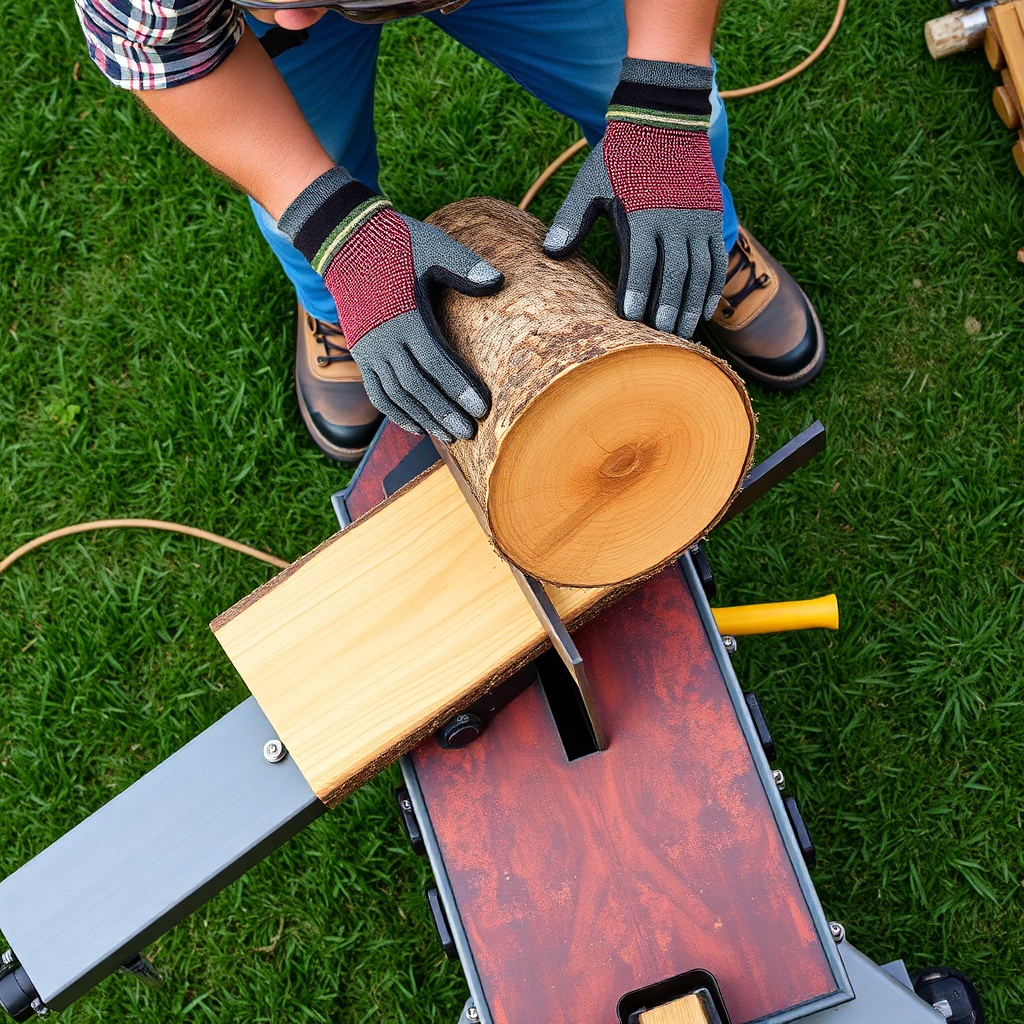
- Cut-resistant gloves (rating ANSI A4 or higher): Knots can cause the log to rotate or jump, leading to hand entrapment. Avoid loose-fitting gloves that can catch on the wedge.
- Steel-toe boots with slip-resistant soles: The machine’s hydraulic fluid can make the ground slick. Steel toes protect from dropped logs or the wedge if it releases suddenly.
- Hearing protection (NRR 25+): The engine runs at 80–90 dB; prolonged exposure damages hearing.
- Close-fitting clothing: Avoid hoodie strings, baggy sleeves, or loose jackets that can get drawn into the wedge area.
Additionally, keep a fire extinguisher nearby—hydraulic oil fires are rare but possible if a line ruptures near hot engine parts. For a comprehensive safety primer, read our Champion 25-Ton Splitter: Essential Safety Tips for Beginners.
Why Is Hydraulic Oil Condition Critical for Splitting Knotty Wood?
The Champion 25-Ton’s hydraulic system operates at pressures up to 2,800 PSI. When splitting knotty wood, the pump cycles into high-pressure mode more frequently, which generates extra heat. Contaminated or degraded hydraulic oil loses its viscosity, reducing the pump’s ability to maintain pressure and increasing the risk of cavitation. This can cause the wedge to stall mid-split, a dangerous condition where you must manually release the log using a pry bar rather than machine force. Always use AW-32 or AW-46 hydraulic oil (check your manual; most Champion models specify ISO 32 for colder climates and ISO 46 for warmer). Change the oil every 100 hours of operation or annually, whichever comes first. For a step-by-step guide, see Champion 25-Ton Log Splitter: How to Change Hydraulic Oil. Before each session on knotty wood, check the oil level and color. If it appears milky or smells burnt, replace it immediately. Low oil or degraded oil reduces splitting force by up to 20%, making even routine knotty wood splits dangerous.
| Hydraulic Oil Condition | Impact on Knotty Wood Splitting | Risk Severity |
|---|---|---|
| Clean, proper viscosity (ISO 32/46) | Full 25-ton force maintained; smooth high-pressure shift | Low |
| Low level (1 quart below full) | Reduced cycle speed; wedge may stall on moderate knots | Moderate |
| Contaminated (water or debris present) | Erratic pressure; wedge can suddenly drop or kick back | High |
| Burnt or degraded (dark, thin) | Pump cavitation; wedge stalls; risk of hydraulic line burst | Critical |
In cold weather, thick oil can also reduce performance. For winter splitting of knotty wood, use ISO 32 oil and warm the engine for 5 minutes before use. See our Champion 25-Ton Log Splitter: Cold Weather Starting and Performance Tips for more.
How Should You Position Knotty Logs to Avoid Kickback?
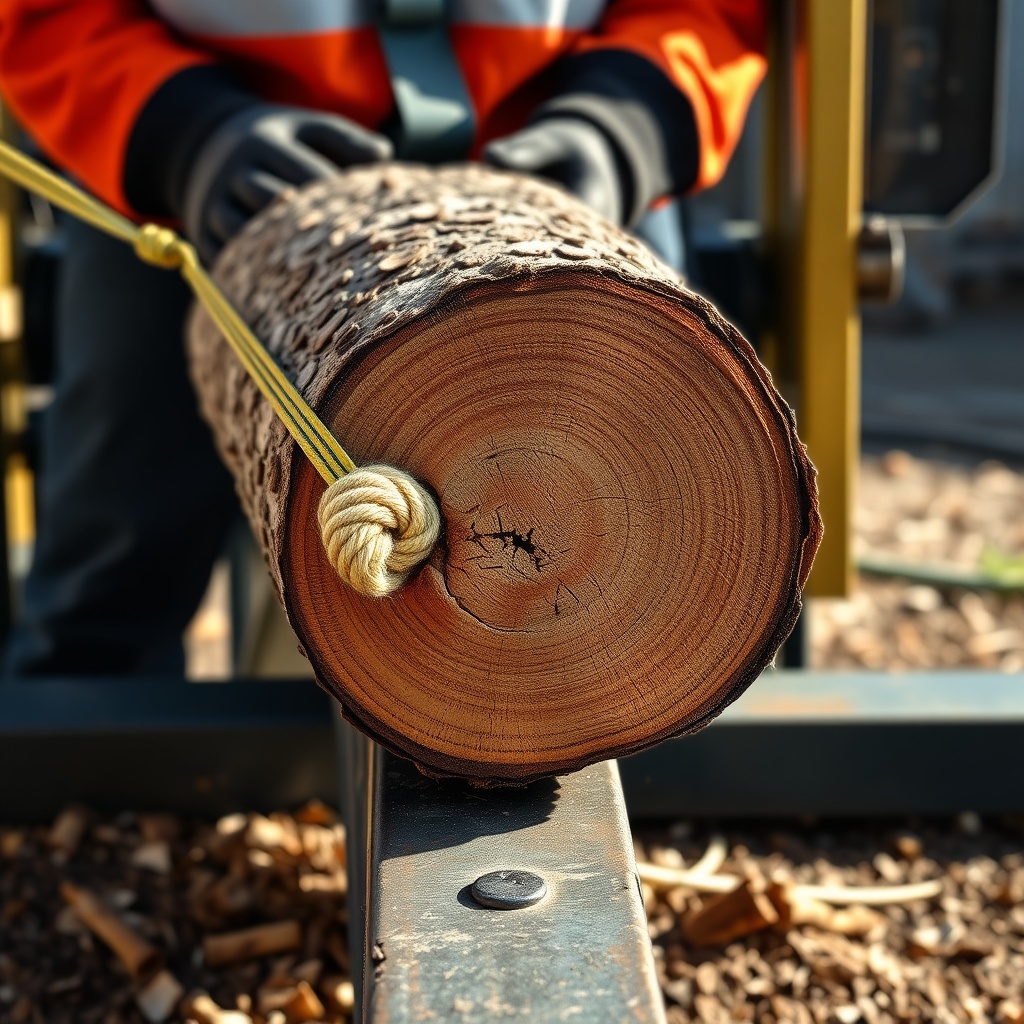
Kickback occurs when the wedge hits the knot and the log’s uneven grain forces the log to rotate violently upward or sideways, potentially striking the operator. The Champion 25-Ton’s beam design includes a log cradle and, on horizontal mode, a stabilizing foot, but proper log placement is your primary defense. Always place the log so the knot faces the wedge, not the operator. If the knot is on the side, rotate the log 90 degrees so the wedge hits the knot head-on. For logs with multiple knots, start with the smallest knot—this creates a clean split that weakens the larger knot. Never try to split a log with a knot at the center—this is the most dangerous position because the wedge can sink into the knot and lock, then release explosively. Instead, use a splitter wedge (manual, not machine) to crack the log from the side first, then place it on the machine. Always keep your hands and feet behind the safety lines marked on the beam—typically 12 inches from the wedge. For long logs, use the vertical splitting mode (available on most Champion 25-Ton models) to reduce reach. For a detailed comparison of splitting modes, see our Champion 25-Ton Log Splitter: Vertical vs Horizontal Splitting Performance.
What Is the Safe Procedure for Unsticking a Wedge in Knotty Wood?
If the wedge sticks in a knotty log, never use the retract lever to “pull” the log off—this can damage the hydraulic cylinder. Instead, follow these steps: 1) Release the control lever to neutral, letting hydraulic pressure drop to zero. 2) Shut off the engine and disconnect the spark plug wire to prevent accidental startup. 3) Use a heavy-duty pry bar (24-inch minimum) to apply force between the log and the beam, levering the wedge free. Never place your body directly in line with the wedge. 4) If the wedge remains stuck, use a second person to apply steady pressure at a 45-degree angle to the log while you operate the retract lever in short bursts (2 seconds max). This method is only safe if both operators are wearing full PPE and are positioned to the side of the beam. For extremely stuck wedges, avoid using a sledgehammer—this can shatter the wedge’s carbon steel tip. Instead, cut the log crosswise at the sticking point using a chainsaw, then split the separated pieces. Always ensure the machine is completely off and unplugged (or spark plug disconnected) before any manual intervention.
Prevent sticking in the first place by lubricating the beam with a silicone spray (not oil, which attracts debris) every 10 knots. This reduces friction between the log and the beam, helping the wedge slide through. Also, keep the wedge’s cutting edge sharp—a dull wedge compresses rather than cuts through knots, increasing sticking risk. Sharpen the wedge with a file every 20 hours of operation or after splitting 3 cords of knotty wood.
What Do Owners Say About the Champion 25-Ton on Knotty Wood?
User Tom R. from Vermont reports: “I split elm and locust—both notorious for knots—on my Champion 25-Ton. The key is slow, steady pressure. If you rush, the wedge bounces off the knot and the log spins. I’ve learned to start at the edge, not the center. Never had a stalling issue except once when oil was low. Changed the oil and it was back to full power.” Owner Maria S. from Oregon emphasizes safety: “I wear full chaps now after a knot kicked a chunk into my calf. The machine is tough, but knots make it unpredictable. I always split in horizontal mode for better control.” Many users on forums note that vertical mode is better for heavy knotty logs because you don’t have to lift them—reducing back strain and allowing better control. However, they caution that vertical mode requires the log to be centered precisely, or the wedge can cause the log to tip. Overall, owners rate the Champion 25-Ton as “excellent” for knotty wood when used with proper technique, but a few mention that the wedge could be taller for very knotty, oversized rounds (over 24 inches diameter). Aftermarket wedge extensions are available but may void warranty. For a full performance analysis, read our Champion 25-Ton Log Splitter: Vertical vs Horizontal Splitting Performance.
Frequently Asked Questions
Can the Champion 25-Ton split knotty elm or locust?
Yes, it can handle most knotty hardwoods, including elm and locust. Use edge-starting technique and ensure hydraulic oil is fresh. Expect slower cycles—about 14–16 seconds per split—compared to clean grain wood (11–13 seconds).
What is the maximum log diameter for knotty wood?
The manufacturer recommends logs up to 24 inches in diameter. For knotty wood, keep it under 18 inches to avoid excessive strain on the wedge. Logs larger than 18 inches with severe knots should be cross-cut first.
Do I need to change the hydraulic oil after splitting knotty wood?
Not specifically for knotty wood, but the extra pressure cycles heat the oil faster. Check oil color after a 2-hour session; if it’s dark brown or smells burnt, change it. Regular oil changes every 100 hours or annually are recommended regardless of wood type.
Why does my wedge stick in knotty wood?
Sticking occurs when the knot’s grain is twisted around the wedge, creating a compression lock. Reposition the log at a 15-degree angle to the wedge, ensure the beam is lubricated, and never force the wedge. If stuck, follow the manual release procedure above.
Can I use aftermarket wedge extenders on the Champion 25-Ton?
Aftermarket extenders are available, but they reduce splitting force by increasing the wedge’s surface area. This can cause stalling on knotty wood. Champion does not recommend them. A sharp original wedge is more effective.
Is it safe to split knotty wood in vertical mode?
Yes, but only if the log is stable. Place the cut end flat on the base and center the wedge over the knot. Use two hands to stabilize the log if needed—but keep hands clear of the wedge path. Vertical mode increases tip-over risk on uneven ground, so set the splitter on a level surface.