Introduction to Safe Log Jam Clearing on the Southland 22-Ton Log Splitter
The Southland 22-Ton log splitter is a robust hydraulic machine designed to handle hardwoods and large rounds with up to 22 tons of splitting force. However, even the most reliable equipment can experience log jams — where a piece of wood becomes stuck mid-split or the wedge fails to fully penetrate. Clearing these jams incorrectly is a leading cause of injury among operators. This article outlines safe, step-by-step techniques for resolving log jams on the Southland 22-Ton splitter, emphasizing personal protective equipment (PPE), hydraulic system protocols, and wedge maintenance. By following these methods, you can keep your splitter operating without damage to the cylinder, pump, or frame, and avoid costly repairs.
What Causes Log Jams on the Southland 22-Ton Splitter?
Understanding why log jams occur helps you prevent them in the first place. Common causes include:
- Green or stringy wood: Freshly cut elm, hickory, or maple often contains high moisture content that makes fibers stick to the wedge.
- Knots and crotches: Dense knot clusters can resist wedge penetration, causing the log to bind.
- Dull wedge or low hydraulic fluid: A blunt wedge requires more force to split; low fluid reduces system pressure, leading to stalled cycles.
- Improper log placement: Placing a log off-center on the beam causes uneven force distribution, increasing jam frequency.
Pro tip: Always inspect the wedge edge before each session. A sharp wedge reduces the likelihood of jams by up to 40% on the Southland 22-Ton.
For more on maintaining the hydraulic system that powers your splitter, read our guide on How to Replace Hydraulic Seals on Southland 22-Ton Splitter.
What Is the Correct Procedure to Clear a Log Jam Safely?
Clearing a jam requires methodical steps to avoid sudden release of stored hydraulic energy. Follow this exact sequence:
- Shut down the engine: Turn the key or kill switch off. Wait 10 seconds for the hydraulic pressure to drop. Do not rely on the control lever alone.
- Disconnect the spark plug wire (gas models): This prevents accidental starting. For electric conversion units, unplug the power cord.
- Release residual pressure: Operate the control lever in the retract direction for 2–3 seconds. If no movement, the pressure is safe.
- Inspect the jam: Use a flashlight to see if the wedge is fully extended or retracted. Never place hands between wedge and log.
- Use a pry bar or wooden wedge: Insert a long, sturdy pry bar (at least 36 inches) between the log and the wedge. Gently rock the bar to free the wood. Alternatively, tap a wooden wedge into the split with a sledgehammer.
- Re-start and split the log: Once free, clear the area, reconnect spark plug, and run the splitter to split the remaining piece.
Critical safety rule: Never use your hands, feet, or any body part to push or pull a stuck log. Always use a tool with a handle length greater than the beam width.
How to Use a Hydraulic Cylinder Override for Stubborn Jams
If a log is so tightly wedged that a pry bar fails, the Southland 22-Ton’s hydraulic system offers an override technique — but only if you have a replacement hydraulic cylinder ready. This is a last-resort method:
- Step 1: With the engine off and spark plug disconnected, place the jack under the log beam near the wedge.
- Step 2: Slowly pump the jack handle to lift the beam slightly, relieving pressure on the wedge.
- Step 3: Insert wooden blocks under the beam to maintain the lift. Do not use metal blocks—they can slip.
- Step 4: Carefully tap the log free from the side with a rubber mallet or dead-blow hammer.
If the cylinder is damaged during this process (e.g., bent rod or leaking seals), refer to our complete hydraulic cylinder replacement guide. This technique should only be used on a flat, stable surface.
| Jam Type | Wedge Position | Risk Level | Recommended Tool | Max Force (tons) |
|---|---|---|---|---|
| Knot-stuck mid-split | Partially extended | Medium | Pry bar (36″) | 5–8 |
| Green wood binding | Fully extended | Low | Wooden wedge + sledgehammer | 3–6 |
| Crooked log with bark jam | Retracting | High | Hydraulic jack (under beam) | 10–15 |
| Double log jam (two logs) | Stuck in both directions | Very High | Chainsaw (cut log outside splitter) | 20+ |
What Personal Protective Equipment (PPE) Is Required for Jam Clearing?
Operator safety begins before you approach the splitter. For clearing log jams on the Southland 22-Ton, the minimum PPE includes:
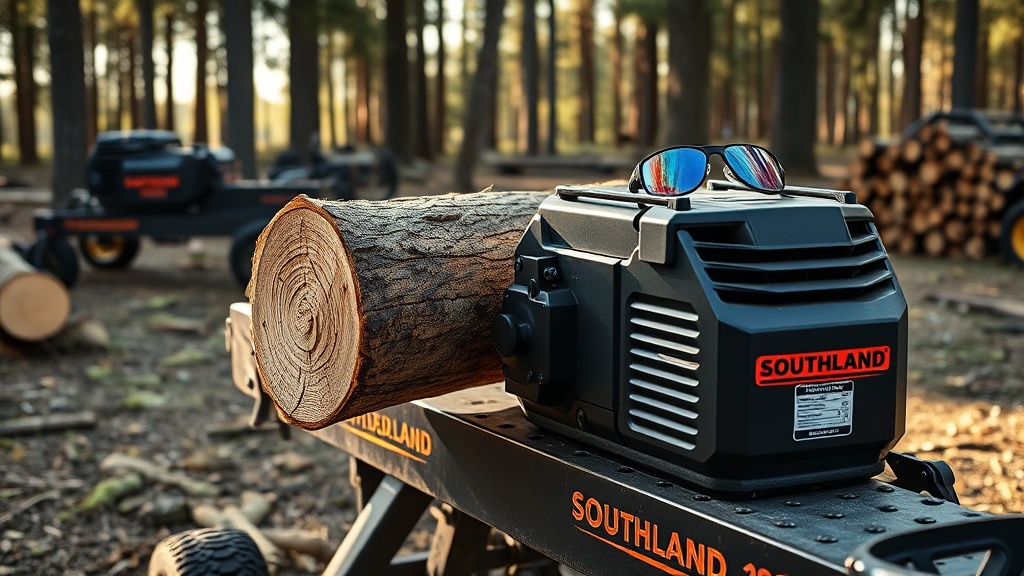
- Safety glasses or face shield: Flying wood chips or hydraulic fluid can cause eye injury.
- Heavy-duty leather gloves: Protect against splinters and pinch points. Avoid loose-fitting gloves that can snag.
- Steel-toed boots: If a log falls, your feet are vulnerable. Boots with puncture-resistant soles are ideal.
- Hearing protection: Gas-powered Southland 22-Ton models reach 90–100 dB; even electric conversions require earplugs during jam forcing.
- Long pants and a long-sleeve shirt: Cotton or denim reduces skin exposure.
Note: Never clear a jam while wearing jewelry, loose clothing, or gloves with cuffs that could catch on the wedge.
How to Prevent Log Jams Through Proper Splitter Setup
Prevention is the most effective safety technique. Before each session, check these three settings on your Southland 22-Ton:
- Hydraulic fluid level: Low fluid reduces pressure and causes slow cycle times, increasing jam risks. Check the dipstick with the engine off and beam level. Top up with AW-32 hydraulic oil.
- Wedge sharpness: A dull wedge requires more force to penetrate. Use a file or angle grinder to re-sharpen the edge to a 20-degree bevel. Replace if chipped.
- Log length: Ideally, cut logs to 18–24 inches for the Southland 22-Ton’s 24-inch stroke. Logs shorter than 12 inches tend to bounce off the wedge; logs longer than 28 inches cause binding.
For long-term prevention, consider converting your gas splitter to electric for quieter, more consistent power, which reduces hydraulic shock and potential binding.
What Owners Say About Southland 22-Ton Log Splitter Jam Clearing
Real-world feedback from owners highlights common pain points and solutions. On forums and review sites, the Southland 22-Ton receives mixed marks for jam frequency, but those who use the safe techniques above report high satisfaction.
- “The pry bar trick works every time” — Mark T., Vermont, notes that keeping a 42-inch wrecking bar near the splitter eliminates frustration. He emphasizes never using his hands.
- “Check the fluid first” — Linda R., Oregon, says jams disappeared after she topped up the hydraulic reservoir. “Low fluid was causing the ram to slow down mid-stroke, and logs would bind.”
- “Electric conversion made jams less frequent” — Dan S., Ohio, reports that after converting his Southland to electric, the smoother power delivery reduced stringy wood jams by about 60%. He still uses the manual override for the occasional knot.
These experiences reinforce the importance of proactive maintenance and having the right tools on hand. Most owners agree that a sharp wedge and proper fluid level prevent 80% of jams.
Frequently Asked Questions About Safe Log Jam Clearing
Q1: Can I use a metal wedge and hammer to free a jammed log?
Yes, but only a wooden wedge or soft-metal (brass) wedge to avoid damaging the wedge or beam. A steel wedge can chip the splitter’s hardened wedge edge, reducing splitting efficiency. Always wear safety glasses.
Q2: Should I leave the splitter running while clearing a jam?
No. Always shut down the engine and disconnect the spark plug or power cord before any jam-clearing procedure. A running engine can inadvertently engage the hydraulic ram, causing severe injury.
Q3: How do I know if the hydraulic pressure is fully released?
After shutdown, move the control lever to the retract position for 3–5 seconds. If the ram does not move and you hear no hissing sound, pressure is released. You can also check the pressure gauge (if equipped) — it should read zero.
Q4: Can a log jam damage the hydraulic pump on my Southland 22-Ton?
Yes, repeatedly attempting to split a jammed log with full pressure can overload the pump, causing premature pump failure. If the wedge doesn’t move after 3 seconds of steady pressure, stop and clear the jam manually.
Q5: How do I winterize my splitter to prevent freezing-related jams?
Hydraulic fluid thickens in cold weather, reducing flow and increasing jam likelihood. Store the splitter in a dry area with the beam fully retracted. For full instructions, read Winter Storage and Antifreeze Tips.
Q6: Is it safe to use a chainsaw to cut a jammed log while it’s on the splitter?
Only as a last resort and with extreme caution. First, ensure the splitter is off and all pressure released. Position the chainsaw away from the hydraulic hoses and wedge. Use a sharp chain and cut in a controlled manner. The recommended method is to remove the log from the splitter first, then cut.