
Why Convert Your Southland 22-Ton Log Splitter to Electric?
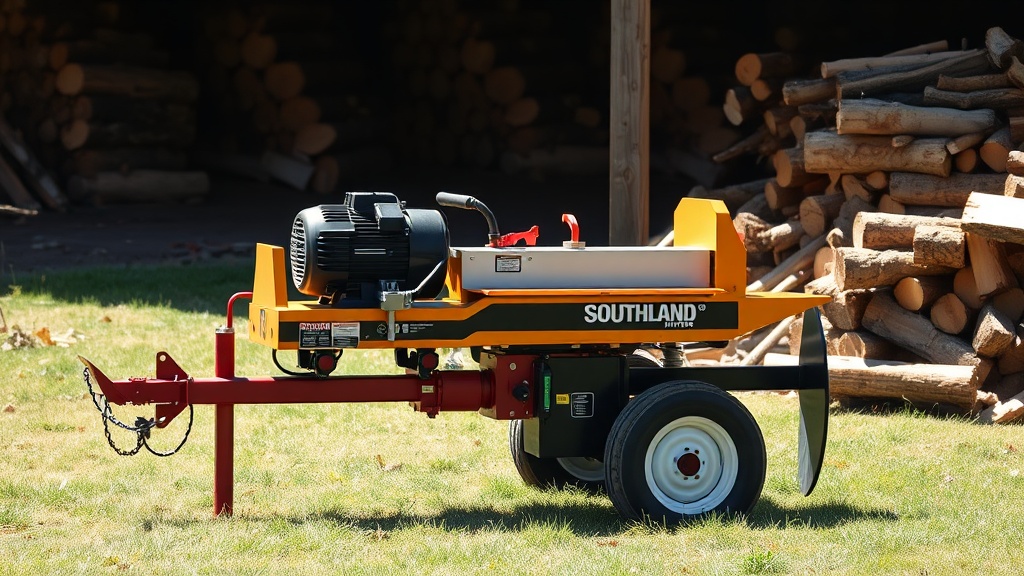
If you own a Southland 22-ton log splitter and are tired of fumes, noise, and periodic engine maintenance, an electric conversion offers a clean, quiet, and efficient alternative. This step-by-step guide walks you through converting your gas-powered Southland 22-ton splitter to a reliable electric unit, allowing you to split wood indoors, near homes, or in noise-sensitive areas. Before starting, it is wise to check our Southland 22-Ton Splitter: Electric Conversion Fuel Savings Analysis to understand long-term cost benefits.
What Tools and Components Do You Need for the Conversion?
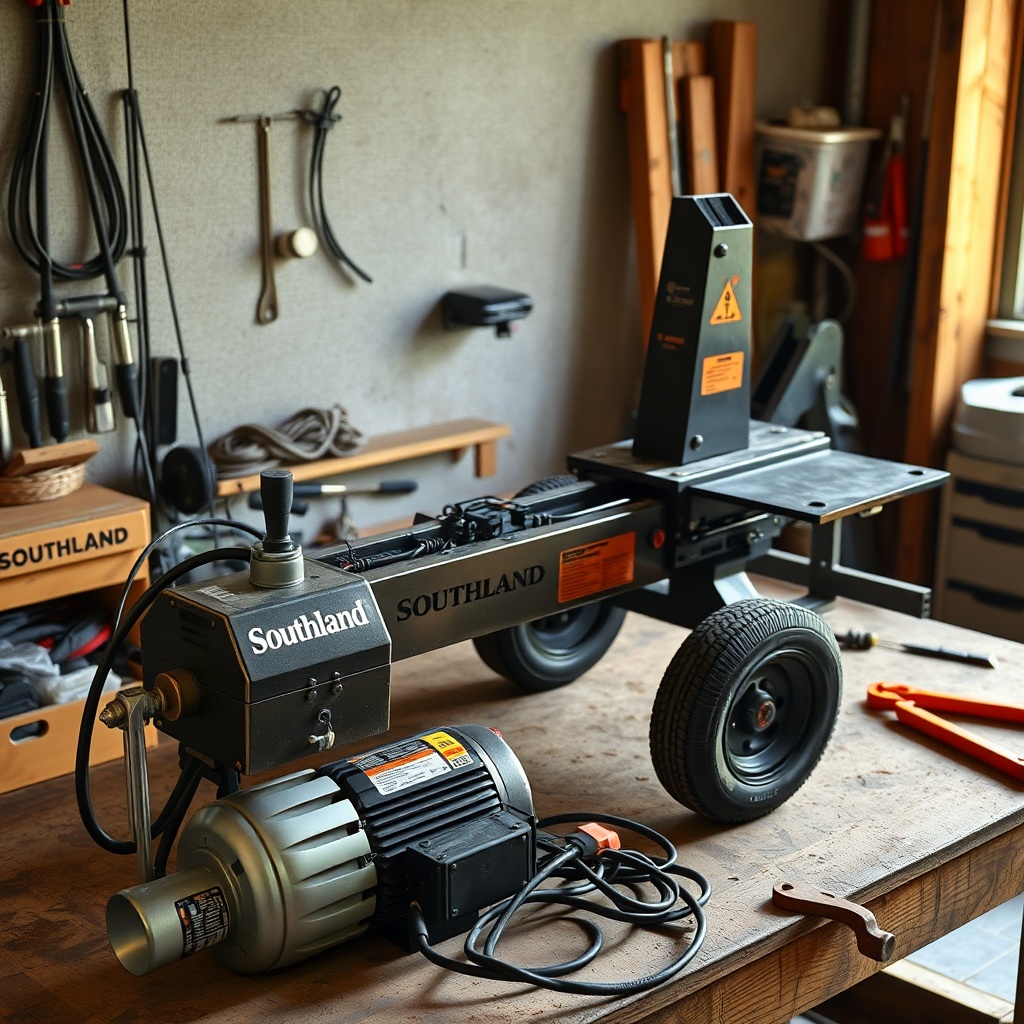
To convert your Southland 22-ton log splitter, you need the following essential tools and parts. The exact specifications depend on your splitter’s year and hydraulic pump flow rate. Below is a detailed table of recommended components, with approximate costs in US dollars for a typical 2020-2024 model.
| Component | Specification | Estimated Cost (USD) | Notes |
|---|---|---|---|
| Electric Motor | 7.5 HP (5.6 kW), 1800 RPM, single-phase 230 VAC | $450-$600 | Enough torque for 22-ton splitter; check frame mount compatibility. |
| Motor Mounting Bracket | Custom or universal steel bracket (12 x 12 inches) | $40-$80 | Ensure bolt pattern matches your engine mounting plate. |
| Honda or equivalent gas engine adapter | Shaft coupling (1-inch bore, Lovejoy L-type) | $25-$45 | Directly connects motor shaft to hydraulic pump spline. |
| Electrical Control Box | NEMA 4X enclosure, includes magnetic starter, overload relay, and thermal protection | $120-$200 | Pre-wired units available for 230V single-phase. |
| Power Cord and Plug | AWG 10, 3-conductor, 50-foot length, 20A rated | $50-$80 | Heavy-duty for outdoor use. |
| Hydraulic Hose (if repositioning) | Two 3/8-inch hoses, 3000 PSI rated, with JIC fittings | $30-$50 | Only needed if pump is relocated. |
| Wiring Tools | Crimper, multimeter, heat shrink, screwdrivers | $20-$40 | Standard electrician tools. |
| Total Estimated Cost | — | $735-$1095 | Lower if using a factory conversion kit. |
How Do You Safely Remove the Gas Engine?
Before removal, disconnect the spark plug and drain the fuel tank. Place a catch pan under the gas engine. With a socket wrench, remove the four mounting bolts securing the engine to the frame. Disconnect the fuel line, throttle cable, and kill switch wires. Lift the engine off using an engine hoist or a helper, as the stock 22-ton engine weighs about 60 pounds. Clean the mounting plate from oil and debris to ensure a flat surface for the electric motor. If your splitter has a belt-driven pump, remove the belt and pulley as well. Refer to Southland 22-Ton Log Splitter: How to Troubleshoot Engine Stalling if you encounter any stalling issues before removal.
How Do You Mount the Electric Motor and Couple It to the Pump?
Install the motor mounting bracket on the frame, aligning the motor shaft with the hydraulic pump input shaft. Use a Lovejoy coupling (L-type, size 095 for 1-inch shafts) to connect them. Ensure the shafts are parallel within 0.005 inches using a dial indicator or straight edge. Torque the coupling set screws to 10 ft-lbs. If the pump spins in the wrong direction, swap any two motor leads inside the control box. This step is critical for proper oil flow and pressure. Check our Southland 22-Ton Splitter: How to Upgrade Ram Speed for Faster Splitting for tips on optimizing pump-motor alignment.
What Electrical Wiring and Safety Precautions Are Necessary?
Wire the electric motor using a magnetic starter to prevent unexpected restarts after a power loss. Follow these steps: (1) Install the control box near the motor, within 5 feet of the motor junction box. (2) Connect the motor power leads (T1, T2, T3) to the magnetic starter output. (3) Wire the starter coil to a momentary push-button switch on the splitter handle for operator control. (4) Ground the motor housing to the splitter frame with a bare copper wire (8 AWG). (5) Install a GFCI protected breaker in your main panel (20A, 240V). Do not skip thermal overload relay—set it to motor’s full-load current rating (e.g., 18 amps for 7.5 HP). Test the motor direction before operating under load. Keep the wiring diagram inside the control box for future troubleshooting.
How Do You Test the Converted Splitter?
After installation, fill the hydraulic reservoir with the recommended AW-32 hydraulic oil (check our Southland 22-Ton Splitter: Hydraulic Oil Change Frequency Guide for correct viscosity and change schedule). Familiarize yourself with the cold-weather performance by reading Southland 22-Ton Splitter: Cold Weather Performance and Starting Tips. Conduct a no-load cycle: run the motor for 60 seconds while the wedge is fully retracted, listening for abnormal noises. Then perform three splitting cycles using a small log (6-inch diameter). Monitor the motor temperature after 10 minutes of continuous splitting—surface temperature should not exceed 200°F. Check for oil leaks at all fittings. If the ram moves too slowly, verify pump speed (should match motor RPM) and coupler alignment. The electric motor should draw about 15-18 amps under full load.
What Owners Say
John from Montana converted his 2021 Southland 22-ton to electric and reports, “The quietness is incredible. My neighbors now let me split early mornings. The torque is identical to gas, but I saved money on fuel in the first season—our analysis at Southland 22-Ton Splitter: Electric Conversion Fuel Savings Analysis confirmed it.” Sarah from Vermont notes, “I had to add a longer power cord (100 feet) to reach my woodpile, but the motor never bogged down on 12-inch oak. The installation took a weekend with a friend.” Mark from Pennsylvania warns, “Double-check the mounting bracket strength—the electric motor is heavier than the gas engine. I reinforced mine with 1/4-inch steel.” Some owners mention the need for a dedicated 20-amp circuit; those with smaller breakers consider upgrading to 30 amps after consulting an electrician.
Frequently Asked Questions
1. Will an electric motor damage the hydraulic pump?
No, if you match the motor’s RPM to the pump’s original specification (typically 1800 rpm for most Southland 22-ton models). The electric motor provides smooth, constant torque without the RPM fluctuations of a gas engine.
2. How much does a typical conversion cost?
Expect to spend between $735 and $1095 USD for a quality motor, starter, and hardware. Using a factory conversion kit can lower the cost to around $600 USD. The investment often pays back within two years through fuel savings.
3. Can I use a smaller motor like 5 HP instead of 7.5 HP?
A 7.5 HP electric motor is recommended to match the original 22-ton splitting force. A 5 HP motor may struggle with large hardwoods and cause slower cycle times, but it can work for occasional light splitting if you accept reduced performance.
4. Is the converted splitter safe to use in the rain?
The electric motor and control box must be rated for outdoor use (NEMA 4X). It is safer than a gas engine with exposed spark plug wires, but avoid soaking the splitter. Store it under cover when not in use.
5. Do I need a professional electrician for the wiring?
If you are comfortable with 240V circuits and electrical code, you can install it yourself. However, for breaker upgrades or running new lines, a licensed electrician is recommended to ensure safety and compliance with local codes.
6. How long does the conversion usually take?
Most owners complete the mechanical and electrical work in 6 to 10 hours over a weekend, assuming all parts are ready and no major modifications are needed.